 Seller OS
Client used my work after cancelling the order
A client cancels the order, then uses the logo you made anyway. It happens, and it is maddening. The response that protects you is plain: preserve the evidence now, report it through official support channels with a clear file trail, and tighten how you hand over previews. Keep the confrontation out of public view — documented facts matter more than the reaction.
Free plan available. Local-first data. Human review on every action.
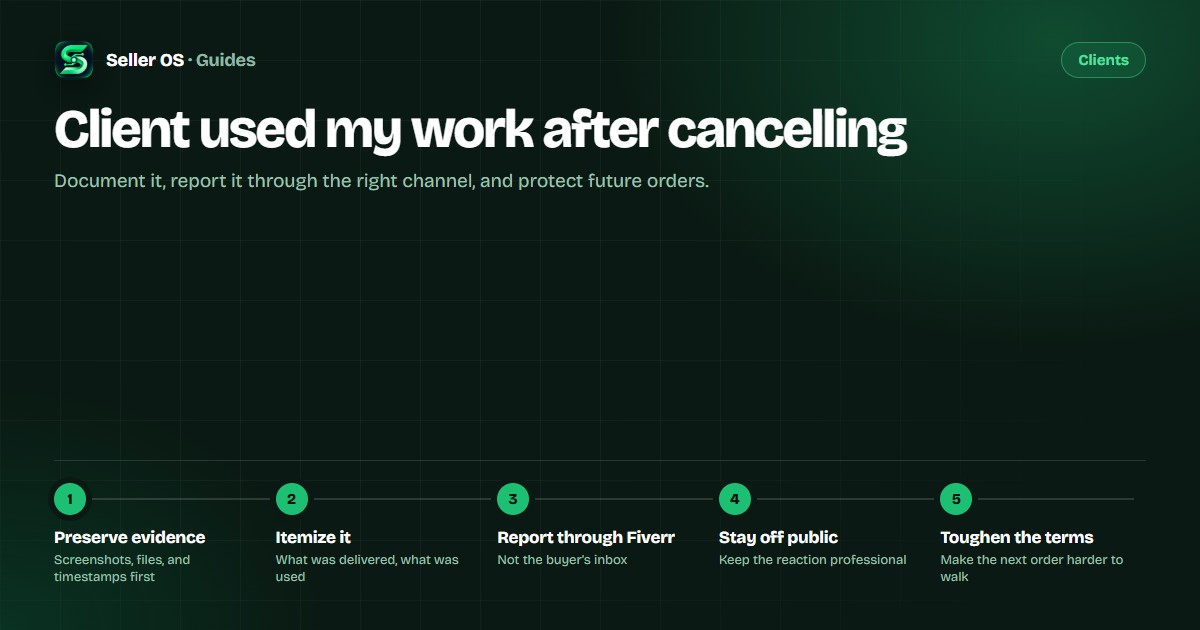
Preserve the evidence before you react
Save the cancellation notice, the order number, the full message thread, and every file you delivered. Do not delete drafts or source files, even the ones you would write differently now. If you need to show what happened, the original record beats a reconstruction from memory.
Screenshots help, but keep the underlying files too. A screenshot of a message is weaker than the thread itself, and a screenshot of a deliverable is weaker than the file with its timestamps. Put dated copies in one folder so the timeline reads at a glance.
The evidence list, item by item
- The order number and the cancellation notice.
- The complete message thread, including requirements and revision requests.
- Every file you delivered, with creation and modification dates.
- Working or source files that show how the work was made.
- Any proof of where the work appeared after the cancellation.
- The usage terms you stated in the order or requirements.
Report it through Fiverr, not the buyer's inbox
Use Fiverr's help center and its support channels rather than private messages to the buyer. Write a short, factual summary: the order number, what you delivered, when the order was cancelled, what files you kept, and where the work has appeared. Attach the evidence list and keep the tone neutral.
One clear report beats five angry ones. Follow up once after a reasonable wait; repeated or contradictory tickets work against you. Fiverr reviews each case and makes its own decision, so nobody can promise a particular result — your job is to make the facts easy to verify.
Keep the reaction off public channels
Posting about the buyer, messaging them directly, or answering a review in anger feels good for a minute and can put your own account at risk. Keep the client's identity and the work off public channels, and keep every communication factual and inside the platform.
Make the next order harder to walk away with
Watermarked previews
Send a marked or low-resolution preview until the buyer approves the work. A preview good enough to evaluate but not good enough to use directly makes casual reuse pointless.
Staged delivery
Deliver in stages inside Fiverr rather than handing everything over at once. If a problem surfaces mid-order, you still hold the final step and the buyer still has a reason to keep the order active.
Written usage terms
State what the buyer receives and how it may be used in the requirements and order details. Clear scope will not stop every bad actor, but it gives you a specific agreement to point to.
Keep the paper trail
Keep requirements, revisions, and approvals on the platform. Conversations that happen elsewhere leave no record when you need one most.
Before you call a lawyer
Whether a contract, a copyright claim, or something else applies depends on your jurisdiction and the terms of the order. That is a question for a qualified professional, not a forum thread. If you do seek advice, the records above are what a professional will ask for first, so collect them either way.
Where Seller OS helps
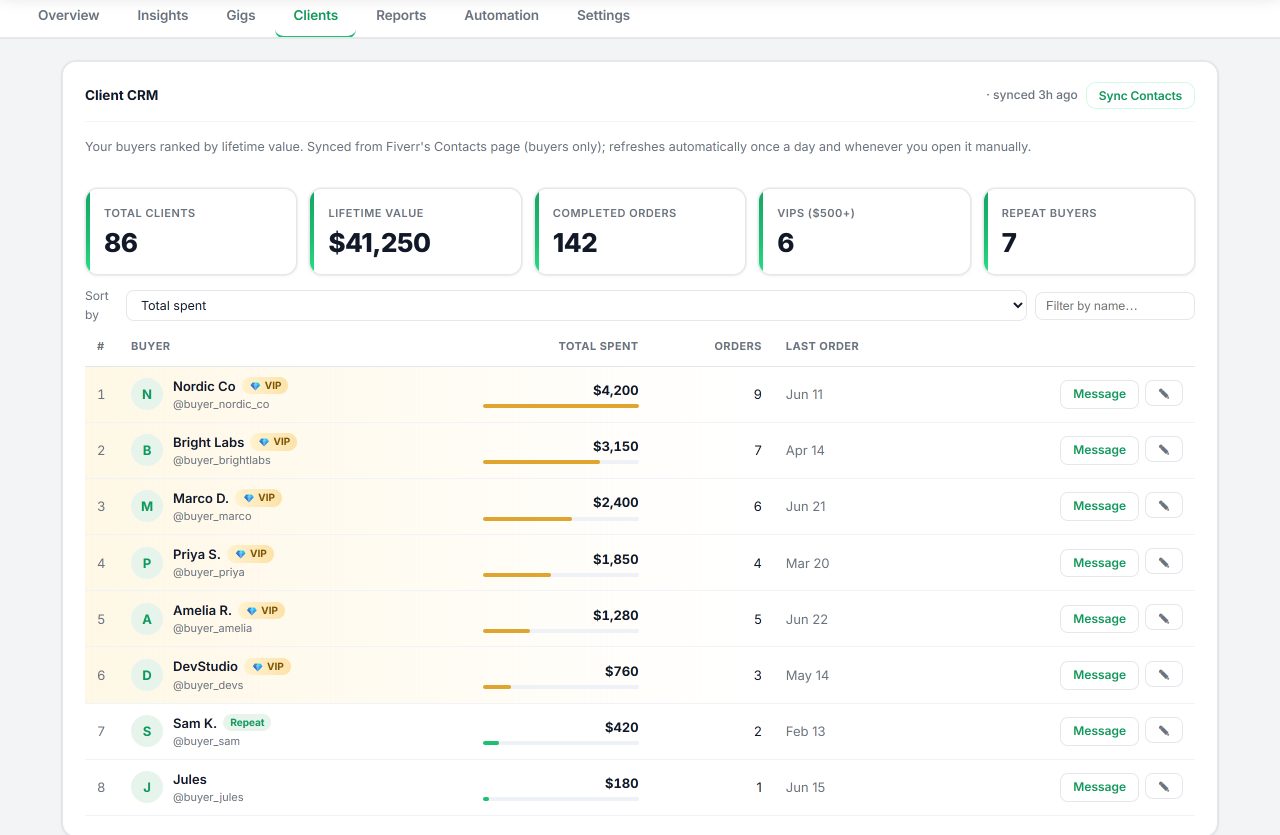
Seller OS is a local-first Chrome extension that keeps client records — notes, tags, and repeat history — in your own Chrome storage, so the timeline of an order can be reconstructed when you need it. Client records and CSV exports help you turn that history into something you can review, and inbox reply drafts help you respond without heat in the moment.
Seller OS does not represent you in a dispute, does not send anything automatically, and cannot guarantee an outcome. It simply makes sure the history stays on your side of the table. Read more in the Fiverr seller tools guide.
Client work and cancellation questions
Can Fiverr help if a buyer uses my work after a cancellation?
Yes, report it through Fiverr's official support channels with your evidence and let their team review it. Outcomes depend on Fiverr's assessment, so keep your documentation factual and complete.
What evidence should I save first?
Save the order number, the cancellation notice, the complete message thread, the files you delivered with their dates, and any proof of where the work appeared. Keep originals untouched and make dated copies.
Should I message the buyer or post about it publicly?
No. Contacting the buyer to demand payment or posting their details publicly can escalate the situation and put your own account at risk. Keep communication factual and route the complaint through official support channels.
How do I stop this from happening again?
Use watermarked or low-resolution previews until the order is approved, deliver in stages inside Fiverr, and state usage terms in the requirements and order details. Clear written scope makes reuse after cancellation harder to argue.
Keep the proof on your side.
Client history, drafts, and CSV exports stay in Chrome storage on your machine, with every send reviewed by you.