 Seller OS
Fiverr ecommerce manager SEO for Amazon and Etsy sellers
Store management buyers arrive with a platform already chosen: an Amazon seller with a broken listing, an Etsy owner with photos and tags to fix, a brand that wants its ad spend reviewed. They also use one phrase, ecommerce manager, for three different scopes, and the scope decides your price and the access you need.
This guide separates listing optimization from store management from advertising work, names the deliverables each platform expects, shows proof that never exposes a client's sales, and covers the access and brand rules that get sellers into trouble. The table holds example phrases to test on your own account, not platform figures.
Free plan available. Local-first data. Human review on every change.
Listing work, store operations, or ads
Fiverr's public E-commerce Management category page, checked October 1, 2026, shows five subcategories: E-Commerce Store Management, Product Upload, Product Research, E-Commerce Store Setup, and Consultation. The seller titles on that page lean hard on Amazon FBA: managing a wholesale business, launching a private label brand, fixing variation errors, and creating FBA product listings.
Etsy work sits in the same buyer conversation even when the observed titles rarely name it, so an Etsy offer has to state itself plainly. Three scopes run through all of it: listing optimization changes a single page, store management runs the account day to day, and ad work moves budget. One gig should sell one scope on one platform.
| Scope | What you actually do | Buyer's first question |
|---|---|---|
| Listing optimization | Titles, bullets, images, and enhanced content rebuilt | Will this page convert better? |
| Store management | Uploads, fixes, variations, and routine reporting | Who watches the account? |
| Advertising | Campaign structure, budgets, and a written PPC audit | Where is the spend leaking? |
| Store setup | Groundwork for a new store or a new marketplace | What gets set up first? |
Keyword examples to validate locally
Build the list from stores you have actually worked on, then test each phrase on Fiverr: type it, read the autocomplete, open the gigs that rank, and note the platform they name and the scope they promise. You are checking vocabulary and promises, not measuring demand.
The set below fits one seller who works on Amazon listings and Etsy shops. Check each phrase against live results before the gig relies on it. Fiverr's Advanced Analytics article states that title text is read first, then the positive keywords field, then the description, and it asks for at least 30 days before you judge a keyword change.
| Slot | Example phrase | Why a buyer types it |
|---|---|---|
| Primary | fiverr ecommerce manager | The scope phrase in a buyer's words |
| Secondary | amazon store manager fiverr | Platform and role stated together |
| Secondary | product listing fiverr | The page that needs fixing |
| Long-tail | etsy shop optimization | Owner shopping for a tune-up |
| Long-tail | amazon ppc audit | Ad buyer with a spend problem |
Deliverables named the way platforms name them
Buyers search with the platform's own vocabulary, and your description should use it without padding. On Amazon, the page work covers the title, bullet points, images, backend search terms, and enhanced brand content for sellers enrolled in the brand program. On Etsy, the same job covers the title, tags, category choices, and photo order.
Operational deliverables read differently again: variation fixes, bulk product uploads, inventory or order reports, and a written PPC audit of campaign and keyword structure. Name each artifact with the word the buyer uses, keep one platform per gig, and describe the count you will deliver so the scope is measurable before the order.
- Listing rebuild — title, bullets, images, and search terms rewritten to a template
- A+ content — module-based brand content for sellers enrolled in the brand program
- Etsy refresh — title, tags, categories, and photo order rebuilt for the shop
- PPC audit — campaign and keyword structure reviewed in a written report
Proof that never exposes a client's sales
The strongest proof here is a listing before-and-after: the same page as you found it and as you delivered it, with the brand name, store URL, and order numbers covered. Two images and a short note about what changed answer the buyer's real question, which is whether you understand a page rather than whether you have seen a dashboard.
Sales context stays anonymized. If you describe results, describe them as that client's context rather than a promise for the next one, and strip identifiers from every screenshot before it becomes a portfolio piece. Fiverr's portfolio article allows one to twenty projects, each holding one to five files with a description of 120 to 1,400 characters, which fits a before pair, an after pair, and your method note.
Capture both states
the listing before the work and as delivered
Cover identifiers
brand name, store link, prices, and order counts
Annotate the change
one line per edit and the reason behind it
Frame results as context
the client's situation, not a guarantee
Package the scope, then price the volume
Ecommerce work scales with counts: listings, variations, campaigns, hours of maintenance. Build the packages around those counts. Fiverr's gig creation article states that you can offer three packages, each with its own delivery time, revision count, and price, that at least one revision option is required, and that the minimum starting price is $5, though some categories set a higher one.
As an illustrative example: a buyer with 140 listings and variation errors on eight of them is quoting two jobs, and one flat price for both means you either absorb the fixes or argue at delivery. Split cleanup from ongoing maintenance. The ladder below is an illustrative structure only, so set the counts and windows from stores you have actually run.
| Tier | Scope example | Delivery example |
|---|---|---|
| Basic | 5 listings optimized to your template | 3 days |
| Standard | 20 listings plus variation fixes | 6 days |
| Premium | Full listing audit plus 40 listings | 10 days |
| Maintenance | Monthly uploads and reporting hours | Rolling month |
Ecommerce SEO mistakes that end contracts
The first is promising ranking. Search position moves with price, reviews, stock, and the platform's own ranking system, none of which you control, so a guarantee about placement is a claim you cannot keep. Sell the work instead: the fields you fix, the content you publish, the audit you deliver.
The second is sloppy account access. Ask for the least access that lets you do the job, record who granted it and what it covers, and confirm revocation when the contract ends. The third is ignoring brand rules: if the buyer's brand is enrolled in a registry program, confirm before you edit content the brand owner controls.
When the store runs on a hosted platform rather than a marketplace, the shopify developers guide covers that build work, and the social media managers guide covers the channel that usually feeds these listings its traffic.
Where Seller OS helps
Seller OS supports the selling side of store work. The Gig Builder turns a one-line idea, such as Amazon listing optimization with variation fixes, into a structured listing with title, five tags, description, and three packages, and fills the Fiverr wizard while you review each field. The Gig Performance Optimizer reviews a published gig's copy and gallery against that gig's own performance data and suggests edits.
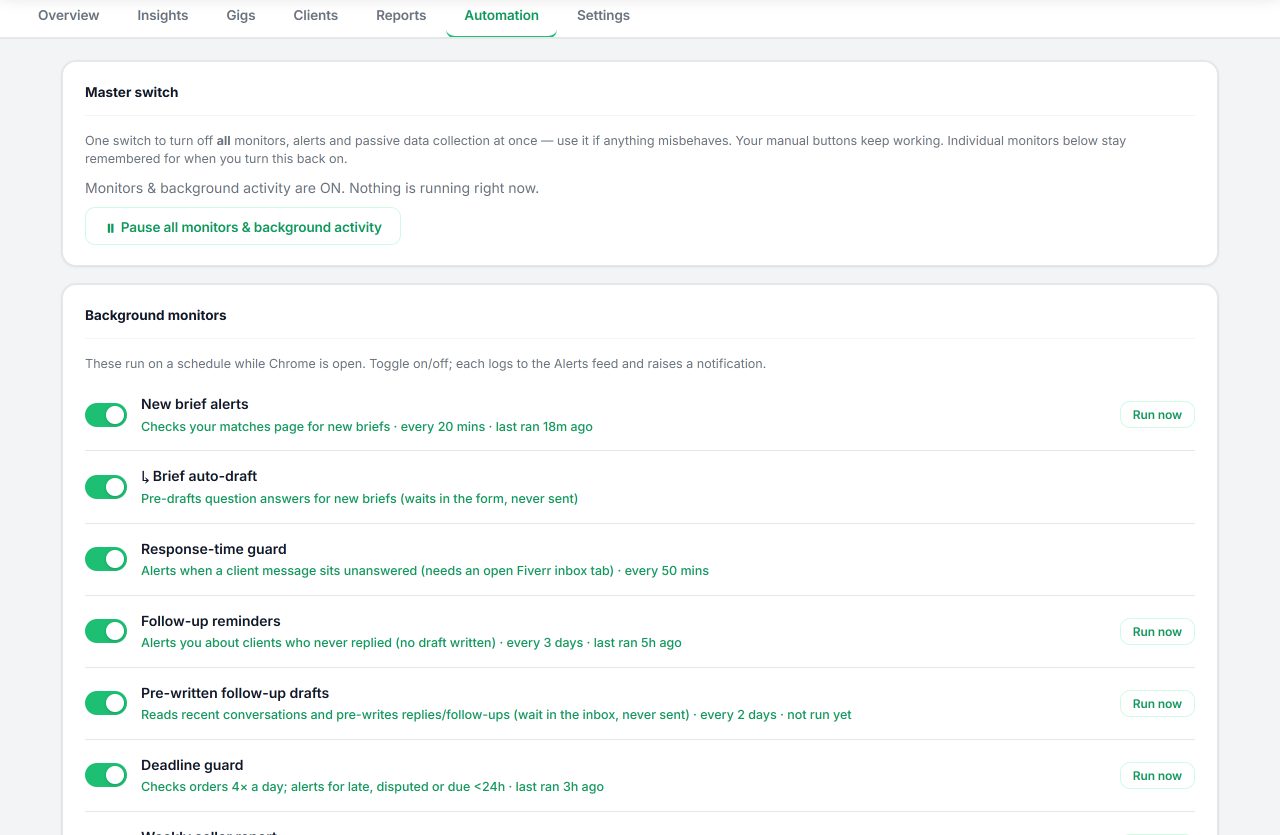
Client records hold each store's platform, scope, listing counts, and access notes so the next batch starts from the last agreement, while on Pro the deadline guard and client radar monitors watch incoming work while Chrome is open. It drafts and fills; a person performs every final Send, Save, Continue, or Publish action, and it never signs into a client's store.
Fiverr SEO for Amazon and Etsy Store Managers questions
Should I sell store management or listing optimization on Fiverr?
Sell the one you can demonstrate first. Listing optimization is a bounded job with visible before-and-after proof and a countable number of pages, while store management is open-ended work that needs a stated scope and a maintenance window. Start with listings on one platform, add reviews, and open the broader management gig once you have a process to repeat.
How do I show ecommerce results without sharing client sales?
Use before-and-after screenshots of the listing with the brand name, store link, and order numbers covered, plus a note on what changed and why. Describe any results as that client's context rather than a promise for the next buyer, and keep every image redacted before it reaches your portfolio or gig gallery.
What access do I need from an Amazon or Etsy client?
Ask for the least access that covers the agreed scope, note in your requirements who granted it and what it includes, and confirm revocation when the order closes. Keep access arrangements inside the order record rather than in casual messages, because questions about permissions or scope surface after the work is delivered, not before.
How should I price ecommerce management packages?
Price against counts you can verify: listings optimized, variations fixed, campaigns audited, or hours of monthly maintenance. Put a small batch at the basic tier, bulk work with cleanup in the middle, and a full audit at the top, then sell ongoing maintenance as its own package so recurring work is not absorbed into a one-time price.
Pick the platform, price the counts
Name one platform and one scope, publish a redacted before-and-after, and set listing counts a buyer can quote against.