 Seller OS
Fiverr custom offer vs gig: what's the difference?
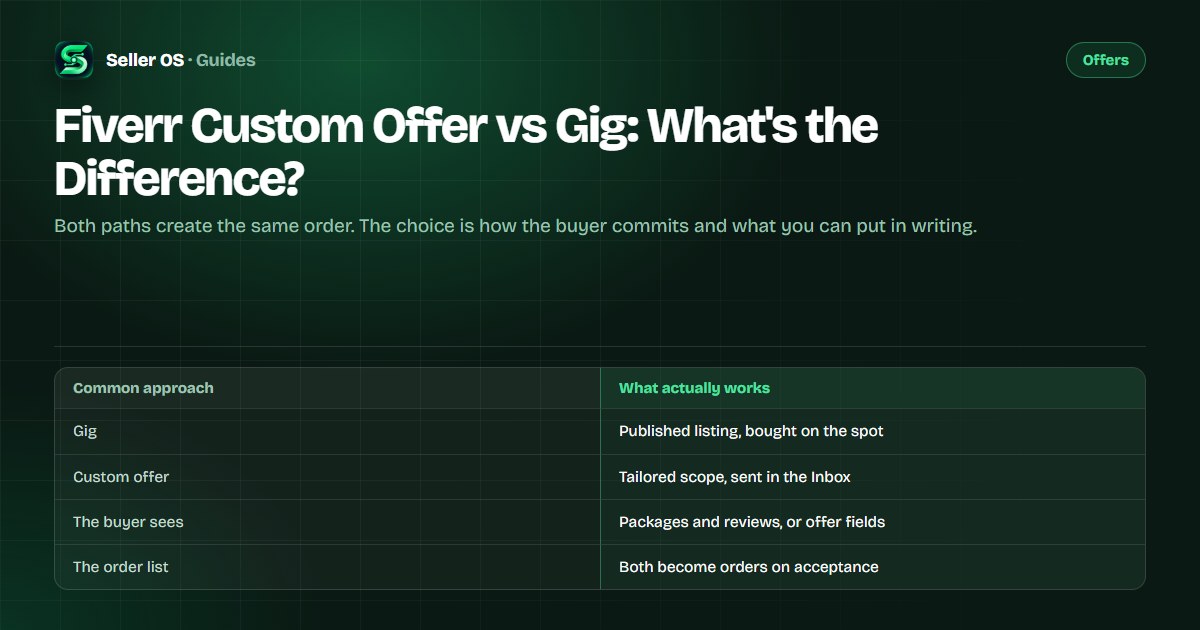
A gig and a custom offer end in the same place: an order in your list with a delivery date and a review window. The difference is the start. A gig is a published listing the buyer can purchase on the spot; a custom offer is a tailored proposal you send in the Inbox, and Fiverr starts the order the moment the client accepts.
This guide compares both paths for the situations that actually come up: a repeat buyer with a changed scope, a project too large for one package, and a rush job with a hard date. It closes with a short checklist you can run before you send anything.
Free plan available. Local-first data. Human review on every change.
Two ways a buyer commits to your work
Fiverr defines custom offers as a tool for freelancers to provide tailored solutions that may not be covered by standard gigs. They travel through the Inbox on desktop or the mobile app, and Fiverr states that all freelancers with an active gig can send them. The custom offers help page lists the fields and limits.
A gig works differently. It is a published listing with packages, a description, a gallery, and public reviews the buyer can read before purchasing; the order starts from the page with a click. A custom offer carries a scope too, but the conversation is the page: the client reads the offer fields, then accepts, declines, or asks for changes.
That difference shapes everything practical. The gig sells while you are offline and reaches strangers, while an offer answers a live conversation. Fiverr also states that freelancers cannot initiate contact with new clients, so the custom offer is a reply-shaped tool: it responds to interest that already exists, usually after a message.
| Element | Gig purchase | Custom offer |
|---|---|---|
| Entry point | Gig page with packages and reviews | Inbox conversation with offer fields |
| How the buyer commits | Purchases a package directly | Accepts, declines, or asks for changes |
| Price range | Package pricing from $5 | $5 to $20,000 |
| Revisions | What the package includes | 0 to 20, or unlimited |
| Order start | At purchase | Automatically on acceptance |
| Best for | Catalog work buyers can compare | Tailored scope, rush, multi-part projects |
What carries over after the buyer accepts
Once an offer is accepted, the two paths converge. The work becomes an order in your list and follows the same lifecycle: requirements, delivery, then three days for the client to accept, request revisions, or extend the review period. If nothing happens, standard and hourly orders auto-complete after three days, and milestone orders after eight.
Reviews and order history work the same way. Both parties can leave a public review after completion, with a 14-day window in most categories and 30 days in Programming and Tech and the listed Digital Marketing subcategories. Reviews become public only after both sides submit or the window closes, and completed orders stay in your history either way.
The difference worth planning for is delivery: milestone offers pay as each step completes and auto-complete on the longer clock, while a single-payment offer behaves like a standard order.
When the gig page is the right answer
The gig page wins when the work is catalog-shaped: something a buyer can compare, price, and purchase without a conversation. Packages make scope and price public, and existing reviews do the trust work before you ever speak.
Example: a repeat client who has ordered the same $120 logo package twice messages with 'same as last time.' The fastest path is the gig: point them at the package and let checkout do the rest. Rebuilding a custom offer for a catalog item adds a negotiation step and can suggest that a private price exists, which is a precedent you will have to live with on the next order. The numbers here are hypothetical; the pattern is the point.
The gig also wins for first-time buyers browsing a category. An offer cannot be discovered in search, and Fiverr's rule that freelancers cannot contact new clients first means the listing is what reaches people who have never heard of you.
When a custom offer is the right answer
Reach for an offer when the request does not fit a package: a scope with several parts, a budget that needs shaping, or a deadline outside the package's delivery time. The published limits are wide, from $5 to $20,000, with delivery from 1 to 90 days and revisions from zero to 20 or unlimited. Milestones cap at five steps, hourly needs a rate and a weekly hour limit, and milestone and subscription types cannot be combined in one offer.
Example: a buyer wants a six-page site, a booking integration, and copy edits; the gig is a three-page build. One offer with two milestones covers it: the first three pages as step one, the remaining pages plus integration as step two, paid as each completes, each with its own delivery window inside the 1-to-90-day range. That split keeps the first payment close to delivery instead of financing the whole project on trust.
The other natural fit is recurring work. A custom-offer subscription can recur at any interval, including daily, weekly, biweekly, or monthly, though Fiverr notes the automated discount is not available on custom offers, so you adjust the base price yourself. The subscriptions guide covers when that structure is worth it.
A five-question decision checklist
Run these five questions in order before you write anything. The first yes usually ends the process: you already know which path the request belongs to and what to send next.
Does the gig package already cover the scope?
Send the buyer to the package and keep checkout one click away.
Did the scope change for a repeat buyer?
Compare the change against the package; if it grew, price the real work with an offer instead of absorbing it.
Would milestones make the project safer?
Split anything you would not deliver in one pass into up to five steps paid as each completes.
Is the deadline outside the package?
An offer sets its own delivery time from 1 to 90 days, so a rush carries its own date and price.
Will the work repeat on a schedule?
Check subscription availability for the gig or the offer, and remember the two types have different rules.
Mistakes that make either path cost you
The most common mistake is quoting a price in the chat and leaving it there. No order starts from a message, and a number typed in a thread is a commitment without fields. If the scope is custom, send the offer; if it is catalog, send the gig.
The second mistake is treating an offer as a way around your gig. An offer built for something the package already sells creates a private price, hides the review-rich page from the buyer, and weakens the listing's consistency. The third is forgetting availability: clients cannot accept custom offers while your status is set to unavailable, even though they can still pay pending ones, so check your status before a long break.
Where Seller OS helps
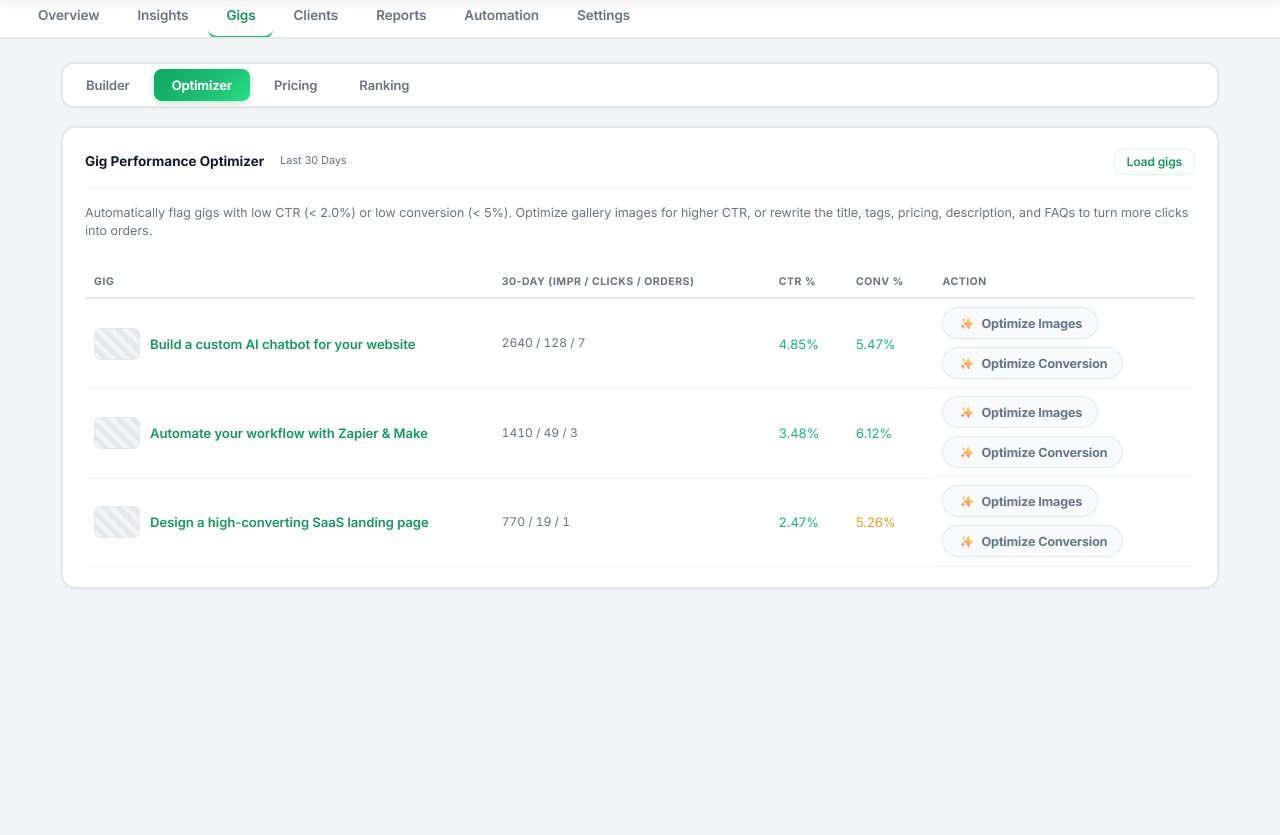
Seller OS helps you answer the first question in the checklist — does the gig already cover this? — with the Gig Performance Optimizer, which reviews a live gig's copy, gallery, and conversion signals against its own performance data and proposes changes. Seeing the gaps makes a custom offer an evidence-based decision instead of a reflex.
For the offer itself, package pricing review keeps profit assumptions and recently applied prices beside the draft, and the inbox assistant can draft the offer message from the conversation. As everywhere in Seller OS, the drafts stop at review: a person sets the final price and presses Send.
Fiverr Custom Offer vs Gig questions
What is the difference between a Fiverr custom offer and a gig?
A gig is a published listing with packages that any buyer can purchase from the page. A custom offer is a tailored proposal for work the standard gigs do not cover, sent through the Inbox. Both start an order once the buyer commits, and both follow the same delivery, acceptance, and review flow afterward.
Can a Fiverr custom offer be used instead of a gig?
For tailored work, yes, that is what the tool is for. For catalog work, no: a custom offer cannot be discovered by browsing, and freelancers cannot contact new clients first, so a gig remains the path that reaches strangers. Keep the gig as the storefront and use offers to shape the requests that do not fit it.
Do custom offer orders get public reviews on Fiverr?
Yes. Once accepted, the offer becomes an order, and after completion both parties can leave a public review. The window is 14 days in most categories and 30 days in Programming and Tech and the listed Digital Marketing subcategories. Reviews become public only after both sides submit or the window closes.
When should a seller send an offer instead of a gig link?
When the request outgrows the packages: a multi-part scope, a milestone project, a rush deadline, or a changed scope from a returning buyer. If the request maps to a package, send the gig; the offer adds friction and can create a private price expectation for catalog work.
Pick the path that matches the scope
Use an offer for tailored work, the gig page for catalog work, and keep the buyer's path to checkout short.