 Seller OS
How to find long-tail keywords on Fiverr
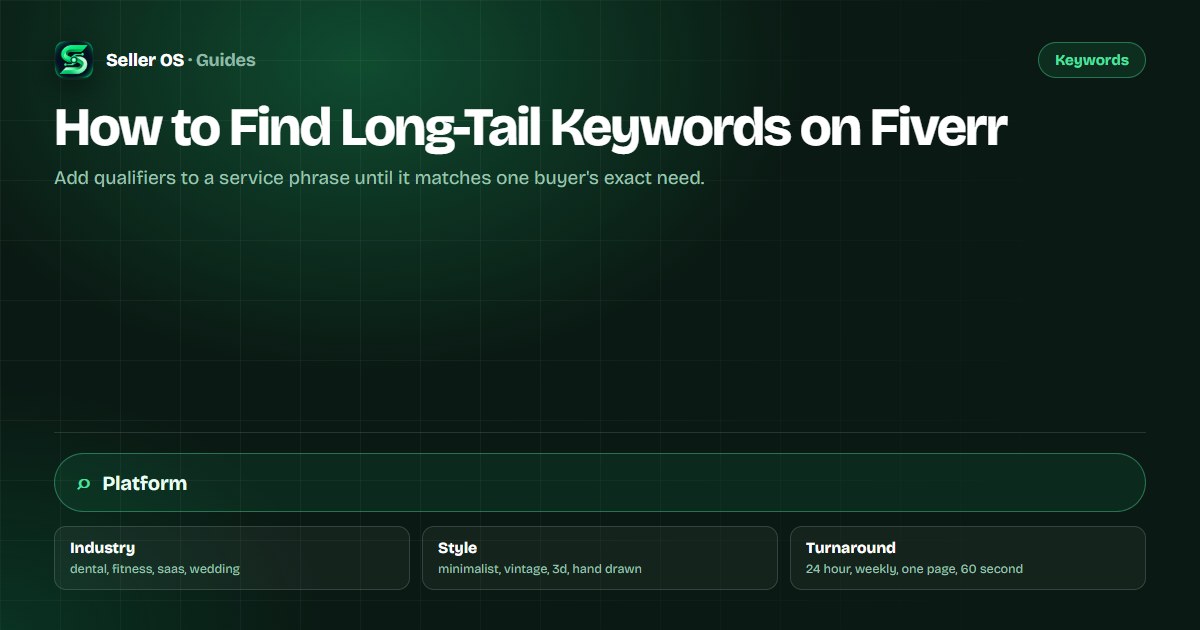
Long-tail keywords on Fiverr are three-to-five-word phrases that combine a service with a qualifier: a platform, an industry, a style, or a turnaround. They are specific enough that a small gig can compete, and clear enough that buyers know what they are ordering. The best ones come from language your own buyers already used.
This guide covers the qualifier types, how to harvest phrases from order history and inbox threads, and where each phrase belongs across the title, keywords, tags, description, and FAQ. Every example phrase is one you could verify in your own buyer messages before using it.
Free plan available. Local-first data. Human review on every change.
What counts as long-tail on Fiverr
Length alone does not define long-tail; specificity does. Podcast editing is a service phrase. Editing a weekly fitness podcast in Adobe Audition is a long-tail phrase a buyer could type when they know exactly what they need. On Fiverr, the practical range is three to five words that still read like something a person would search.
Long-tail phrases are also where new gigs get their first traction. A broad term is held by listings with history, while a specific phrase often has a thinner result set and a buyer who is closer to ordering. That is why the low-competition guide treats long-tail phrases as the main hunting ground.
The four qualifier types that build phrases
Most useful long-tail phrases are built by adding one or two qualifiers to a service core. The four that pay off most often are platform, industry or use case, style or format, and turnaround or size. Mixing two from different rows usually produces the most specific phrase, and the most honest one you can actually deliver.
The test is simple: could a buyer read the phrase and know whether you are the right seller? If the phrase still needs a conversation to clarify, it is too vague. If it names something you cannot do, it is not your phrase, no matter how many searches it might carry.
| Qualifier | Example phrase | Why it narrows the buyer |
|---|---|---|
| Platform | shopify store setup | Names the tool they use |
| Industry | explainer video for saas | Names the business context |
| Style or format | minimalist logo design | Names the look they want |
| Turnaround or size | 24 hour podcast edit | Names the constraint they have |
Harvest phrases from your own order history
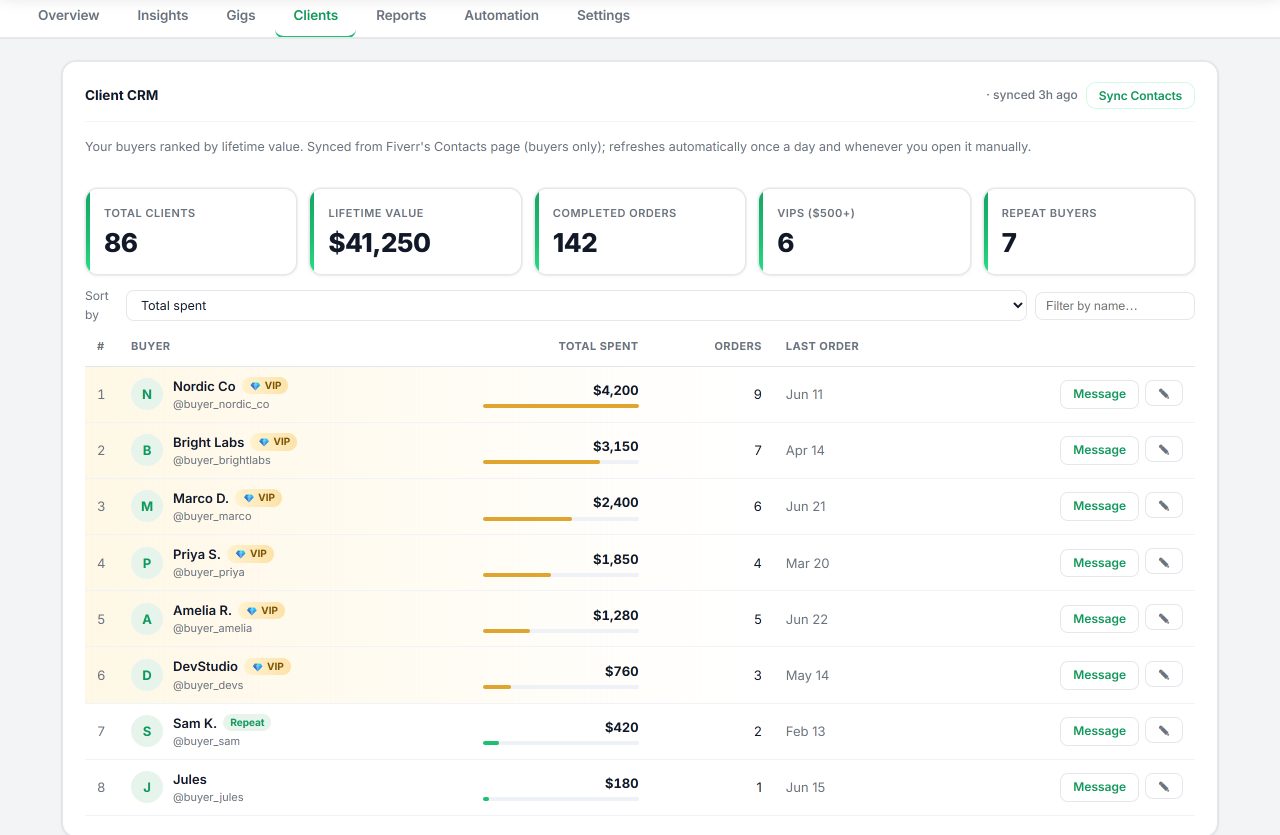
Your completed orders contain the exact phrases buyers used before they learned your gig vocabulary. Open the first messages and requirements of your last ten orders and highlight the nouns: platform names, file types, occasions, deadlines. Those words are long-tail ingredients already proven to convert, because they converted for you.
A short scenario shows how it works. A seller offers general website help. One buyer writes: my WooCommerce checkout breaks when I add a coupon. Another asks to move a Squarespace site to WordPress. Neither phrase appears in the seller's title, and both describe repeatable, specific services worth a slot.
- Order requirements: the scope language buyers write themselves.
- First messages: the problem stated before any sales talk.
- Revision notes: what buyers say was missing or wrong.
- Review text: the outcome described in the buyer's own words.
Where each long-tail phrase belongs
Where a phrase lands depends on how Fiverr reads the fields: title text is weighed first, then the positive keywords field, then the description. That order decides placement, with the single strongest phrase going into the title, related phrases filling the five positive keyword slots, and tags sorting the gig into search buckets. The description and FAQ can hold the rest without crowding the top fields.
Fiverr's gig creation guidance allows up to five words or short phrases in the positive keywords field, up to five tags, up to 1,200 characters in the description, and up to 10 FAQs, as listed in Creating a Gig. Long-tail phrases fit all of those formats easily; the discipline is choosing one home per phrase instead of repeating it everywhere.
One warning about the FAQ: it is public copy, not a keyword dump. Write the questions buyers actually ask, answer them honestly, and let the phrases you need appear naturally inside the answers. The FAQ has to help a person decide first and serve the phrase set second.
Worked example: build a phrase set for one gig
Start from a head term and build outward with the qualifiers buyers gave you. The set below is illustrative for a podcast editing gig, assembled from example inbox language rather than platform data, and every phrase is one you could verify in your own messages.
Core phrase
podcast editing, already in the title if it performs.
Platform: adobe audition podcast editing
positive keywords field.
Industry: fitness podcast editing
positive keywords field.
Turnaround: 24 hour podcast edit
tag or FAQ, depending on fit.
Format: weekly podcast show editing
tag.
Buyer stage: podcast editing for new shows
description sentence and FAQ answer.
Test long-tails without diluting the gig
Every added phrase costs something: attention in the description, a keyword slot, a tag. The safe pattern is to add one phrase at a time and give it the review window Fiverr recommends for new or updated keywords, which is at least 30 days, before deciding whether it earned a permanent place.
Tags and extra positive keyword slots are the cheap places to start, because they are easy to revert and they do not disturb the title the gig's current visibility depends on. Move a proven phrase upward only after it has earned the promotion with data.
Long-tail mistakes that waste slots
The first mistake is inventing phrases buyers never type. If a phrase appears in no autocomplete suggestion, no inbox thread, and no requirement field, it is a slogan, not a keyword. The second is stacking qualifiers until the phrase sounds like a spec sheet instead of a search a person would run.
The third is treating long-tail phrases as a substitute for a clear service. A gig still has to say what it delivers; the phrase set only helps the right buyer find that gig. Keep the language human, keep the qualifiers true, and retire phrases that never appear in a real conversation again.
Where Seller OS helps
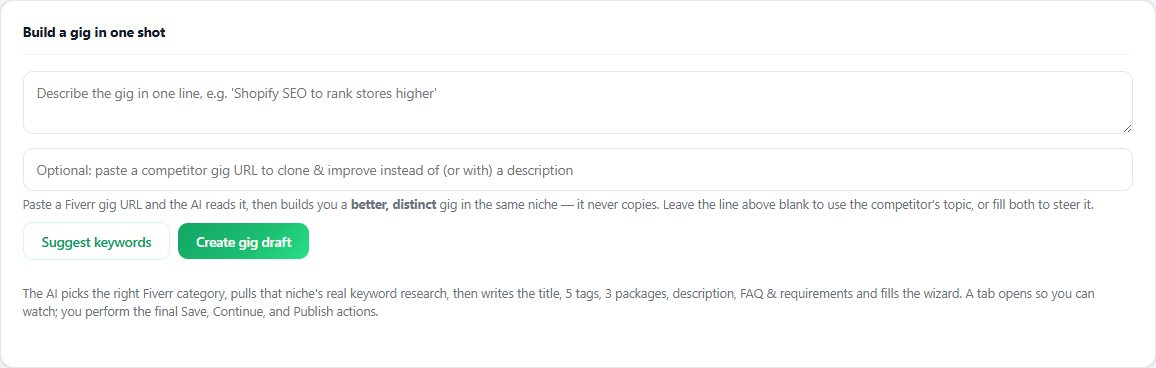
Seller OS makes the harvest easier. Client records keep your local order history and notes searchable, so the language buyers used stays available when you refresh a gig, and keyword help suggests long-tail terms that fit the five phrases, five tags, 1,200 characters, and FAQ slots Fiverr gives you.
Drafts are suggestions you review and edit; the extension never publishes or edits a gig on its own. All client and keyword data stays in Chrome local storage.
How to Find Long-Tail Keywords on Fiverr questions
What are long-tail keywords on Fiverr?
They are specific buyer phrases, usually three to five words, that combine a service with a qualifier such as a platform, an industry, a style, or a turnaround. Example: minimalist logo design for a coffee shop. Because they are specific, they often have thinner competition and attract buyers who know what they need.
How do I find long-tail keywords without paid tools?
Use language you already own: first messages, order requirements, revision notes, and review text. Add Fiverr's autocomplete suggestions, particularly the longer variants that appear after a few typed words, and the phrases that repeat across top gigs in your subcategory. All of it is free and grounded in real buyer language.
Where should long-tail keywords go in a gig?
Fiverr weighs the title before the positive keywords field, and the description comes last. Put the strongest phrase in the title, related phrases in the five positive keyword slots, supporting terms in tags, and longer questions in the description and FAQ. Give each phrase one home instead of repeating it.
Can long-tail keywords rank a new Fiverr gig?
They are the most realistic place for a new gig to start, because a specific phrase usually has fewer strong listings competing for it. That is not a guarantee of ranking or orders. Add phrases one at a time, give each the 30-day review window Fiverr recommends, and keep the ones that bring impressions, clicks, and conversations.
Build phrases your buyers already use.
Install Seller OS, mine your order history for long-tail phrases, and test one slot per 30-day window.