 Seller OS
How to get repeat clients on Fiverr
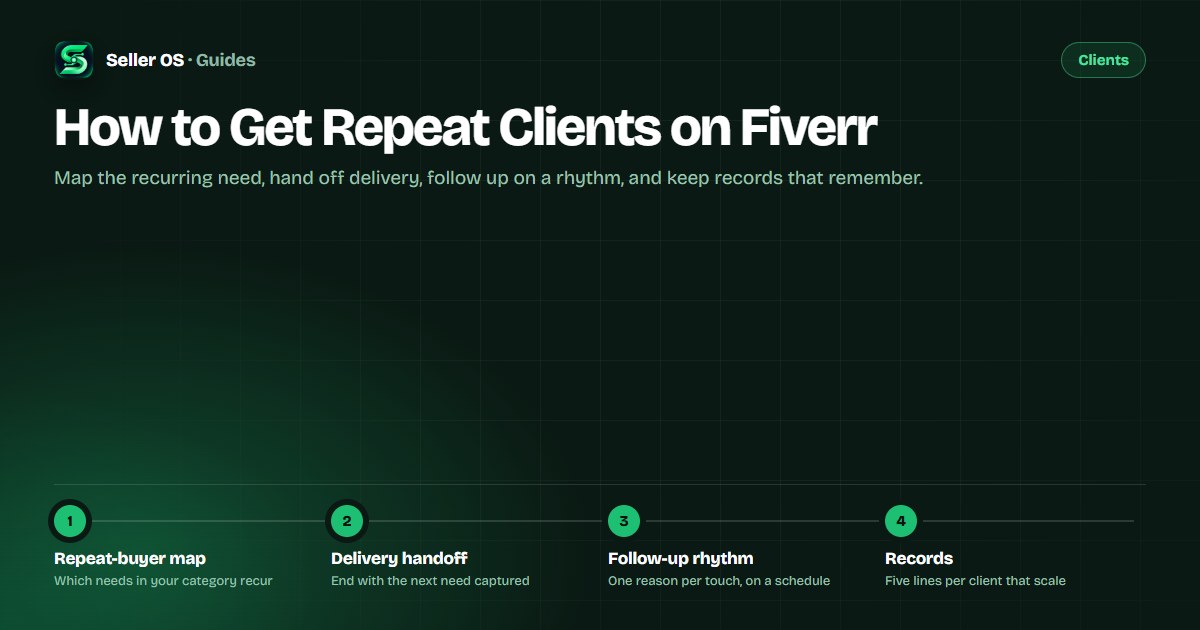
Winning one repeat order is a moment; getting repeat clients consistently is a system. Sellers who rely on returning buyers tend to share four habits: they know which needs recur in their category, they end each order with a reason to come back, they follow up on a calendar rather than a mood, and they keep records that make the next order easier than the first.
This guide builds that system one layer at a time: the repeat-buyer map, the delivery handoff, the follow-up rhythm, and the records that hold it together. The message-by-message playbook for a single order lives in its own guide, linked along the way.
Free plan available. Local-first data. Human review on every change.
Why retention is a system, not a moment
A single repeat order can happen by luck. A repeat client base is structure: the work of earning the next order does not depend on remembering to do it or on being in the mood that week. Systems survive busy months, which is exactly when retention usually gets skipped.
Fiverr supplies the platform pieces, including subscriptions on eligible gigs and coupon-based re-engagement for Seller Plus members. The system around them is yours: what you map, what you capture at delivery, when you follow up, and what you write down.
Start with a repeat-buyer map for your niche
For every service you sell, write down the need that usually follows it. The map is a short list of arrows, and its value is that it turns intuition into a checklist you can design around.
Example, hypothetical: a voiceover seller's map reads: explainer video read to monthly video series; audiobook sample to full audiobook plus chapter pickups; brand commercial to localized versions; app demo to update reads at each release. None of those arrows needed a new marketing idea; they were already happening in the inbox, just unlabeled.
The map doubles as a product test. When the same arrow shows up in three different conversations, it deserves a named package, a subscription where eligibility allows, or at least a one-line scope you can quote without thinking. Arrows that never repeat are someone else's product, not yours.
The delivery handoff that earns the next order
The end of an order holds the most trust and the most information you will ever have about that buyer. A handoff is a repeatable close that confirms what arrived, invites one question about what is next, and captures the answer before the thread scrolls away.
Treat it as a required step in every delivery, not a nice gesture on good days. The moment the order is accepted, send the handoff and write the answer down where you record clients. The message-level version of this moment is covered in the one-time client guide; the system version is a checklist item you do not skip.
- Confirm what arrived — files, formats, and how to use them
- Ask about the project — one question, about their next step
- Capture the answer — in their words, next to the order record
- Set the follow-up date — based on the cycle they named
Build a follow-up rhythm, not a habit
A rhythm is a calendar, not a personality trait. Tie touchpoints to the buyer's cycle: monthly work gets a monthly window, quarterly work gets a quarterly one, and seasonal buyers get one note before their season. One reason per touch, and a stop rule agreed with yourself in advance.
The timing windows and stop rules for specific moments are covered in the buyer follow-up guide. What matters at the system level is that the follow-up exists on a schedule, so it does not depend on an idle afternoon.
| Trigger | Touch | Job |
|---|---|---|
| Order delivered | Handoff note | Confirm what arrived, capture the next need |
| Three days after acceptance | One check-in | Confirm the work is in use, offer a fix |
| Start of their next cycle | Cycle note | Name the next unit and hold the slot |
| Ninety days silent | One re-engagement note | Close the loop or release the slot |
Records are the retention asset
Memory does not scale; records do. After every order, log five lines: the buyer's goal, the deliverables, the preferences they mentioned, the next need they named, and your last touch. Five lines take two minutes and pay out months later.
Example: a buyer returns eight months later with 'we are doing the same thing for a new product.' A seller with records opens with the old scope, the format the buyer preferred, and the deadline pattern from last time, and quotes in a single message. Without records, the same seller starts from zero and reads like a stranger who happens to own the previous files.
- Goal — what the work was for, in their words
- Deliverables — files, formats, and versions sent
- Preferences — tone, formats, names, do-nots
- Next need — what they said comes next, and when
- Last touch — what you sent, and the date
Measure repeat work once a quarter
Retention becomes manageable when you can see it. Once a quarter, count the orders from buyers who had ordered before and divide by all completed orders in the period. Worked example, hypothetical: 9 repeat orders out of 40 completed orders is a repeat share of about 23 percent.
Read the trend, not the value. Is the share rising since you added handoffs? Are one or two services doing all the repeating, which suggests they deserve a package or a cycle? Is a single client carrying the repeat share, which is concentration rather than retention? One number, one decision per quarter.
Keep the arithmetic in a simple sheet of your own; Fiverr does not publish a retention formula, and the point is not precision. The point is to notice change in time to act on it.
Retention mistakes that undo the system
The first mistake is reducing retention to discounts. A coupon can carry a return message, but a discount habit teaches buyers to wait for the next one, and it prices your second project below your first. The second is skipping records, which turns every returning buyer into a new lead.
The third is following up without a reason or past your own stop rule, which spends the relationship instead of the calendar. The fourth is designing the repeat in your head instead of in your packaging: if the buyer has to invent the recurring version of your service, most will not.
One honest note to end on: no system guarantees a return order. Clients change roles, budgets move, and some projects simply end. A retention system does not control individual buyers; it improves your odds across many of them, quietly, one well-closed order at a time.
Where Seller OS helps
A retention system lives on memory and next steps, and Seller OS is built for both. Local client records keep notes and order history in Chrome, so a buyer who returns after months starts from what was delivered and preferred, not from re-reading an old thread.
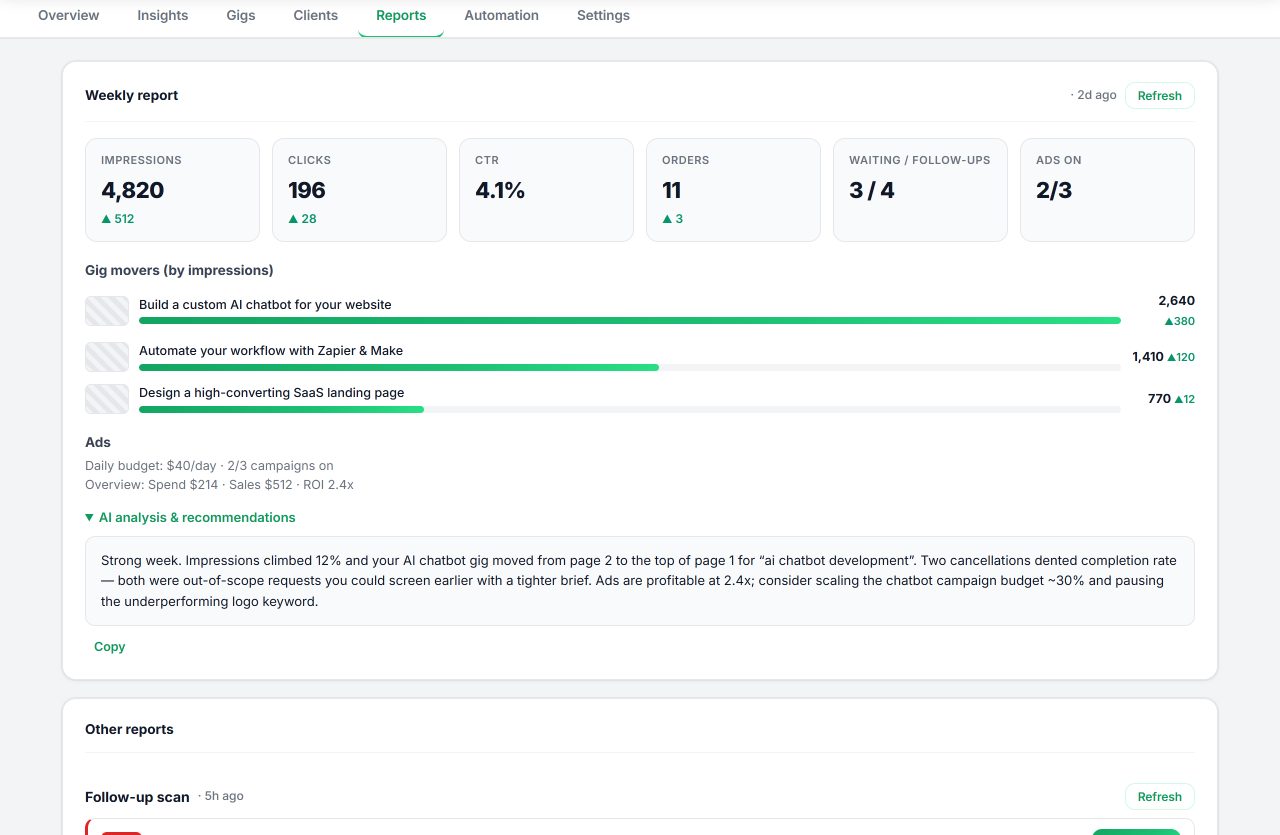
Re-engagement drafts turn those records into a message for a dormant buyer, and the reports view with its short action queue gives the quarterly review a natural home. It organizes and drafts; it does not message buyers on its own, and it does not promise that anyone will return.
How to Get Repeat Clients on Fiverr questions
How do I get repeat clients on Fiverr?
Build the system rather than chase the moment: map which needs recur for your services, close every delivery with a handoff that captures the buyer's next step, follow up on a calendar tied to their cycle, and keep records so a returning buyer starts from context instead of zero. Then measure repeat share quarterly and adjust.
Which past clients are most likely to order again?
Start with the buyers whose last project implied a sequence, such as a launch that needs a follow-up batch, a sample that led to a full run, or seasonal work that returns each year. Records make those candidates visible, and the buyer's own words from the handoff are the strongest signal you have.
How often should I follow up with old Fiverr clients?
Tie the touch to their cycle rather than a fixed number of days: monthly work earns a monthly window, seasonal work earns a note before the season. One reason per touch, and one unanswered note is the practical limit unless the buyer named a date themselves. Rhythm beats volume.
Do repeat clients improve your Fiverr ranking?
Fiverr does not publish a ranking formula, so nobody can promise that. What Fiverr does say is that gigs with more orders carry more weight in the Success Score, and that level criteria count orders, unique clients, and earnings. Repeat clients contribute to those measures, alongside the stability they add to your schedule.
Make the second order a process
Map the recurring need, hand off every delivery, keep the rhythm, and let records do the remembering.