 Seller OS
How to follow up with a Fiverr buyer
Following up is not chasing. A useful follow-up adds something the buyer did not have: an answer, an option, a date, or a reason to decide. Sent at the right moment, it reads as service; sent on repeat with nothing new, it reads as pressure.
This guide covers the four moments sellers follow up most: after a question, after a quote, after a delivery, and after a client goes quiet for months. Each one has a timing window, a message shape, and a stop rule you set before you send.
Free plan available. Local-first data. Human review on every change.
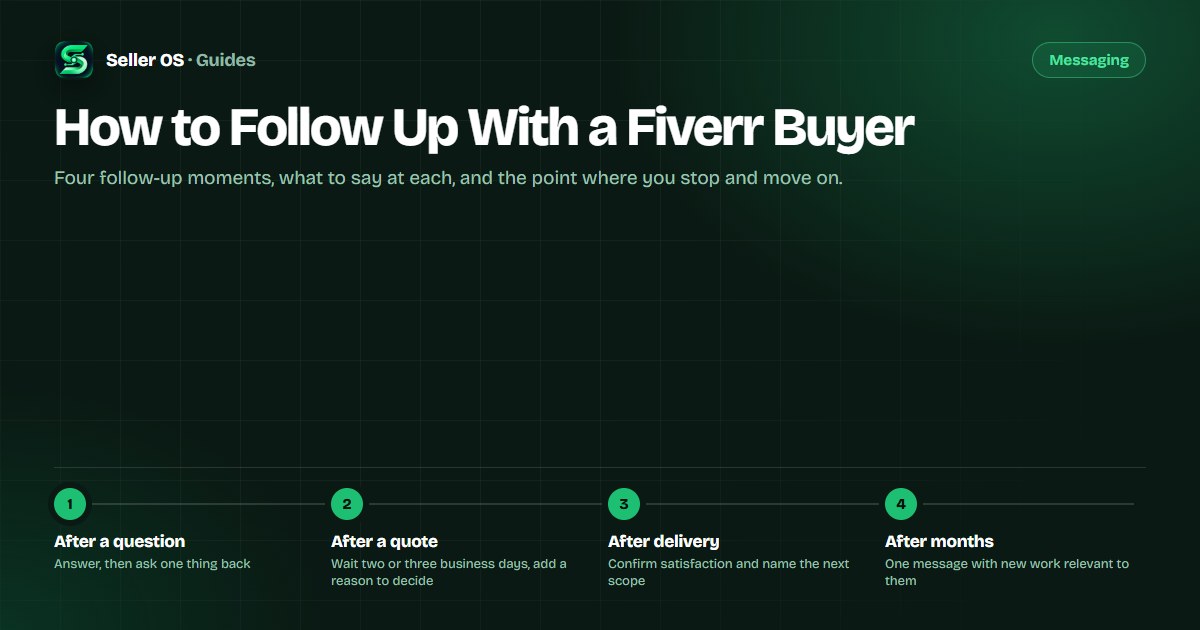
Why follow-up timing beats follow-up volume
Most follow-ups fail on timing, not wording. A message sent an hour after a quote reads as pressure; the same message sent two business days later, with one new detail, reads as attention. Buyers are busy, and silence rarely means no.
The window depends on what you are waiting for. A question needs a same-day answer. A quote needs room to think. A delivery needs a review period. A dormant client needs a reason that has nothing to do with your calendar.
- One follow-up per moment unless something changes: a new date, a new file, a new option.
- Every follow-up carries information; a nudge with nothing new is noise.
- The stop rule is part of the plan: decide it before you send the first message.
After a question: answer, then ask one back
If the buyer asked a question and then went quiet, your reply is the follow-up. Answer fully, then close with one question that moves the project forward: a deadline, a file, or a choice between two options. Questions get replies because they are easy to answer.
Fiverr measures the response rate from your first response to a new message, so a later message in the same thread is not counted as another first response. The response speed guide covers the machine around this habit.
“Response rate is the percentage of first responses to new messages that a freelancer sends within 24 hours.”
— Fiverr Help Center, Everything you need to know about response time and rate, September 2026
After a quote: give it room, then add a reason
A custom offer is a decision, not a task: the client can accept it, decline it, or ask for changes, and you can withdraw it at any time before acceptance or expiry. Set an expiry so the conversation has a clock, then follow up once, two or three business days in.
Example quote follow-up, labeled hypothetical: Hi Maya, a quick note on the offer I sent Friday. I have a production slot open next week, so if you approve by Wednesday the first cut still lands in seven days. If the budget is the sticking point, reply and I will send a smaller version with just the script and the first cut.
What makes this message work is what it adds: a real availability window, a consequence the buyer can plan around, and a smaller option. It does not repeat the price, it does not ask whether they saw the offer, and it does not apologize for following up.
After delivery: confirm, then ask the next step
Delivery is not the end of the conversation. On a standard order the client has three days to accept, request revisions, or extend the review period before the order completes automatically, and a short message on day one confirms the files arrived and invites questions while the work is fresh.
Keep the follow-up about the work, not the rating. The common mistake is chasing a review instead of checking the work: ask whether the files meet the brief and whether anything needs a small fix before they use them. If there is a natural next deliverable, name it once. The public review window is 14 days in most categories and 30 days in Programming and Tech plus the listed Digital Marketing subcategories, so there is no rush to chase it.
Day one - confirm the files arrived and restate where they are.
Day two or three - ask if anything needs a fix before they use the work.
After the first exchange - name one next deliverable, once, and leave it there.
After months: re-engagement with a new reason
A dormant buyer does not need a reminder that you exist; they need a reason that fits their world: a new capability, a seasonal deadline, or a specific gap you noticed in the work you did together. One message, one reason, one question.
Example re-engagement, labeled hypothetical: Hi Maya, I just finished a series of onboarding videos for a similar tool and remembered your product tour still uses the old branding. If you want a quote for refreshing those three clips this quarter, tell me and I will send options. If now is not the time, no reply needed.
If you use Seller Plus, coupons are the structured version of this message: a repeat-client coupon is valid for 30 days, requires a completed order within the past 12 months and a 4 or 5 star rating from the client, and can carry a short personal note. The coupons guide explains the eligibility rules.
The stop rules that keep follow-up professional
Two follow-ups after a quote is the ceiling; one after a delivery; one re-engagement per quarter at most. When a stop rule is reached, close the loop in your own records and leave the thread open. The next message from you should carry a new reason, not a repeat.
If the silence sits on an active order rather than a conversation, different mechanics apply: requirements have a deadline, deliveries auto-complete, and there is a defined path for each stage. The ghosted buyer guide walks through those stages one by one.
| Moment | When to follow up | Stop after | What to include |
|---|---|---|---|
| Buyer question waiting on you | Same day | One reply | The full answer plus one question |
| Quote sent | 2-3 business days | Two messages total | New information, not a nudge |
| Delivery accepted | Day one | One message | A check on the work, then a next step |
| Client dormant 3+ months | With a new reason | One per quarter | Something relevant to their last project |
Where Seller OS helps
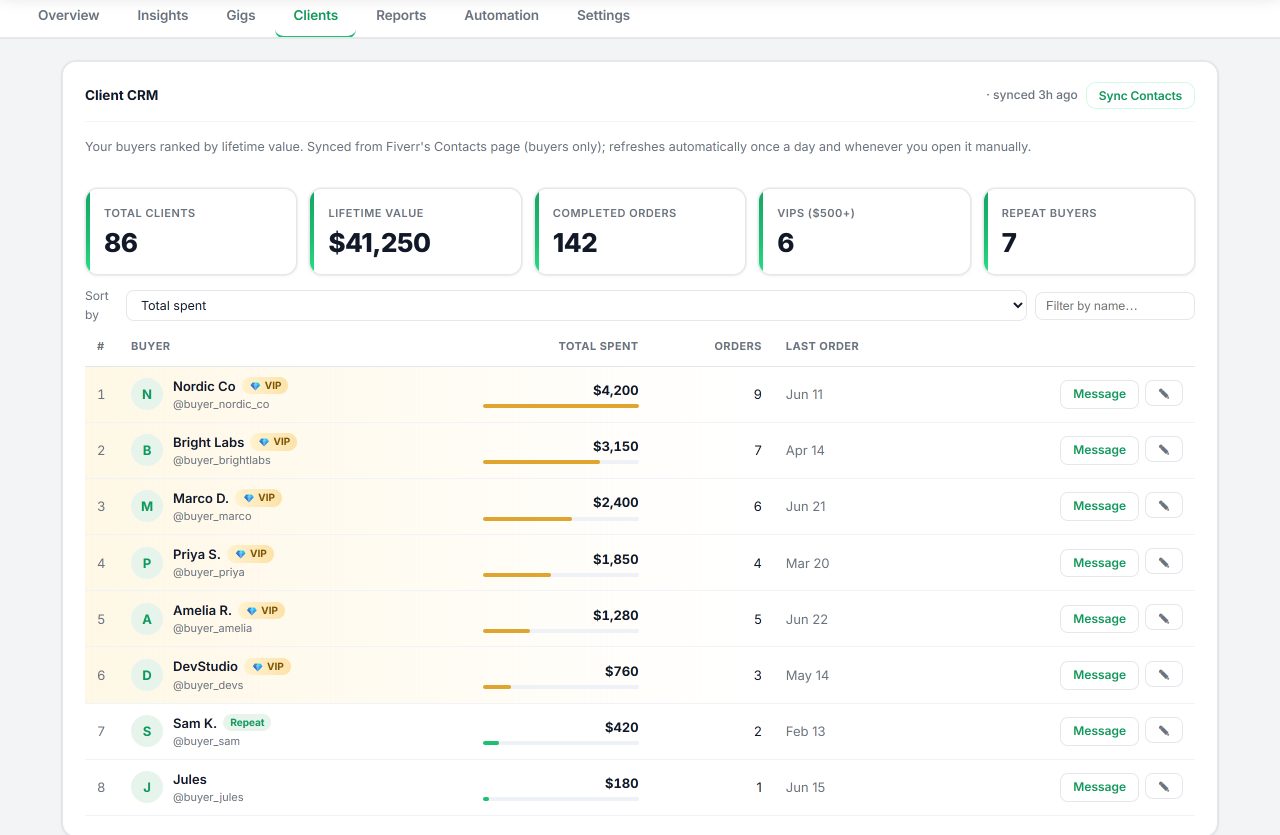
Seller OS keeps the context a good follow-up needs. Client records store notes, order history, and the last conversation locally, so a re-engagement message starts from what you actually did together instead of a blank page. The inbox assistant can draft the message; you edit and send it yourself.
The line it will not cross: it does not message buyers on its own and does not schedule sends. On Pro, monitors can alert you to unread messages while Chrome is open, so a reply window does not quietly expire.
How to Follow Up With a Fiverr Buyer questions
How many times should I follow up with a Fiverr buyer?
Two messages after a quote, one after a delivery, and one re-engagement per quarter. That is the shape, not a law. If nothing changes between messages, do not send the next one. Each follow-up should carry a new date, file, option, or reason, because a repeated nudge adds pressure without adding information.
How long should I wait to follow up after a quote?
Two or three business days gives a buyer room to think without letting the conversation go cold. When you do follow up, add something: availability, a smaller option, or a deadline that matters to the project. If the custom offer has an expiry, mention it once, then let the stop rule end the chase.
Should I follow up after delivering an order?
Yes, once, on the day you deliver. Confirm where the files are and ask whether anything needs a small fix before use. On a standard order the client has three days to accept, request revisions, or extend review before it auto-completes. If there is an obvious next deliverable, name it once and stop.
How do I re-engage an old Fiverr client?
Send one message built around a reason that belongs to their world: a new capability, a seasonal deadline, or a gap in the work you did together. Reference the project specifically, offer options rather than a pitch, and include an easy exit line. If you have Seller Plus, a repeat-client coupon can carry the same message with a deadline attached.
Follow up with a reason, then stop.
Pick the moment, add one new piece of information, and set your stop rule before you send.