 Seller OS
Learn copywriting for Fiverr in 30 days
Thirty days will not make you a veteran copywriter, but they can take you from a blank page to a publishable Fiverr offer with real samples behind it. The plan below is built around output: every week ends with pieces of writing a buyer can read, because buyers hire proof, not study histories.
Expect four phases: fundamentals in week one, five spec pieces in weeks two and three, a niche and an offer with prices in week four, and first outreach at the end. This page is the training plan; the category guide for copywriters covers how the niche itself reads on Fiverr.
Free plan available. Local-first data. Human review on every change.
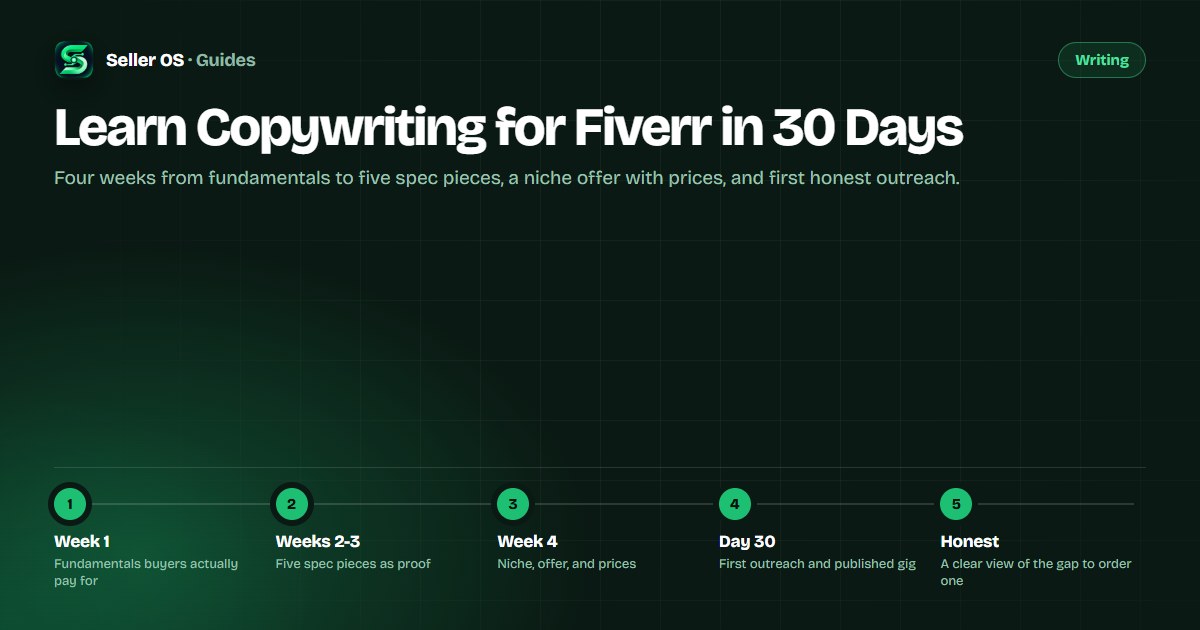
What the 30 days cover
The plan assumes one to two focused hours per day and no prior client work. Each phase produces something tangible: notes and teardowns in week one, finished spec pieces in weeks two and three, a niche decision and priced offer in week four, and sent outreach on the final days. If you miss a day, extend the calendar rather than skipping the output, because the portfolio is the whole point.
Read this plan alongside a general skill-building habit. The guide to learning new skills for gigs covers practice routines that transfer directly to daily writing drills.
Days 1-7
fundamentals: headlines, offers, proof, calls to action, and ten teardown notes
Days 8-18
five spec pieces: one per format, rewritten twice each before it counts as done
Days 19-25
niche and offer: pick an audience, name the deliverables, and set tier prices
Days 26-30
publish and outreach: live gig, portfolio links, and first honest pitches
Days 1-7: fundamentals that buyers pay for
Copywriting fundamentals are smaller than most beginners expect. Learn to write a headline that names the reader and the outcome, a lead that opens with the reader's problem rather than your credentials, bullets that translate features into outcomes, a proof section with specifics instead of adjectives, and a call to action that asks for one thing. Practice each in isolation before combining them.
Spend half of week one on teardowns: take a landing page, an ad, or a product description, rewrite its headline three ways, and note in one sentence why each version might win. Ten teardowns teach you more about buyer psychology than ten chapters of theory, and the notes become the voice you later use in gig FAQs and buyer messages.
- Headlines that name the reader and one concrete outcome.
- Leads that open on the reader's problem, not your biography.
- Bullets that turn each feature into a result the buyer can picture.
- Proof sections built on specifics, numbers, and named details.
- Calls to action that request exactly one next step.
Days 8-18: five spec pieces that act as proof
Spec pieces are unpaid samples written for imaginary or real businesses, clearly labeled as practice. Write one per format so your portfolio covers the range buyers search for: a landing page section, a short email sequence, a product description set, an ad set with three angles, and a website homepage rewrite. Pick real businesses you admire as subjects, but mark every piece as a spec exercise.
Rewrite each piece twice before it counts. First drafts nearly always run long, bury the offer, and repeat the same adjective; the second pass cuts and the third sharpens the headline and call to action. Two strong pieces beat five rough ones, so if time runs short, finish three formats well rather than five poorly.
- Landing page hero plus two sections for an invented or admired product.
- Three-email welcome sequence with subject lines and one goal per email.
- Five product descriptions showing features turned into pictured outcomes.
- One ad set with three different angles on the same offer.
- Homepage rewrite of a real small business page, labeled as spec work.
Days 19-25: niche, offer, and price
Generalist copywriters compete with everyone; a niche lets a buyer believe you already understand their customers. Pick the audience your spec pieces already serve best, such as fitness coaches, SaaS tools, real estate agents, or Etsy sellers, and angle the gig toward their recurring need. Your niche can widen later once reviews exist.
Turn the niche into an offer with named deliverables and tier prices: a starter tier with one short deliverable, a standard tier with the most-requested package, and an advanced tier with strategy plus copy. Describe how words convert on the page itself, since your gig description is itself a writing sample. The conversion guide shows how buyers read that page.
| Tier | Deliverable | Revision rule |
|---|---|---|
| Starter | Hero section plus one supporting section | One revision round |
| Standard | Full short landing page up to five sections | Two revision rounds |
| Advanced | Landing page plus three-email follow-up | Two rounds plus a review call |
Days 26-30: publish, outreach, and the honest wait
Publish the gig on day 26 with your three best spec pieces in the portfolio and gallery, then start outreach the same day. Good first outreach is specific and short: name the prospect's page, point at one concrete weakness, and offer the fix with a link to the matching spec piece. Send a small number of tailored messages rather than dozens of identical ones.
Be honest about the gap to a first order. A thirty-day writer competes against sellers with hundreds of reviews, so the first order may take weeks of visibility, and early jobs may be small and fussy. That is normal and not a verdict on your writing. Keep producing one new spec piece per week while you wait, because every addition raises the odds for the next visitor.
Where Seller OS helps
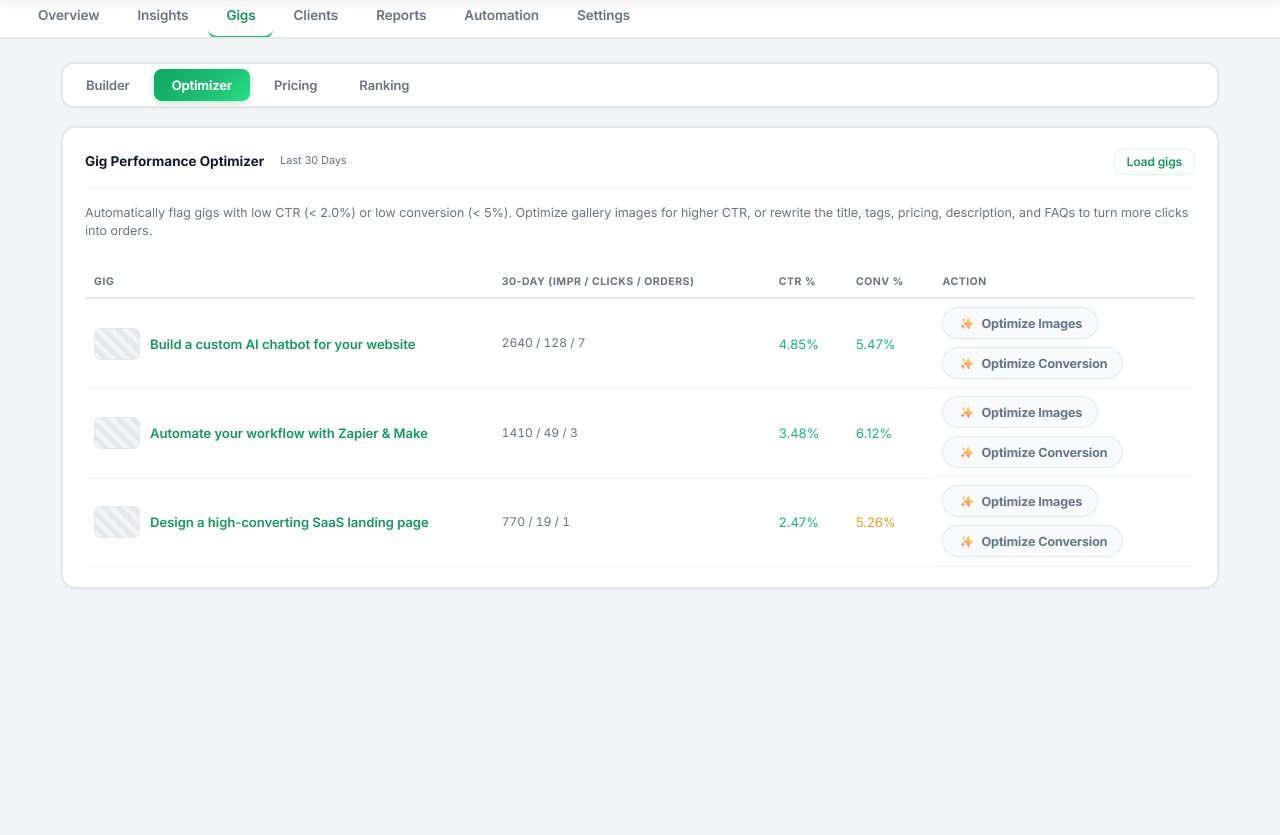
Seller OS supports the listing side of this plan. Once your spec pieces exist, the gig builder drafts your packages, requirements questions, and FAQs from your niche and deliverables, and the gig optimizer reviews the live copy against its own performance data so later edits follow evidence.
The writing itself stays entirely yours. The extension never generates your portfolio pieces, never messages buyers, and never publishes anything; it drafts listing fields for your review, and a person completes every Save, Continue, or Publish action. Your drafts and records stay in Chrome local storage.
Learn Copywriting for Fiverr in 30 Days questions
Can I really learn copywriting for Fiverr in 30 days?
You can reach a publishable offer with real samples in thirty focused days, but not veteran judgment. The plan produces five spec pieces, a niche, priced tiers, and first outreach. Expect the first order to take additional weeks of visibility, and keep adding one spec piece per week while you wait.
What should my copywriting portfolio show with no clients?
Show five spec pieces across formats buyers search for: a landing section, an email sequence, product descriptions, an ad set, and a homepage rewrite, each labeled as practice work. Rewrite each twice before publishing. Two polished pieces persuade more than five rough drafts, so finish fewer formats well if time runs short.
Should a new copywriter pick a niche immediately?
Yes. A niche lets a buyer believe you understand their customers, which a generalist listing cannot do without reviews. Choose the audience your spec pieces already serve best and angle the gig at their recurring need. You can widen the positioning later once completed orders provide broader proof.
How should I price copywriting with no reviews?
Open with named deliverables per tier rather than hourly rates, starting modestly while your proof is spec work. A starter tier with one short deliverable, a standard tier with the common package, and an advanced tier with strategy plus copy gives buyers a clear ladder. Raise tiers one at a time as completed orders accumulate.
Write the proof, then publish.
Five spec pieces first, then the gig they earn you.