 Seller OS
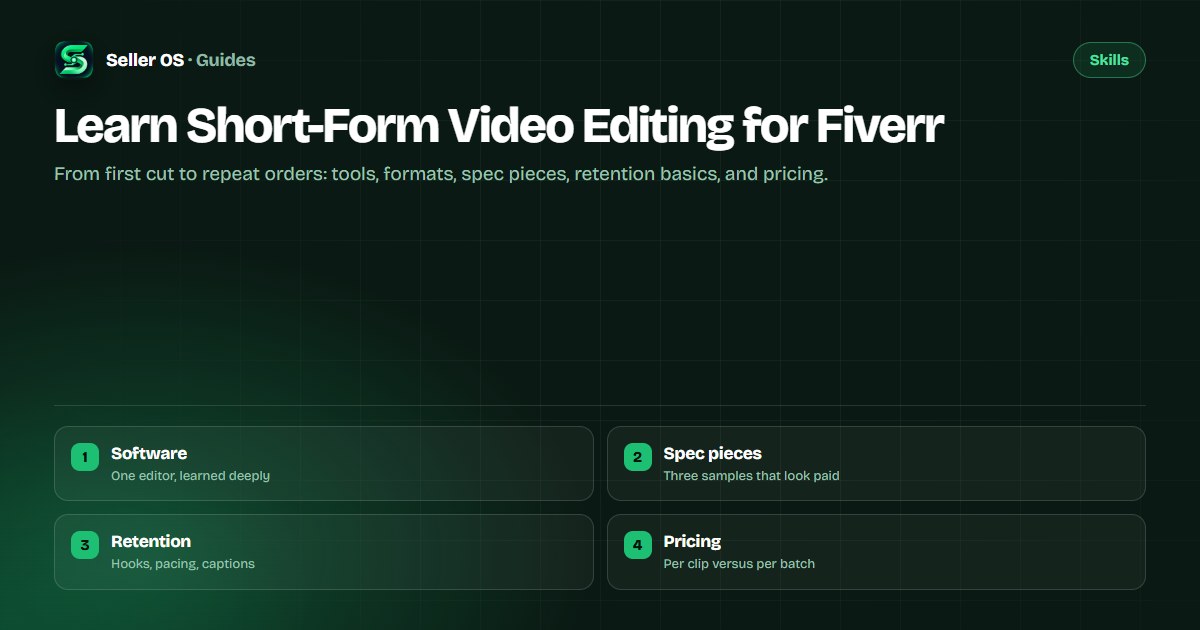
Learn short-form video editing for Fiverr, from cuts to clients
Short-form video is steady, repeatable Fiverr work. Brands and creators need reels, shorts, and TikToks every week, and they judge editors on one thing: whether viewers keep watching. If you can learn pacing, captions, and clean delivery, you can sell this skill within weeks.
This roadmap covers the software, the formats buyers expect, three spec pieces to build, the retention basics that separate amateurs from earners, and how to price per clip versus per batch. It ends with a delivery workflow that keeps revision loops short.
Free plan available. Local-first data. Human review on every change.
Software and formats to learn first
Pick one editor, CapCut, Premiere Pro, or DaVinci Resolve, and learn it deeply instead of sampling three. Buyers do not care which tool you use; they care that exports are sharp, captions are clean, and deadlines hold.
Learn the three formats buyers order: talking-head reels with captions, b-roll montages timed to audio, and repurposed long-form cutdowns. Each has its own pacing, and your portfolio needs one of each. Put export specs such as 9:16 framing and caption style options in your gig FAQ.
Practice by recreating reels you admire shot for shot with your own footage. Copy the cut points, caption timing, and music drops exactly, then compare your version against the original. This single exercise teaches pacing faster than any course, and the recreations stay private so nothing in your gallery misrepresents paid work.
Retention basics that win repeat buyers
Retention is the skill buyers pay for. Open with the payoff in the first two seconds, cut every pause that does not earn its place, and change the visual every few seconds with b-roll, zooms, or text.
Captions carry silent viewers, so style them to the niche: bold kinetic words for finance and fitness, calm lower-thirds for coaches. Watch your own edits on mute at full speed; anywhere you feel the drag, a viewer leaves. The video category guide shows how buyers describe this work.
- Hook first: state the payoff before the context, inside two seconds.
- Cut tight: remove filler words, pauses, and repeated points without mercy.
- Caption everything: styled, synced, and readable at phone size.
- Vary the frame: b-roll, punch-ins, or graphics every few seconds.
Three spec pieces that look like paid work
Spec pieces are self-assigned briefs with real constraints: a 30-second talking-head reel, a 20-second product montage, and a 45-second podcast cutdown. Give each a fictional client, a deadline, and one revision, then treat them like paid orders.
Publish each with a short note on the choices you made: why the hook opens where it does, where retention dips were fixed, and what the caption style serves. That commentary is what turns samples into proof. The YouTube editors page covers adjacent long-form proof.
Per-clip versus per-batch pricing
New editors usually sell per clip, which is simple but caps income at your hours. Batch pricing, ten or thirty clips a month, trades a lower per-clip rate for predictable volume and fewer sales conversations.
Open with per-clip tiers to earn reviews, then move steady buyers toward batches. Name revision counts in every tier; open-ended revisions on video work are how editors burn out by week three.
| Model | Buyer | Watch out |
|---|---|---|
| Per clip | One-off tests and trials | Hours cap your income fast |
| Weekly batch | Creators posting constantly | Needs a strict revision count |
| Monthly retainer | Brands with calendars | Scope must fence formats and length |
A delivery workflow that prevents revision loops
Most revision pain comes from unclear inputs, not bad editing. Require the script or selects, reference links, brand fonts, and caption style before the clock starts, using Fiverr's requirements questions to collect them. Fiverr describes how order requirements work in the Help Center.
Deliver in rounds: a draft with timecoded notes requested, then one locked revision pass. Keep project files organized so batch clients get consistent output month after month, and confirm music licensing sources in writing before anything publishes.
Where Seller OS helps
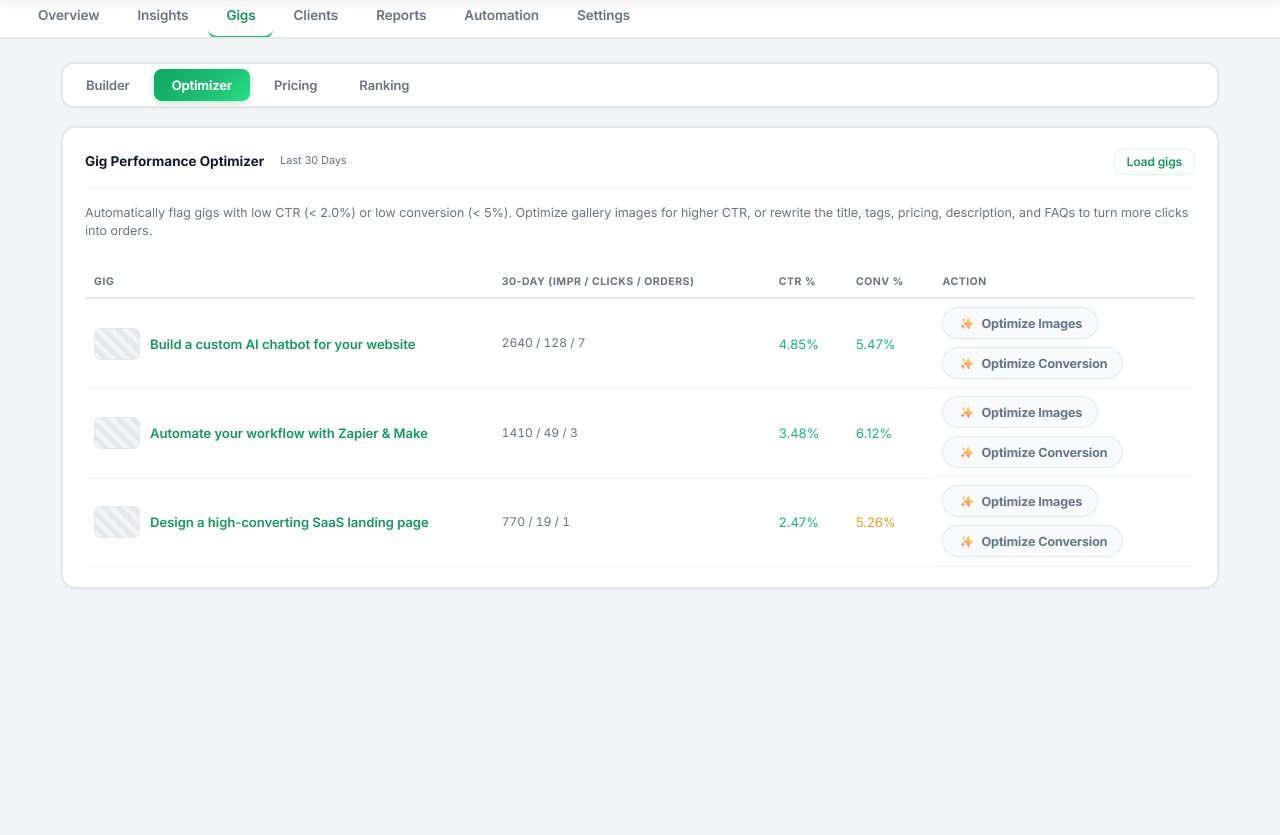
Once the editing gig is live, the optimizer reviews its copy, gallery order, and conversion signals against the gig's own performance data. Small fixes, thumbnail order, FAQ wording, and package names, compound for video sellers.
Batch clients are tracked locally with notes and order history in Chrome storage, so repeat buyers get consistent output without their details leaving your machine.
Learn Short-Form Video Editing for Fiverr questions
How long does it take to learn short-form editing well enough to sell?
Around four to six weeks of daily practice if you already watch a lot of short-form content. Learn one editor, copy the pacing of ten reels you admire shot by shot, then build the three spec pieces from this roadmap. Buyers judge the samples, so publish once the samples look like paid work.
CapCut or Premiere Pro for Fiverr reels work?
Either earns. CapCut is free and fast to learn, with caption and template flows that suit high-volume reels. Premiere Pro handles heavier projects, mixed sources, and precise color better. Pick one, learn it deeply, and mention it in the gig FAQ so buyers with existing project files know you fit.
How many portfolio pieces do I need before publishing?
Three strong pieces beat ten uneven ones: a talking-head reel, a product montage, and a cutdown. Each should match one format buyers order, with a note on the editing choices behind it. Replace concept work with paid samples as orders land, keeping the gallery to your best recent work.
Should I charge per clip or per batch?
Start per clip to keep scoping simple while you earn reviews, with revision counts named in every tier. Move steady buyers to weekly or monthly batches once trust exists, since batches trade a lower per-clip rate for predictable volume. Retainers are where editing income stabilizes, not one-off clips.
Cut three spec reels, then publish.
One talking head, one montage, one cutdown: that is the portfolio that earns the first order.