 Seller OS
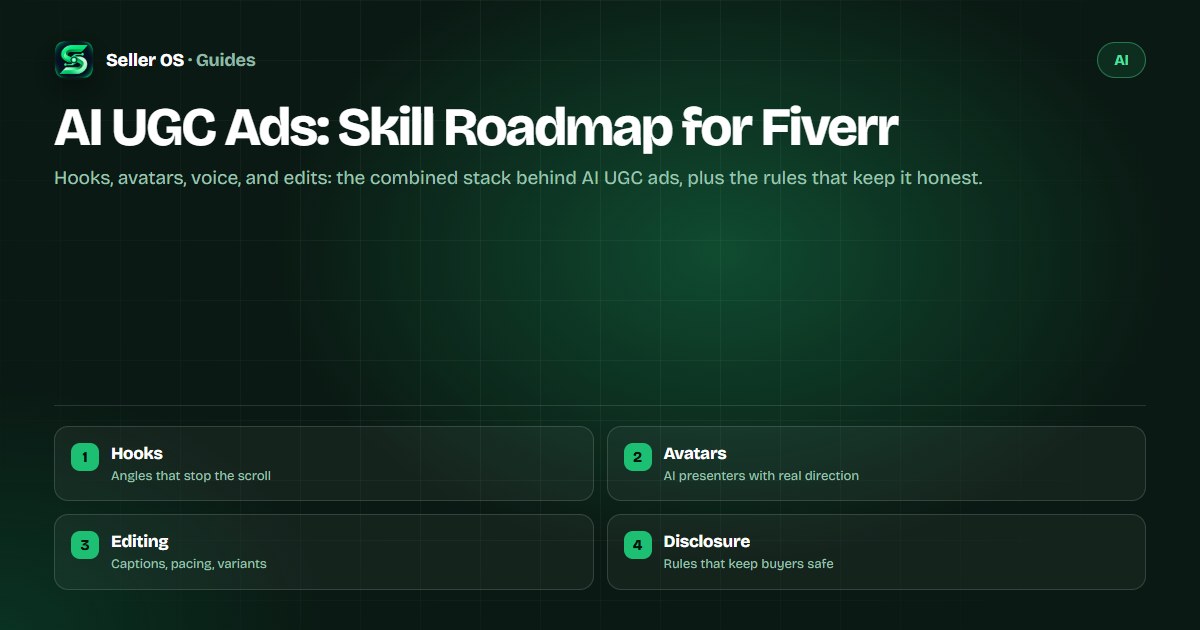
AI UGC ads for Fiverr: the skill roadmap from hooks to delivery
AI UGC ads blend two crafts: direct-response copy that stops the scroll, and AI production, avatars, voice, and editing, that ships variants fast. Brands buy them because one concept can become twenty tested creatives in days. This roadmap teaches the stack in that order: message first, machine second.
You will learn hook writing, AI avatar and voice tools, short-form editing, and the disclosure and ethics rules that keep buyers safe. It closes with deliverables and a pricing ladder, so the skill lands as a gig rather than a hobby.
Free plan available. Local-first data. Human review on every change.
What buyers mean by an AI UGC ad
A UGC ad looks like a customer talking, not a brand announcing. Buyers order a hook, a 20 to 40 second script, an avatar or creator-style read, captions, and several aspect-ratio variants for testing.
Your job spans the full chain or a slice of it: scripts only, production only, or concept-to-variants. State the slice in the gig title so media buyers know whether you write, produce, or both. The short-form roadmap covers the editing half in depth.
Know who orders this work: direct-to-consumer brands testing creatives weekly, agencies white-labeling production, and affiliates needing compliant angles. Agencies pay the steadiest, brands pay the most per concept, and both reward sellers whose variants arrive labeled, captioned, and ready to upload.
Hook writing: the highest-paid slice
Hooks decide whether the ad gets watched, so learn angles before tools: problem calls, curiosity gaps, demonstrations, and objections answered on camera. Write ten hooks per brief, then keep the three with the sharpest payoff.
Study reviews and comments in the buyer's niche for the exact words customers use, and put those words in the first line. A generic hook with great production still loses to a sharp hook with plain production.
- Call out the buyer: name who the ad is for in the first second.
- Promise one payoff: a single result, not a list of features.
- Use customer words: lift phrasing from reviews and comments.
- Write ten, ship three: volume at draft stage, discipline at delivery.
Avatars, voice, and editing
Learn one avatar generator and one voice tool well enough to direct them: framing, gesture timing, pronunciation fixes, and pacing. The difference between cheap-looking output and watchable output is direction, not software.
Finish with real editing skill: captions synced to speech, jump cuts on breath points, b-roll over claims, and end cards with the offer. Deliver variants buyers test with: three hooks times one body is the standard starter set.
Disclosure and ethics rules
AI-generated ads sit inside advertising rules that vary by platform and country, and several require clear disclosure of synthetic or sponsored content. Tell buyers upfront when a creative uses AI presenters or voices, and place that disclosure in the delivered files where their ad manager expects it.
Keep consent in writing for any real likeness, voice clone, or testimonial-style script, and refuse briefs that fake reviews, impersonate real people, or make claims the product cannot support. This is general advertising practice, not legal advice; buyers remain responsible for compliance, and Fiverr's policies are published in the Help Center.
Deliverables and a pricing ladder
Sell testing sets, not single videos: a concept with three hook variants in two aspect ratios gives media buyers something to optimize. Name revision counts and turnaround per tier, since variant work multiplies revision surface fast.
Open with a single-concept set to earn reviews, then ladder to monthly creative packs for brands that test constantly. Monthly packs are where this skill compounds, because one good concept becomes next month's control.
| Tier | Includes | Suits |
|---|---|---|
| Script pack | Three scripts with ten hooks each | Buyers with their own editors |
| Single concept | One script, avatar read, captioned edit | First test orders |
| Testing set | Three hooks, two ratios, end cards | Media buyers with budgets |
| Monthly pack | Fresh concepts on a cadence | Brands testing constantly |
Where Seller OS helps
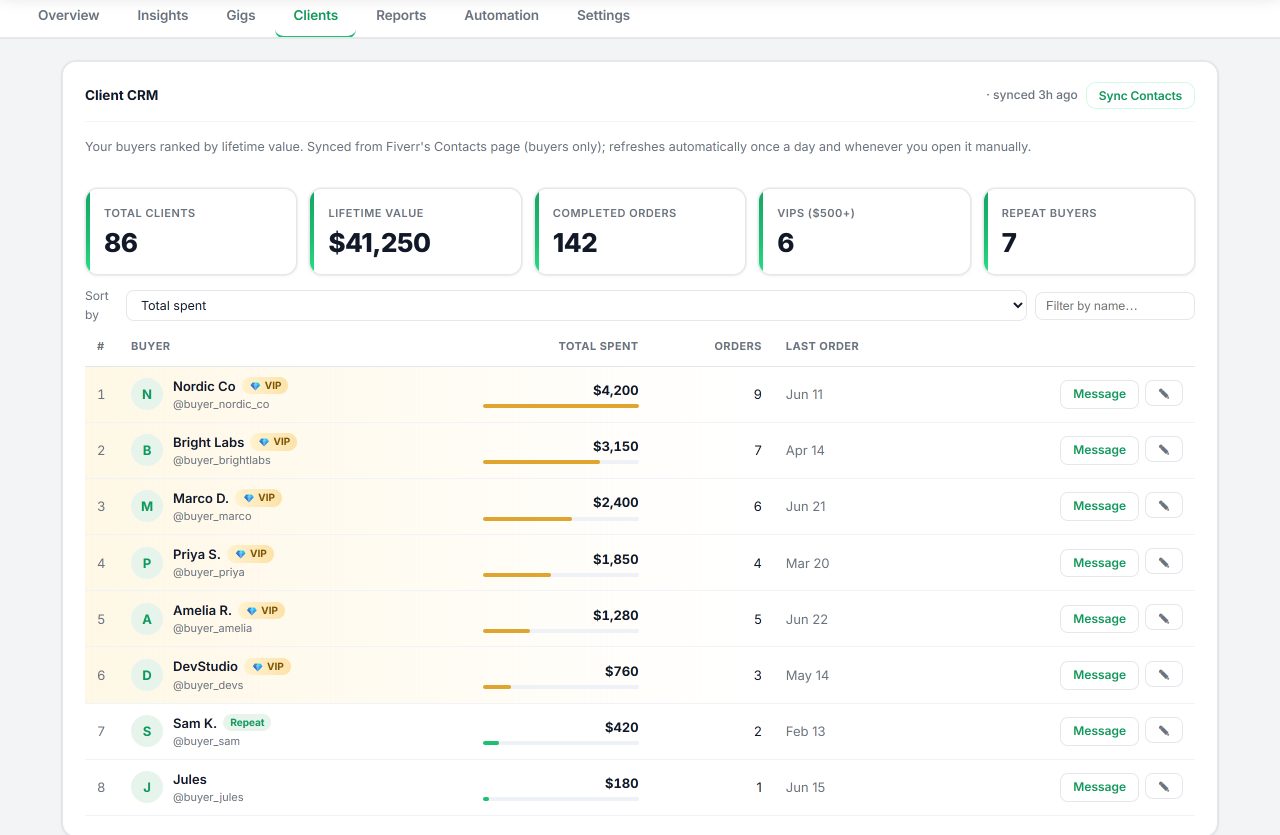
UGC sellers juggle concepts, variants, and buyer feedback, and the client records in Seller OS keep that organized: notes, past orders, and follow-ups in one local workspace.
Drafts, scripts, and hook lists stay in your browser until you send them, and nothing publishes to Fiverr on its own. A person reviews every message and delivery before it leaves.
AI UGC Ads: Skill Roadmap for Fiverr questions
Do I need to show my face to sell AI UGC ads?
No. Avatar-led production is the point of this niche, and many buyers prefer it for testing volume. Some briefs still ask for real creator reads, which you can decline or subcontract honestly. State in the gig whether you deliver AI presenters, real reads, or both, so expectations match.
Which AI avatar and voice tools should I learn first?
Pick one avatar generator and one voice tool and learn to direct them well, since tools change monthly but framing, pacing, and pronunciation repair transfer everywhere. Judge tools by output quality at phone size and export flexibility. Your editing skill and hook writing matter more than any single generator.
Are AI UGC ads allowed on major ad platforms?
Generally yes, with disclosure rules that vary by platform and country for synthetic or sponsored content. Build disclosure into your delivery process and keep buyers responsible for final compliance. Refuse briefs involving fake reviews or impersonation. Treat platform policies as moving targets and recheck them per campaign.
How is AI UGC different from regular short-form editing?
Editing is one slice of the stack. AI UGC adds hook and script writing, synthetic presenter and voice direction, and variant logic for ad testing. Editors deliver one finished video; UGC sellers deliver a testable set of hooks, bodies, and ratios. That testing structure is what media buyers pay the premium for.
Write hooks first, produce second.
Ten practice hooks and one avatar-led concept: that is the sample set that sells this gig.