 Seller OS
Fiverr and AI: how sellers stay valuable
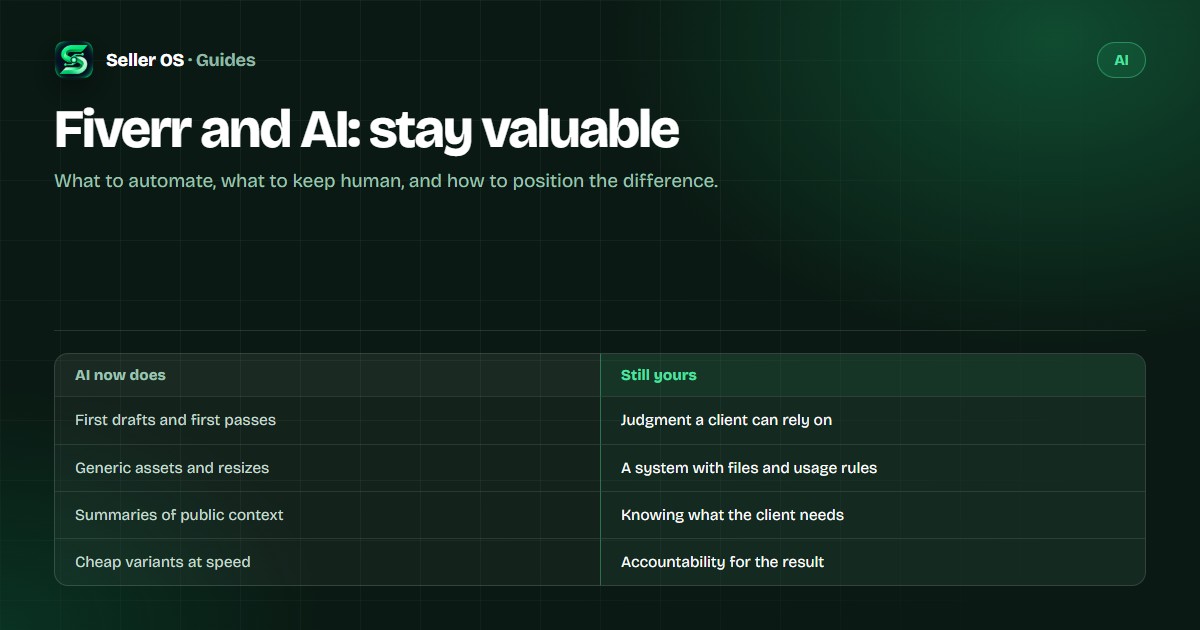
AI turns a brief into a passable first draft before you finish reading it. Your buyer can run the same tool, which is why the draft alone no longer sells. What stays paid is judgment, accountability, client context, and the final quality check — the parts someone has to answer for, and that someone is you.
Free plan available. Local-first data. Human review on every change.
What AI changes about Fiverr work
First drafts of copy, thumbnail concepts, brief summaries, basic image edits, and routine reply outlines now cost seconds. Buyers can generate those themselves. When a deliverable is a generic first draft, its market price drifts toward zero, and sellers who only pass text through a tool feel that first.
The middle of the market is what gets squeezed. The simple, low-context task is exposed; work that needs a decision, a relationship, or a result still sells.
What AI does not replace
Four things keep buyers coming back, and none of them are prompt-shaped.
Judgment
Choosing what not to do is a service. A client with a rough idea needs someone to say the landing page needs one clear offer, not five. Tools generate options; judgment selects one and can explain why.
Accountability
No tool answers for a late delivery, a broken export, or a refund conversation. Buyers pay for a person who shows up when the outcome is not perfect.
Client context
Knowing that this buyer wants British spelling, dislikes stock photos, and reorders every quarter is relationship knowledge. It lives with you, not in a prompt, and it makes your deliverable fit better than a generic one ever will.
Outcome ownership
AI produces assets; it cannot own a result. Position the gig around the outcome, such as a working funnel or a finished brand kit, and the tool becomes an implementation detail rather than the product.
Reposition around the outcome
Sell AI-assisted work openly: you use modern tools, you review the output, and the client gets a faster turnaround. Move toward niches where context matters, because brand voice and technical subject matter resist commoditization. Then productize outcomes: define the deliverable, the revisions, and what finished means, so the conversation is about the result rather than the tool.
A quick test: if your gig description could be copied to a hundred other sellers word for word, it is exposed. If it names the buyer's situation and the result they get, it is not. For the practical workflow of rewriting a gig with AI help, see how to use AI to optimize a Fiverr gig.
Using AI safely in client work
Speed is not worth a confidentiality problem. Keep confidential client material out of tools you have not cleared with the client, verify facts, names, and quotes because generated output can be confidently wrong, and review every output before it goes out. Disclose AI assistance when the client's expectations or platform rules call for it, and keep client files on your machine.
Mind third-party terms too. Your provider's usage rights and data-handling rules are between you and that provider. Seller OS bundles no AI credits; it works with the browser AI session or provider account you choose, and it keeps the review step in your hands.
A calm position, not a panic
The sellers who struggle most with AI are usually the ones who ignore it or hand it the wheel. The middle path holds up: AI for the drafting and research layers, your judgment for the decisions, and a clear answer when a client asks what they are paying for. That is a defensible business whether or not next year's tools are better.
Where Seller OS helps
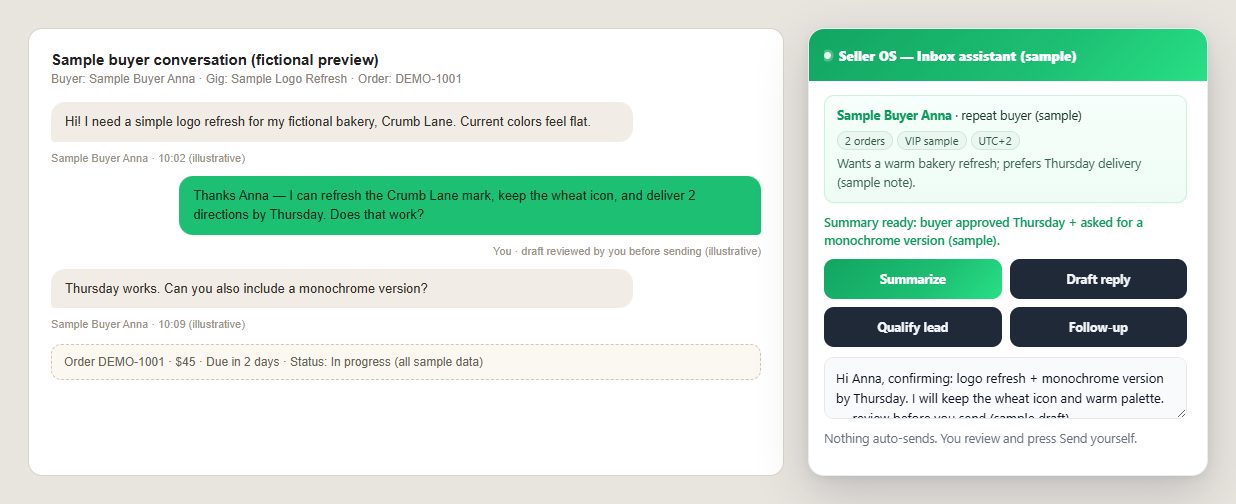
Seller OS is built around that middle path. It brings AI-assisted drafting into the Fiverr workflow with human review at every step: brief and inbox replies arrive as drafts you edit before sending, and the one-shot Gig Builder turns an idea or competitor URL into a structured gig draft that fills the wizard only after you approve it. You bring your own AI provider account, no AI credits are bundled, and nothing sends or publishes without you.
Read the full Fiverr seller tools guide for how drafting, gig work, and monitoring fit together, or see the Fiverr SEO tool for the ranking side of the workflow.
Fiverr and AI questions
Will AI replace Fiverr sellers?
Not as a whole. AI reduces the value of generic, low-context deliverables, but buyers still pay for judgment, accountability, and someone who owns the outcome. The sellers most affected are those competing only on producing a first draft.
Which parts of a Fiverr order should stay human?
The decisions and the final check: scoping the work, choosing the direction, verifying facts, reviewing the deliverable, communicating with the buyer, and taking responsibility for delivery. Drafting and research can be assisted.
Can I use AI tools for client work on Fiverr?
Generally yes, if you respect the client's confidentiality, your provider's terms, and Fiverr's expectations for original, accurate work. Do not upload confidential client material without permission, and always review output before delivery.
Does Seller OS include AI credits?
No. Seller OS is a Chrome extension that drafts inside your Fiverr workflow using the AI session or provider account you connect. Provider accounts and credits are separate, and the plans do not include third-party AI credits.
Stay in charge of the work AI changes.
Draft faster with AI and keep the judgment, the review, and the final click human.