 Seller OS
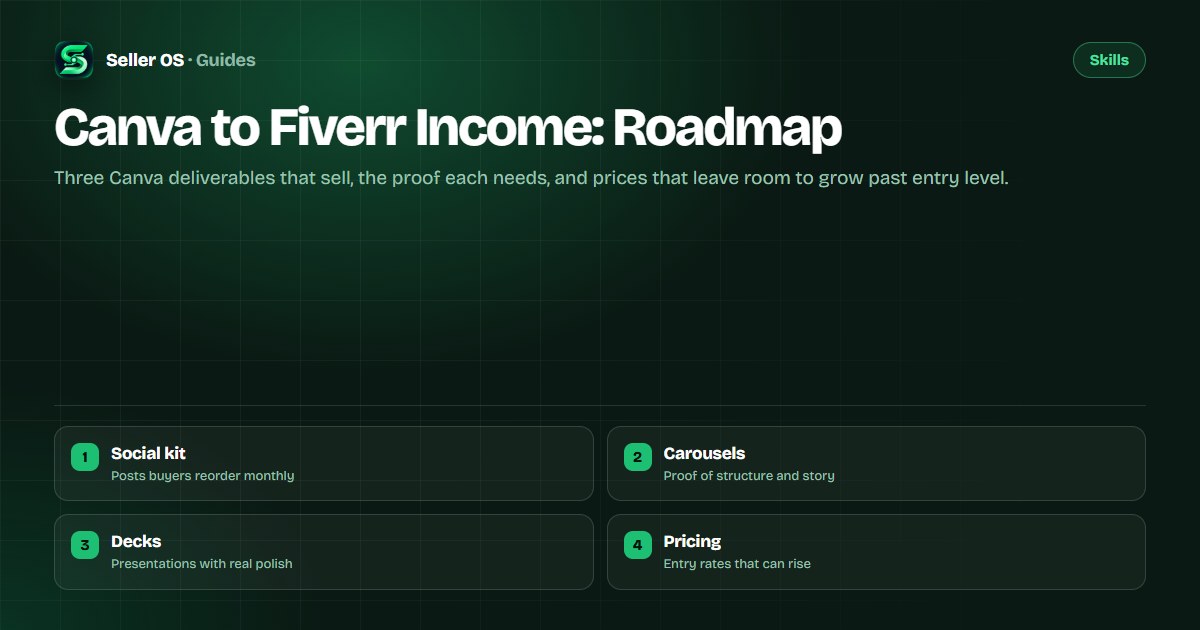
Canva to Fiverr income: a roadmap from templates to paid gigs
Canva is the fastest on-ramp to design income on Fiverr: the tool is free, the learning curve is gentle, and small businesses need a constant stream of posts, decks, and carousels. The catch is competition, which is fierce at the bottom. This roadmap shows how to rise above template-flipping with real deliverables.
You will build three sellable offers, a social kit, a carousel pack, and a presentation makeover, learn where templates end and custom work begins, assemble proof without clients, and price so the gig can grow past entry level.
Free plan available. Local-first data. Human review on every change.
Three deliverables that actually sell
Sell outcomes, not files. A social media kit with profile graphics plus a month of templated posts, a carousel pack with a consistent story arc, and a pitch-deck makeover each solve a named pain a buyer already feels.
Each deliverable should include the source file, an export set, and a one-page usage note. That trio turns a small file drop into a small service buyers reorder. The graphic designers page shows how buyers compare these offers.
Add one reorder-friendly extra to each offer: a month of caption-ready post templates for the kit, alternate cover frames for the carousel pack, and speaker notes formatting for the deck. Extras like these turn one-time buyers into repeat orders without new scoping conversations.
Templates versus custom work
Templates are your starting blocks, never the product. Buyers can spot an unedited template in seconds, and reviews punish sellers who ship them unchanged. Customize type, color, layout rhythm, and imagery until the piece looks made for that buyer.
Be transparent in the gig about your process: custom-built in Canva from licensed elements, with commercial-use terms checked against Canva's published license before you promise anything about licensing. State how many unique concepts each tier includes so custom means something measurable.
Proof without clients
No client hires a designer with an empty gallery, so manufacture the gallery: redesign a real small business's posts as a concept piece, build a carousel for an imaginary launch, and rebuild an ugly public slide deck. Label each piece as concept work so the honesty becomes part of the brand.
Three to five pieces per deliverable is enough to publish. Lead with the strongest, keep styles consistent, and replace concept work with paid samples as orders land. The portfolio guide covers gallery mechanics in depth.
Pricing that leaves room to grow
Entry prices earn the first reviews, but the gig must graduate. Open with a basic tier per single design, a standard tier per set, and a premium tier per monthly kit, then raise the bottom tier after every ten strong reviews.
Watch for the trap of permanent bargain pricing: cheap gigs attract the most demanding buyers. A higher price with a smaller, clearer scope usually earns more per hour and better ratings. Point buyers at package detail rather than negotiating in chat.
| Tier | Includes | Purpose |
|---|---|---|
| Single design | One post or slide, two concepts | Earn first reviews |
| Content set | Eight to twelve matched pieces | The volume sellers live on |
| Monthly kit | Recurring posts plus tweaks | Retainer-style income |
Honest limits of a Canva-only offer
Canva covers most small-business design, but it stops at brand identity systems, complex illustration, and print production with bleeds and color profiles. Say so in the gig, and refer those briefs out instead of failing them.
Treat Canva as the first rung: Illustrator or Figma basics come next once income funds the learning time. Sellers who name their limits in public earn stranger trust than sellers who claim every skill. The skills ranking shows where design fits beside higher-ticket skills.
Where Seller OS helps
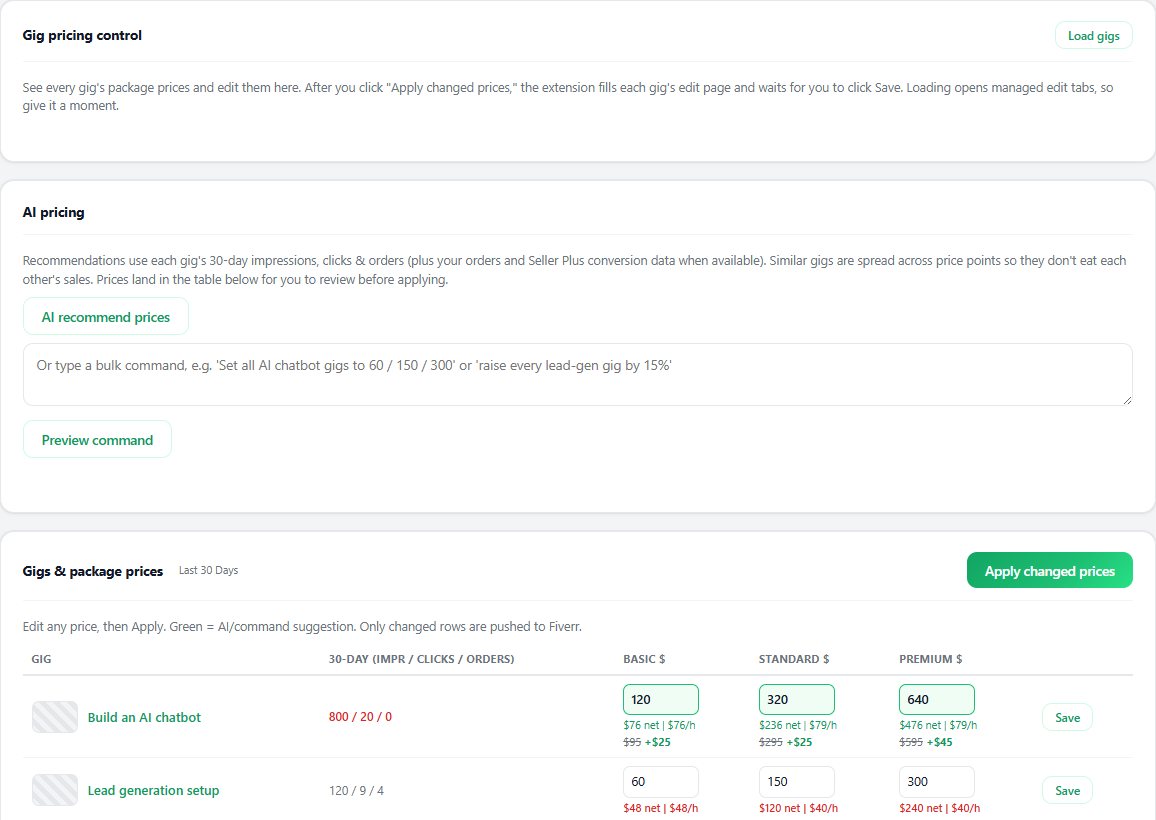
The pricing ladder above is easier to hold when the gig spells it out. Seller OS drafts tiered packages with named inclusions, so buyers compare scopes instead of haggling in chat.
Everything runs locally in your browser with review at every step: drafts, fills, and tracking, with each Save or Publish completed by you. No client data leaves the machine without your action.
Canva to Fiverr Income questions
Can I really earn on Fiverr with only Canva?
Yes, for defined deliverables like social kits, carousels, and deck makeovers, where buyers care about the result rather than the tool. Canva does not cover identity systems or complex print work, so name those limits in the gig. Proof quality decides more than software: a strong Canva gallery beats a weak portfolio from heavier tools.
How do I stand out among thousands of Canva sellers?
Narrow the offer to one buyer and one deliverable instead of selling generic design. Keep a consistent visual style across the gallery, show concept pieces labeled honestly, and spell out inclusions per tier. Most competitors sell vague design services; a scoped social kit or carousel pack with clear proof reads as the safer hire.
What should I charge for Canva work as a beginner?
Open with a modest single-design tier to earn first reviews, a mid tier per content set, and a premium monthly kit. Raise the bottom tier after every ten strong reviews and resist permanent bargain pricing, which attracts the hardest buyers. Smaller, clearer scope at a higher price usually earns more per hour.
When should I learn a second design tool?
When the briefs you must refuse start repeating: identity systems point to Illustrator, product and web interfaces point to Figma. Let paid Canva income fund the learning time rather than pausing earnings to study. Add the new tool as a second gig only after real samples exist.
Build three concept pieces this week.
One social kit, one carousel, one deck: publish the gig once the gallery looks like paid work.