 Seller OS
Fiverr copyright complaint: protect your account
Fiverr's intellectual property policy is blunt. Once a report with the relevant information arrives from a rights holder or an authorized representative, Fiverr removes or disables access to content that infringes copyright or trademark, and the enforcement framework states Fiverr reserves the right to permanently suspend accounts involved in infringement of intellectual property rights.
This guide covers the rules your gig images, portfolio, and deliveries have to meet, the records that protect you, and the order of operations after a notice lands. It does not promise restoration, because the outcome belongs to Fiverr. The steps below are practical advice; the notice you receive is the document that governs your case.
Free plan available. Local-first data. Human review on every change.
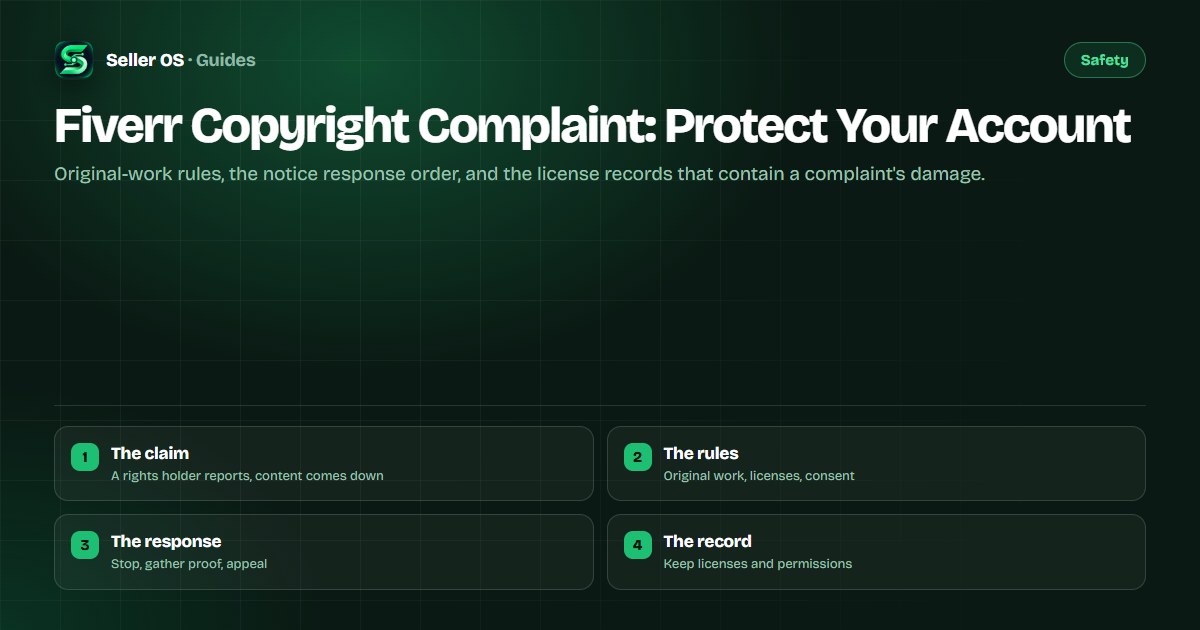
What Fiverr reviews when IP is reported
The enforcement page describes the process without ambiguity: once a report with all relevant information is received from a rights holder or an authorized representative, Fiverr will remove or disable access to content that engages in copyright infringement or trademark infringement. The same framework states Fiverr reserves the right to permanently suspend accounts involved in IP infringement.
The scope is wider than a single image. It covers gig images and gallery files, portfolio samples, delivered work, and the service itself when the service is built around copying material, cracked software, or removing a watermark or copyright mark without the owner's consent. A gig can be removed as enforcement too, and once a gig is removed its content cannot be accessed or reused for future gigs.
Original-work rules for gigs and portfolios
The published rules for visual assets are specific. Designs and photographs on your gig or in your portfolio must be your original work, though previously published work of your own is allowed. Using a design from a Fiverr order requires consent from the client who placed the order. Stock images must come from authorized agencies, cannot be delivered as-is, and can be used transformatively as part of a delivery.
| Asset | What the rules require |
|---|---|
| Gig image | Your original design or photo, or licensed stock used transformatively |
| Portfolio sample | Original work, or order work used with the client's consent |
| Delivered stock | Licensed from an authorized agency and transformed into the delivery |
| Client-supplied files | Confirm rights and permitted use in the order thread |
| Template-based work | Heavy reliance on templates limits eligibility for programs like Fiverr Pro |
The records that protect you later
Fiverr's guidance on responsible digital creation asks for transparency and proof: you must clearly state when you are using third-party content and cannot claim it as your own, you should review the license terms attached to external elements, and when you collaborate or use outside content, you should maintain a record that shows your right to use it.
An illustrative example shows why the paperwork matters. You license a font and a photo pack for a logo gig, and months later a complaint arrives about the logo. If the license receipt names the assets, the tier, and the permitted use, and the order thread shows the client approved the direction, the complaint has an answer. Without both, you are guessing at your own defense.
Keep the records where you can find them: a folder for license receipts and order confirmations, consent agreed in the order thread rather than in a side channel, and a simple note of which assets each gig uses. Five minutes of filing now is the difference between a quick response and a scramble.
When a copyright notice arrives
Read the notice before doing anything else. Fiverr's enforcement process says the account holder is notified of the reason for the removal along with information on the appeal process, so the notice itself names the content, the claim, and the path available to you. Work the sequence in order.
Fiverr's enforcement page describes the right to appeal through Customer Support, and the notice states the window that applies in your case, so check it and act inside it. The practical steps here are advice; the outcome is Fiverr's decision, and no guide can promise that an account or a gig comes back.
Read the reason
The notice names the content and the claim behind it.
Stop distributing it
Remove the asset from your gallery, profile, and any links.
Gather your proof
Original files, license receipts, consents, purchase records.
Use the appeal path in the notice
The enforcement article says the notice includes it.
Respond once, factually
State what you own, attach proof, skip arguing about motives.
Prevent recurrence
Rebuild with assets you created or can license.
Mistakes that escalate a complaint
The first mistake is ignoring the notice or assuming it will blow over. Re-uploading the same asset with a crop or filter is the second, because the underlying work is still the same work. Deleting files and messages to tidy up, arguing with the reporter, and blaming a client without a written record are all variations of making a response harder to build.
Patterns matter to enforcement. Fiverr's policy states that two gig removals within 60 days, at least 24 hours apart, may trigger an account warning, and warnings expire after 90 days but can affect your status in the level system. Repeat removals can escalate toward restriction or permanent suspension, which is why the gig removal guide and the warning system guide are worth reading before a second notice ever arrives.
Preventing the next copyright complaint
Audit the gallery first. Replace anything you cannot trace to your own camera, your own design file, or a named license. Then build the habit that keeps it clean: check the commercial-use terms before buying a template, confirm rights for client-supplied assets in the order thread, and skip request types that cannot be delivered lawfully, including watermark removal without consent.
Community material from September and October 2026, including a YouTube discussion of an account closed after an intellectual property case, keeps the concern visible, and the recurring subject is portfolio images that were never original. The published rules do not move with the discussion. Original work, documented licenses, and client consent are the whole game, and the stolen gig guide covers the other direction when someone copies you.
Where Seller OS helps
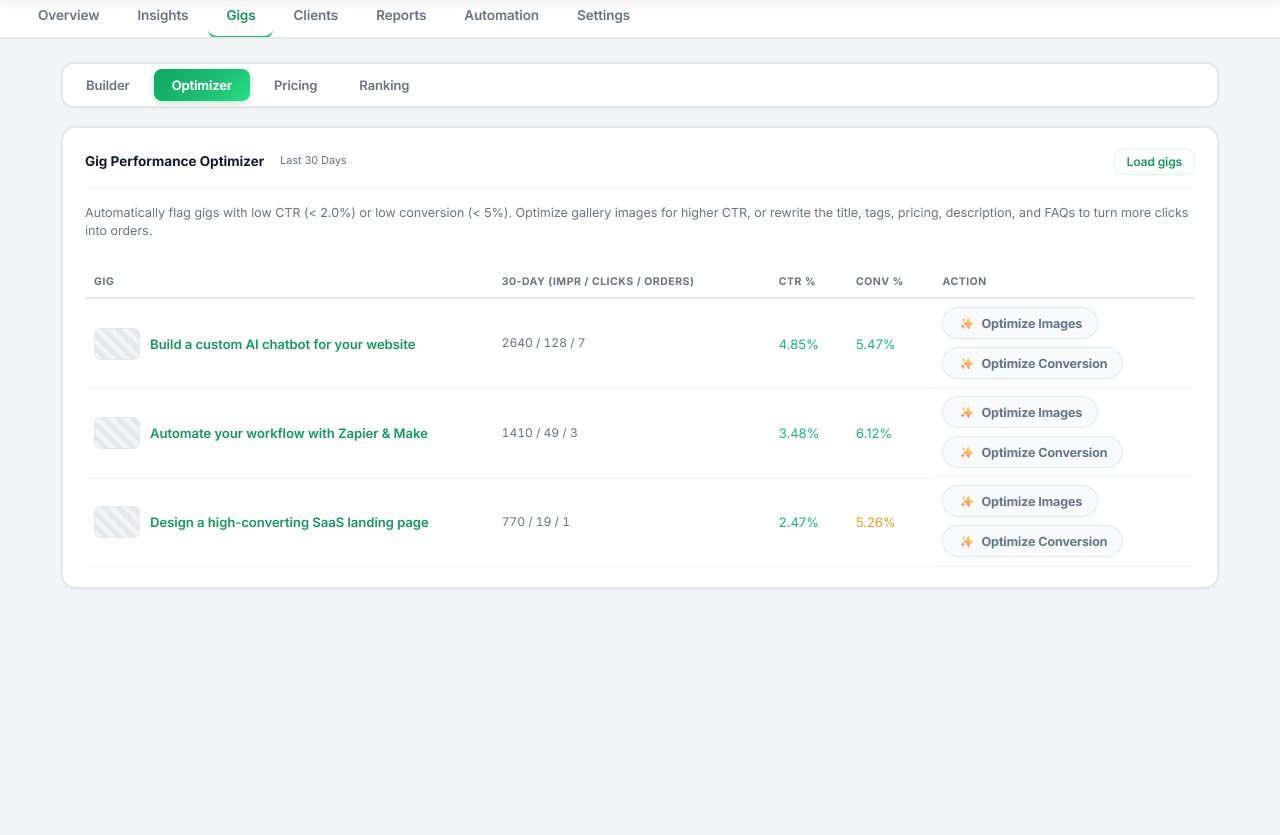
Seller OS keeps the working record in one place. Order messages, client notes, and history live in Chrome local storage, and the Gig Performance Optimizer reviews a live gig's copy and gallery against its own performance data and proposes changes, which helps when you are rebuilding a gallery after a takedown.
The limit is honest: it does not own rights, verify licenses, scan for infringement, or answer a complaint on your behalf. It drafts and fills; a person performs every final Send, Save, Continue, or Publish action. Free plan available; Pro is $12 monthly or $99 one time.
Fiverr Copyright Complaint questions
What happens if someone files a copyright complaint against my Fiverr gig?
Fiverr reviews reports from rights holders or their authorized representatives and removes or disables access to content that infringes copyright or trademark. The account holder is notified of the reason along with information on the appeal process. Outcomes depend on the case, and the policy states Fiverr reserves the right to permanently suspend accounts involved in IP infringement.
Can I use stock images in my Fiverr gig and portfolio?
Stock images must come from authorized agencies, and the rules say you cannot deliver stock as-is; it has to be used transformatively as part of your work. Keep the license receipts and check the commercial-use terms. A stock photo dropped into a gallery unchanged can read as someone else's work, which is what the rules are built to prevent.
Does Fiverr ban accounts for copyright infringement?
The published policy says Fiverr reserves the right to permanently suspend accounts involved in intellectual property infringement. Enforcement also includes removing or disabling content and gig removals, and repeated gig removals can trigger account warnings. The outcome depends on the specifics of the case, so no one can promise a particular result.
Someone copied my Fiverr gig images. How do I report it?
As the rights holder, you can report the content through Fiverr's intellectual property process, providing the information needed to identify your work and the infringing listing. Keep your original files, drafts, and publication dates ready as evidence. Customer Support can point you to the current reporting path, and the guide on stolen gigs covers the practical steps.
Document the work before a claim
Keep licenses, consents, and originals close, and answer a notice once with the proof in hand.