 Seller OS
Fiverr scope creep: how sellers should handle it
Scope creep is not one greedy request. It is a sequence of small, reasonable-sounding additions that slowly turns a defined order into a different, larger project at the original price. By the time you notice, part of the extra work is usually already delivered.
This guide shows the early signals, the checkpoint message that stops the drift in one reply, and how to convert additions into extras or custom offers. It also covers prevention in the package itself.
Free plan available. Local-first data. Human review on every change.
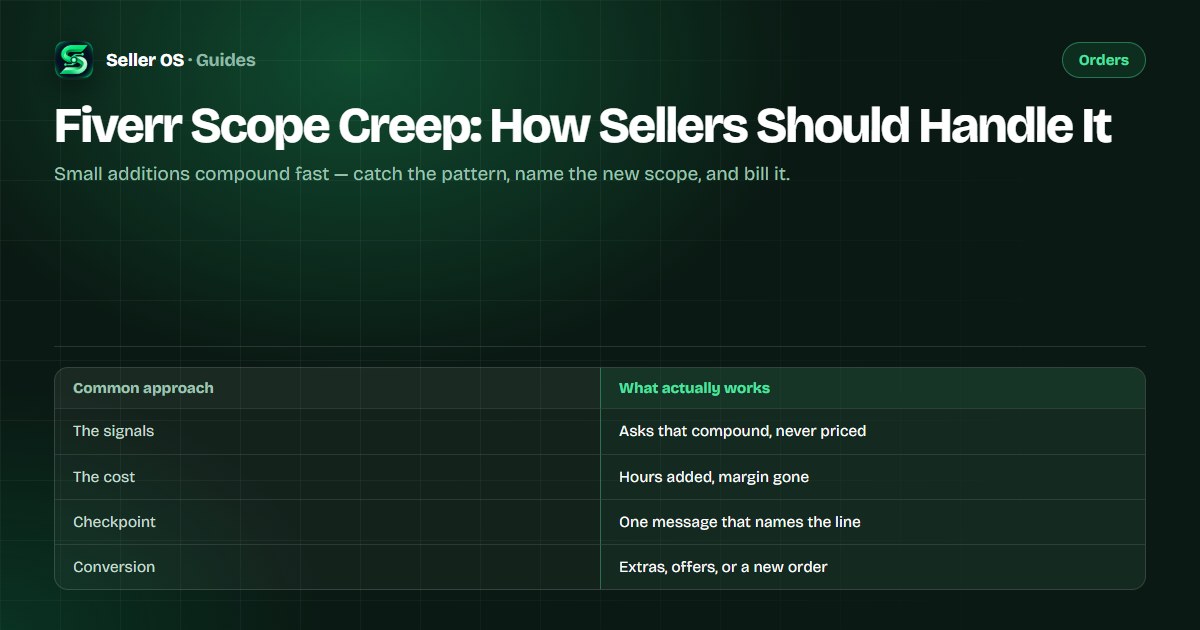
What scope creep looks like in an order
'One more paragraph,' 'same style, one extra page,' 'can you also drop it into the template' — each request is small enough to answer without thinking, and none of them is obviously unfair. The pattern only becomes visible in the total: extra hours, a slipping deadline, and a price that belongs to the order you accepted, not the one you are delivering.
Scope creep differs from revisions, which are part of the agreed package, and from a single free ask, which is one decision. Creep is what happens when those decisions are never made — the work accumulates because nobody ever drew the line, least of all you.
- Requests arrive one at a time, never as a list
- Each addition sounds reasonable on its own
- No added request is ever priced
- The deliverable grows while the order value does not
Count the real cost of each small yes
The arithmetic is where creep stops being abstract. Take a hypothetical logo order at 150 dollars that includes two concepts and two revision rounds. Over ten days the buyer asks for a third concept, a social version of the chosen mark, a one-page brand sheet, and an extra export set. Individually, each request costs you twenty minutes to an hour.
Together that is several hours on a 150 dollar order, plus a to-do list that was never quoted. The deadline slips, the buyer watches the delay, and the review reflects the crunch rather than the extra work. That is the real price of a yes you did not price.
The math changes the conversation. When you can show that the order was priced for one set of deliverables and this list is a different set, the request becomes a choice the buyer can weigh instead of a favor you either grant or refuse. Numbers are neutral; 'you are asking for too much' is not.
| The request | Sounds like | Actually is |
|---|---|---|
| A third concept | One more draft | New design work outside the package |
| A social version | A quick resize | A second asset with its own formats |
| A brand sheet | A small page | A new deliverable and a new approval loop |
Send the checkpoint message early
The checkpoint message is one short note that separates what is included from what is new, sent the moment you notice the drift. It is not a complaint and not a lecture; it is a map. Send it after the second unpriced addition, while the work is still small enough to reprice.
Example, labeled hypothetical: 'Quick checkpoint so nothing gets missed: the order covers the two concepts and the two revision rounds we agreed. The social version and the brand sheet are new pieces, so I have put them in a small custom offer with their own timeline. The main delivery stays on schedule either way.'
Two things make it work. It prices the additions without accusing anyone, and it protects the existing deadline. A buyer who wants the extra work can buy it; a buyer who does not gets exactly what they ordered, on time.
Turn additions into paid extras or offers
Fiverr gives you containers for this. A gig can carry extras that buyers purchase on their own, and a custom offer holds anything specific with its own price, timeline, and revision count. When the work is genuinely a second project, a new order is the honest container.
Match the container to the request. A repeated small addition belongs in the gig extras so a future buyer can order it without a conversation. A one-off that only this buyer needs belongs in a custom offer. The gig extras guide shows how to structure the predictable options.
When the additions genuinely shift the timeline, the extension request is a separate conversation: only you can request one, the client has 48 hours to respond or it is automatically accepted, and the added time applies to the original delivery date — up to 60 days per request, repeatable but best used sparingly. The order extension guide covers the wording, and Fiverr's managing orders guide documents the flow.
A repeated addition is also a message about the offer itself. When the same ask shows up across different orders, the package is missing something buyers want, so add it as a standard paid option with a fixed price. The request then disappears before it starts, which is the cheapest fix of all.
Prevent creep in packages and kickoff
Prevention happens before the first message. Package descriptions that list deliverables, formats, revision counts, and exclusions turn scope from a conversation into a document. Requirements questions do the same job at the start: ask what the buyer wants built, in what formats, and for which platforms.
Then confirm the scope once, in writing, at kickoff. The confirmation is two sentences that repeat the order terms and name what a change would trigger. It costs two minutes and gives every later conversation a written reference, which is exactly what the reply to a scope request needs.
- List deliverables, formats, and revisions in the package
- Name exclusions, not just inclusions
- Ask scope questions in the requirements
- Confirm the agreed scope in the kickoff message
When the order has already changed
Sometimes you catch it late and the delivered work is already beyond the order. You still have options: quote the remaining additions in a custom offer, ask for an extension if the timeline moved, or settle the difference honestly with the buyer before the delivery button.
If the buyer wants compensation instead because the scope shrank on your side, an active order can carry a seller-initiated partial refund through the Resolution Center within Fiverr's published limits, and an accepted refund does not affect performance metrics. The Resolution Center guide covers those mechanics, while the single-ask version of this problem has its own answers in the free extra work guide.
Where Seller OS helps
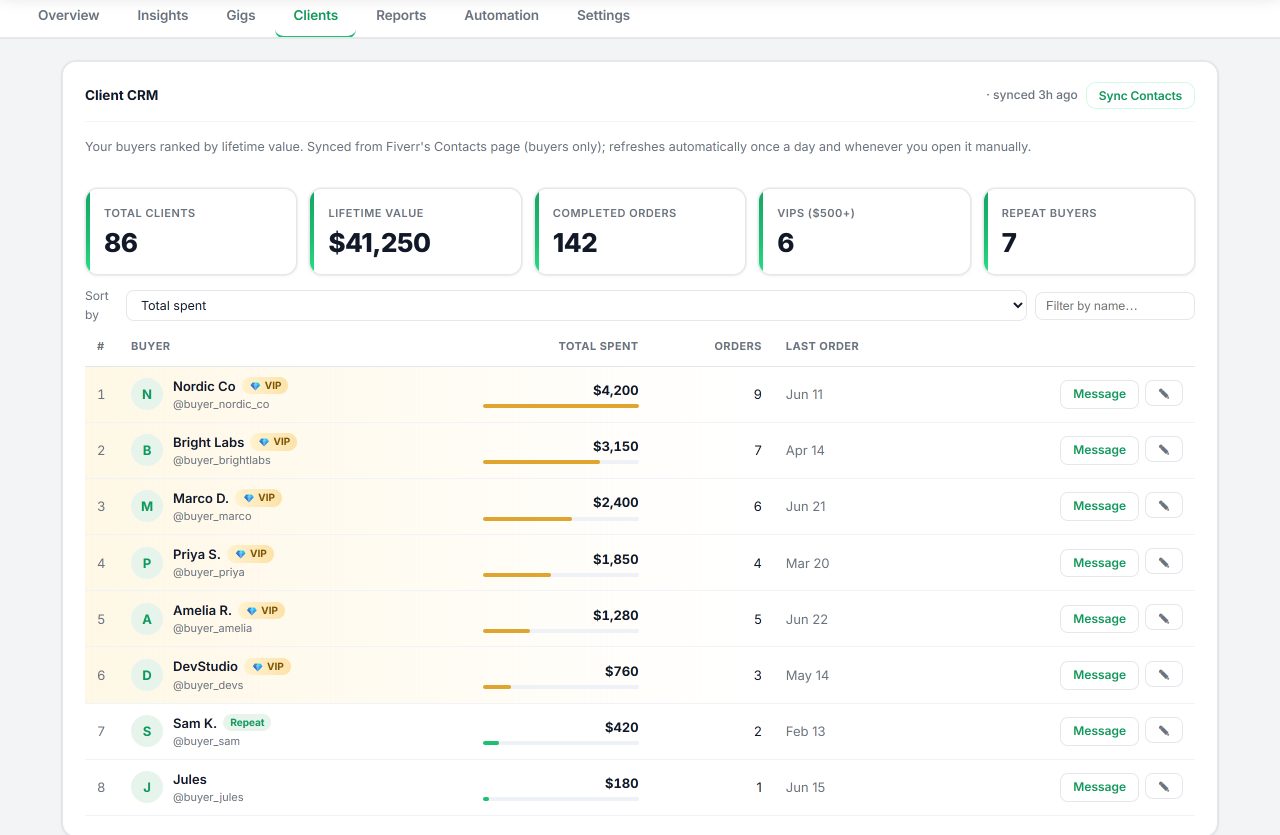
Seller OS makes the pattern visible while it is still small. Client records keep order notes and conversation history in one place, so a second unpriced addition stands out, and the inbox assistant drafts the checkpoint message from the thread. You edit it, set the number, and send it yourself.
The gig audit can also flag package copy that leaves scope open to interpretation, which is where most creep starts. What it does not do: it never changes an order, quotes a price on your behalf, or sends anything without your review.
Fiverr Scope Creep questions
What is scope creep on Fiverr?
It is a pattern of small additions to an order that were never priced or agreed: another asset, one revision beyond the package, a format nobody planned. Each request looks minor, and the total quietly turns the order into a larger project at the original price. Catching it early is the whole skill.
How do I stop scope creep without upsetting the buyer?
Send a checkpoint message that lists what the order includes and what the new request would add, with a price for the addition. Keep it factual and friendly, and send it while the work is still small. Most buyers accept the boundary when it arrives with a paid option attached.
Can I charge more for extra work after the order starts?
Yes, through a gig extra, a custom offer, or a new order, depending on what the addition is. Mid-order changes are exactly what custom offers are for: they carry their own price, timeline, and revision count. Get the buyer's agreement before doing the work, not after.
Does scope creep affect my Fiverr order completion rate?
Not directly; it affects your margin and your calendar first. Completion rate reacts to how orders end: cancellations you submit affect it, very late force-cancellations affect it, and partial refunds do not affect it whether accepted or declined. Uncontrolled scope more often shows up as a late delivery, which is its own metric.
Name the line before it moves.
Send the checkpoint message early, and price every addition while the order can still absorb it.