 Seller OS
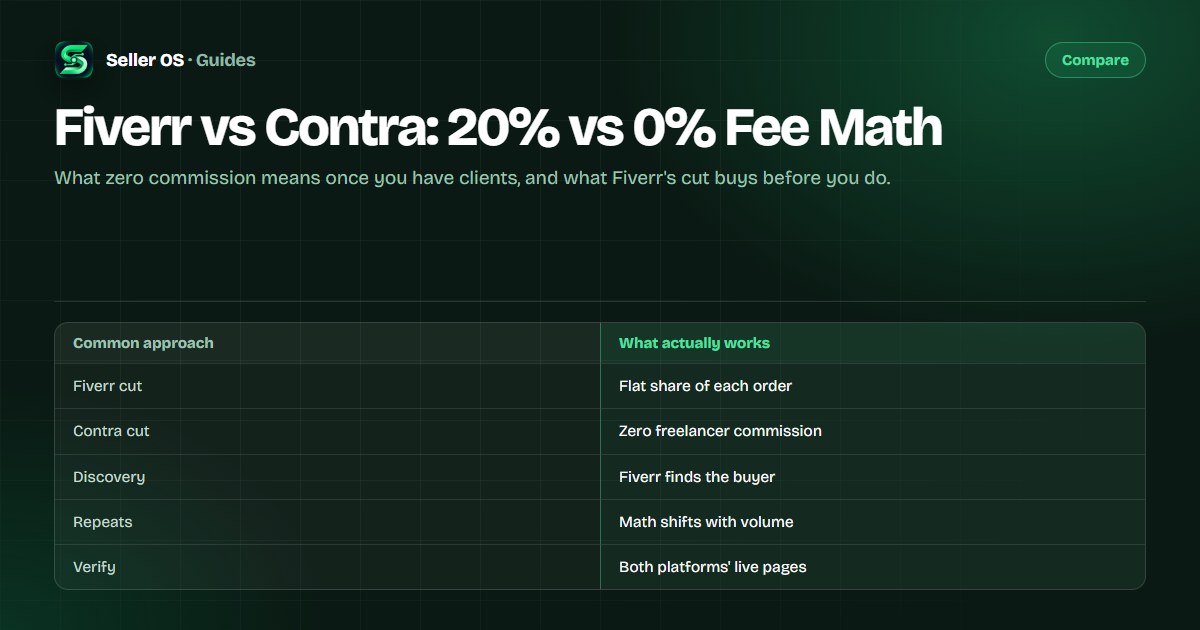
Fiverr vs Contra: the 20% vs 0% fee math
Contra describes its model as commission-free for freelancers, while Fiverr charges sellers the familiar share documented in its Help Center. The headline looks one-sided until you ask what each platform supplies in return: clients you did not find, trust you did not build, and payment machinery you do not run.
This guide works the repeat-buyer math across order volumes, names what Fiverr's cut actually buys, and shows where each platform wins. Fiverr figures come from the Help Center; treat Contra's current pricing page as the authority for everything on its side.
Free plan available. Local-first data. Human review on every change.
What zero commission actually means
Zero commission means the platform takes no share of the freelancer's payment — but the platform still has costs, so read the current pricing page to see who pays for what. Payment processing, premium features, and client-side fees are the usual places the money shows up instead. The model can change with the product, so confirm the present terms rather than relying on launch-era summaries.
The honest reading is that Contra moves the platform cost off your invoice, not out of existence. For established sellers with their own client pipeline, that is a genuine saving. For new sellers with no pipeline, a zero share of zero clients is still zero, which is where the rest of this comparison matters.
What Fiverr's cut actually buys
According to the Fiverr Help Center, the seller fee is a fixed 20% share of each order's value. In return, Fiverr supplies the three things independent sellers find hardest to build: discovery through search traffic, trust through reviews and seller levels, and payment handling including dispute paths. Each order arrives pre-framed by systems you never had to construct.
Price that bundle honestly. A personal site needs its own marketing, its own testimonials, and its own invoicing and collection process, and every hour spent there is unbilled. Fiverr's share is expensive only if you already own clients, credibility, and cash flow; if you own none of the three, it is the cheapest way to acquire them.
- Discovery: search traffic you never pitched for.
- Trust: reviews and levels buyers already believe.
- Payments: collection and dispute paths included.
Repeat-buyer math across order volumes
The comparison tilts with volume and with who found the client. On one-off discovery orders, Fiverr's cut pays for the introduction and there is no contest. On steady repeats with a client who would hire you anywhere, the monthly commission becomes a subscription you could avoid — provided the alternative genuinely costs less once you add your own marketing, admin, and collection time.
| Order pattern | Fiverr fee at 20% | When Contra wins |
|---|---|---|
| $25 one-off from search | $5 | When the client found you, not Fiverr |
| $150 monthly repeat | $30 | When discovery cost you nothing |
| $1,000 established retainer | $200 | When trust is already established |
Who should use which
Use Fiverr while discovery is your bottleneck: no audience, no testimonials, no inbound flow. The commission is customer-acquisition cost, and it beats the alternative of marketing from zero. Stay while search still sends buyers you could not reach alone.
Use Contra for clients you sourced yourself: referrals, social followers, past buyers from elsewhere. There the platform contributes hosting and payment flow rather than discovery, and a zero freelancer commission keeps the full invoice. Many sellers run both permanently, with Fiverr as the finder and Contra as the home for the independent pipeline.
A decision rule for your next client
Ask one question per new relationship: who found whom. If the platform found the buyer, the fee earned its keep and the work stays there — Fiverr's terms, published in the Help Center, require Fiverr-sourced work to stay on Fiverr. If you found the buyer, route them to whichever home costs less in total, counting your own admin hours. The fee explainer keeps the Fiverr side current, and the fee calculator tests any figure in seconds.
Trace the source
platform-found work stays on the platform that found it
Price the alternative
add your marketing, admin, and collection time honestly
Recheck yearly
pricing pages change, and so does your pipeline
Where Seller OS helps
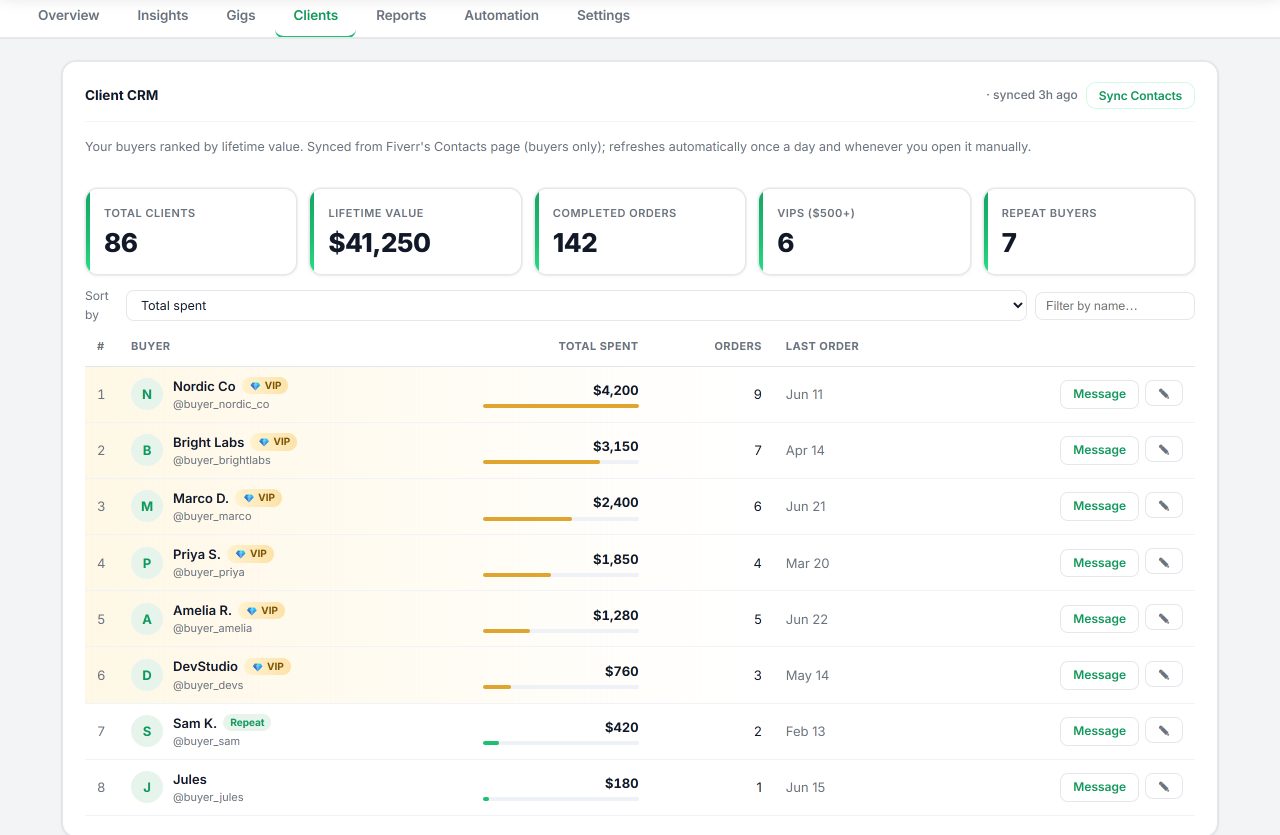
Seller OS helps whichever side of this comparison you lean on. For Fiverr discovery, rank tracking and the gig optimizer measure whether the commission earns its keep; for independents, client records keep every relationship organized in Chrome local storage. The numbers decide, not loyalty.
The extension drafts and fills while you decide and never publishes or moves money on its own. A person completes every Save, Continue, or Publish action.
Fiverr vs Contra questions
Is Contra really free for freelancers?
Contra describes its model as commission-free for freelancers, meaning no platform share is taken from your payment. That does not mean the platform runs on air: payment processing, premium features, or client-side charges may apply depending on the current product. Read Contra's live pricing page before you quote, and treat any third-party summary as background rather than authority.
When does Fiverr's 20% fee beat zero commission?
Whenever the platform supplies the client. If search traffic, buyer trust systems, and payment handling brought you an order you would not otherwise have, the fee is customer-acquisition cost at a fair price. Zero commission wins only when you already own the pipeline: referrals, followers, or past clients who would hire you anywhere. Compare total cost including your own marketing and admin hours.
Can I move Fiverr clients to Contra to avoid fees?
No. Fiverr's terms, published in the Help Center, require Fiverr-sourced work to stay on Fiverr, and routing those clients elsewhere risks your account. The legitimate split is by source: marketplace-found clients stay on Fiverr, while clients you sourced yourself can live wherever the total cost is lowest. Keep the boundary strict and document where each relationship began.
Should new sellers start on Fiverr or Contra?
Start where the clients are: Fiverr, while you have no audience or testimonials of your own. Discovery is the new seller's bottleneck, and the commission buys search traffic plus borrowed trust from day one. Add Contra once referrals and repeat buyers exist outside any marketplace, and keep Fiverr running as the finder until your independent pipeline covers the gap reliably.
Ask who found whom.
Platform-found work stays put; self-sourced work goes where it costs less.