 Seller OS
Fiverr vs Freelancer.com: which fits you
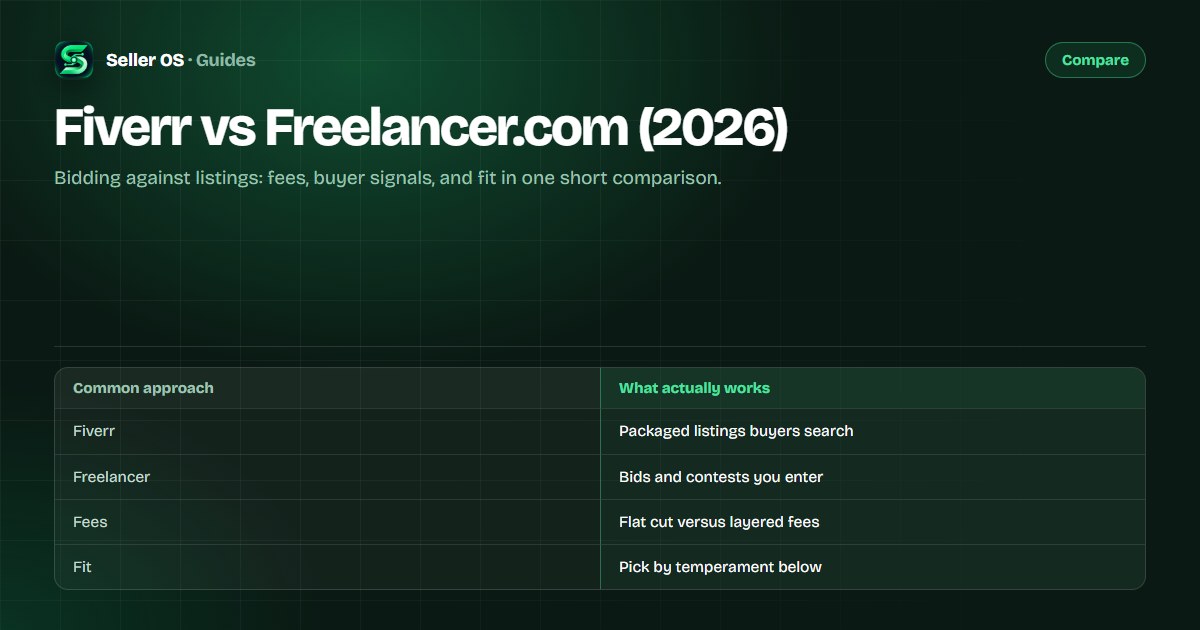
Fiverr and Freelancer.com sell freelance work through opposite mechanics. Fiverr lists packaged gigs that buyers find through search; Freelancer.com runs project posts and contests that freelancers answer with bids. The platform shapes your week more than its homepage suggests.
This is a deliberately short comparison. It covers the bidding model against listings, how fee shapes differ, which buyer signals to trust, and who each platform fits. For the longer Upwork analysis, read the beginner comparison.
Free plan available. Local-first data. Human review on every change.
Listings versus bidding: how your week differs
On Fiverr you build once and sell repeatedly. The gig page, packages, and gallery do the pitching while you deliver, so a good week means orders arriving without applications. Your recurring work is maintenance: answering the inbox, keeping delivery dates honest, and refreshing gigs that slip in search.
On Freelancer.com you pitch continuously. Project posts and contests reward sellers who monitor the feed, write fast tailored bids, and enter contests where the work is speculative. A good week means a high bid-to-win ratio; a bad week means hours of proposals with nothing to show. If you enjoy the hunt, bidding feels energizing. If you find it draining, no fee advantage will compensate.
How the fee shapes differ
According to the Fiverr Help Center, the seller fee is a fixed 20% share of each order's value. One rule applies at every size, which makes pricing arithmetic trivial: divide the net you need by 0.8 and you have the package price.
Freelancer.com combines project fees with optional membership tiers and bid-related extras described on its own fee pages. The structure rewards reading the current schedule before you commit, because the cheapest-looking bid can carry costs a flat percentage never would. Confirm every figure on the platform's published pages; third-party summaries age quickly.
| Platform | Fee shape | Where to verify |
|---|---|---|
| Fiverr | Flat 20% share of each completed order | Fiverr Help Center |
| Freelancer.com | Project fees plus optional membership tiers | Freelancer.com fee pages |
Which buyer signals to trust
On Fiverr, trust arrives pre-packaged: reviews, seller levels, and response metrics sit on every gig page, and repeat-order history shows in your dashboard. A buyer with funded requirements and a verified history is the practical equivalent of a green flag anywhere else.
On Freelancer.com, read the employer side with equal care: payment verification, past hiring history, and review scores on completed projects. Prefer milestone-funded work over vague promises, and treat contests as marketing spend with no guaranteed return. On either platform, a buyer who resists the platform's own payment rails is the signal to walk away.
- Fiverr: reviews, level, response signals, funded requirements.
- Freelancer.com: employer verification, hire history, milestones.
- Both: off-platform payment pressure means decline.
Who each platform fits
Choose Fiverr if your service packages cleanly: fixed scope, fixed price, repeatable delivery. Design assets, short-form edits, translations, and audits thrive as listings because buyers know what they get before messaging you. Patient optimizers who enjoy search, packaging, and review-building do well here.
Choose Freelancer.com if your service resists packaging: unusual scopes, contest-friendly creative work, or skills where a custom bid beats a fixed menu. Fast writers who enjoy daily pitching and can absorb speculative effort do well here. Many sellers test both for a month and keep the one whose weekly rhythm they actually sustain, since the platform you abandon always pays zero.
Where Seller OS helps
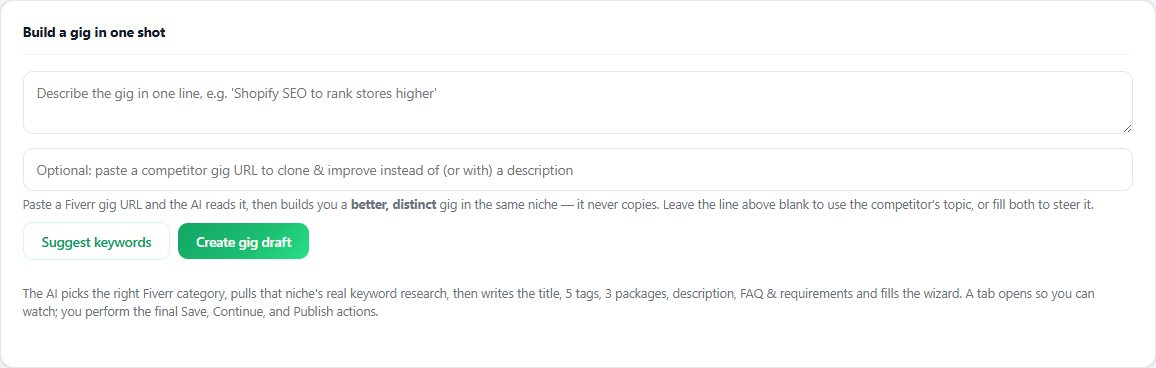
Seller OS works the Fiverr side of this choice: the gig builder drafts structured listings for your review, rank tracking shows whether a gig earns its keep, and client records stay in Chrome local storage. If the test month points to Freelancer.com instead, you lose nothing — the research still sharpened your packaging.
The extension drafts and fills while you decide and never publishes on its own. A person completes every Save, Continue, or Publish action.
Fiverr vs Freelancer.com questions
Is Fiverr or Freelancer.com better for beginners?
Fiverr is usually kinder to beginners because a published gig can sell without proposals, so your first month teaches packaging and delivery. Freelancer.com teaches bidding under pressure, which builds persuasion but can mean weeks of unpaid applications first. Beginners who dislike outreach should start with Fiverr; beginners who enjoy pitching may prefer Freelancer.com's faster feedback loop.
How do Fiverr and Freelancer.com fees compare?
Fiverr charges sellers a flat share of each order, which the Help Center describes as 20%, with no tiers to track. Freelancer.com combines project fees with optional membership tiers and bid extras published on its own fee pages. Compare realized monthly income after each platform's current schedule rather than headline percentages, and recheck the live pages before any pricing decision.
What is contest work on Freelancer.com?
Clients post a prize for creative work, freelancers submit entries, and one entry wins the payment. Contests can build portfolio pieces and occasionally convert holders into direct clients, but most entries earn nothing, so treat the hours as marketing spend. Cap contest time per week, enter only briefs close to your strengths, and never let contests displace funded milestone work.
Can I sell on both Fiverr and Freelancer.com?
Yes, and testing both for a month is a reasonable way to learn which rhythm suits you. Keep Fiverr's one-account rule intact, keep each platform's clients and payments inside that platform, and give each side a distinct offer shape. Review realized hourly pay per platform quarterly, then concentrate on the channel whose weekly rhythm you actually sustain.
Pick the rhythm you sustain.
Test both for a month, then keep the platform whose week fits you.