 Seller OS
Fiverr vs Toptal: why beginners fail screening
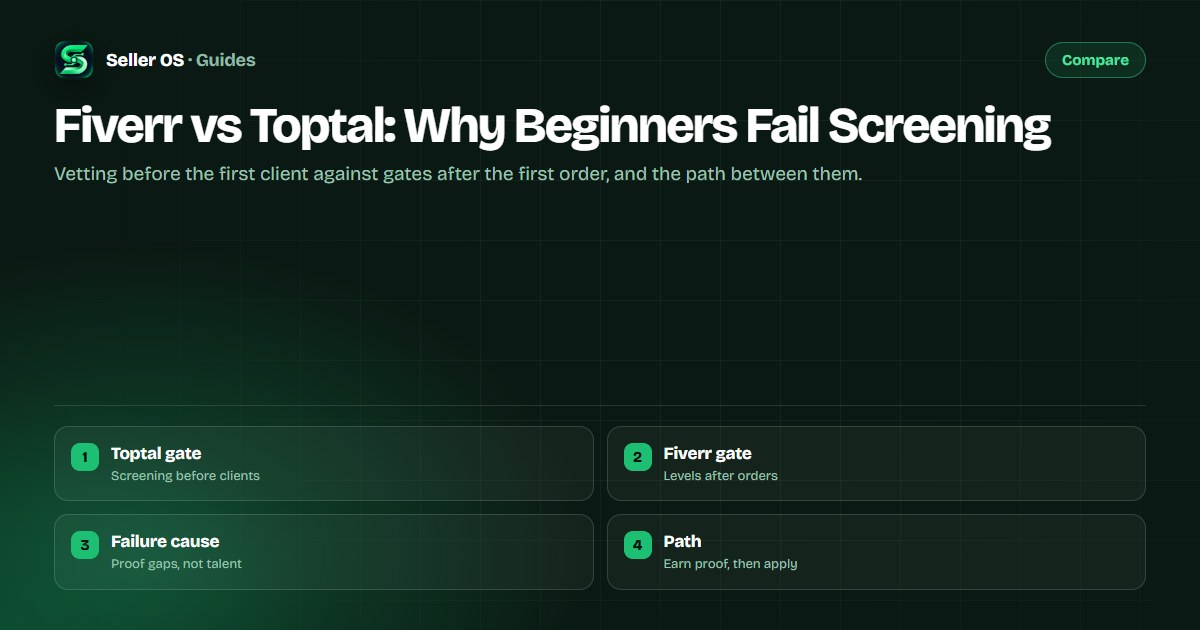
Fiverr and Toptal gatekeep at opposite ends. Fiverr lets anyone publish a gig today and applies its gates afterward, through search visibility, levels, and reviews. Toptal applies its gates beforehand, through interviews and skills exercises, and only admitted freelancers ever meet clients.
This guide explains how that vetting works, why most beginners are not ready for it, how Fiverr's performance gates differ, and what a realistic path to becoming Toptal-ready looks like. Neither model is a verdict on your worth; they simply test different things at different times.
Free plan available. Local-first data. Human review on every change.
How Toptal screening works
Toptal describes a multi-stage process that typically includes language and personality interviews, skills exercises or live problem-solving, and a trial period with real project work. Each stage filters for a different trait: communication, depth, reliability under observation. Confirm the current stages on Toptal's own pages, since the exact sequence changes over time.
The key fact is the order of operations. Screening happens before any client sees you, so there is no partial credit: failing one stage ends that application. That makes preparation, not talent alone, the deciding factor — and preparation is exactly what beginners have not had time to accumulate.
Why beginners usually fail it
Beginners fail screening for lack of proof, not lack of potential. A thin portfolio gives interviewers nothing to probe; no client history means no evidence of deadlines kept or feedback absorbed; and narrow communication skills show up fast in live exercises. Screeners are not grading your future — they are grading the record in front of them.
Test pressure compounds the gap. Timed exercises and observed problem-solving punish unfamiliarity more than inability, and beginners have simply faced fewer real briefs. None of this is permanent. Every gap on this list closes with shipped client work, which is precisely what the open marketplace below exists to provide.
- Thin portfolio: nothing substantial for screeners to probe.
- No client history: no evidence of deadlines or revisions handled.
- Untested communication: live exercises expose vague explanations.
Fiverr levels are a different kind of gate
Fiverr reverses the sequence: publish first, prove afterward. Anyone can list a gig, and the gates appear as you perform — search visibility follows conversion, and seller levels follow completed orders, ratings, and account standing described in the Fiverr Help Center. The marketplace funds your proof with real client money while it tests you.
That makes Fiverr the training ground Toptal applicants need. A year of completed orders produces the three things screeners ask for: a portfolio of shipped work, a record of satisfied clients, and communication habits formed under genuine deadline pressure. The Top Rated path shows what sustained proof-building looks like at the highest Fiverr tier.
The path to becoming Toptal-ready
Treat readiness as a project with a twelve-month horizon. Ship client work on Fiverr, deepen one skill until you can defend every choice in it, and practice explaining your process aloud — the interview tests narration as much as execution. When your portfolio answers hard questions before they are asked, the application stops being a gamble.
Ship volume on Fiverr
complete dozens of orders and collect reviews that name specifics
Narrow to one strength
drop peripheral gigs until a single expertise is obvious
Practice live problem-solving
timed exercises with narration, not silent coding or designing
Apply when proof exists
portfolio, history, and references ready before the first stage
Where Seller OS helps
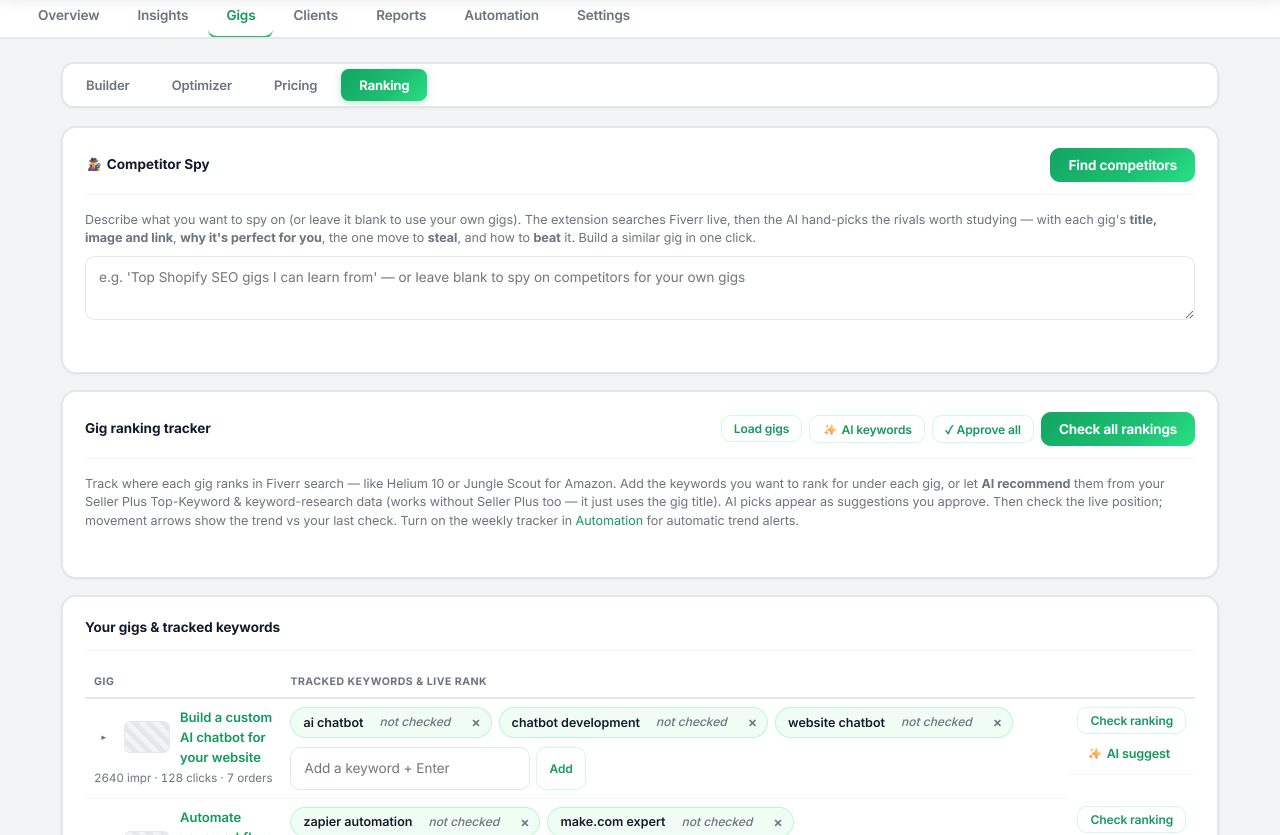
Seller OS supports the proof-building phase this path requires. The gig builder drafts structured listings for your review, rank tracking shows which gigs convert, and client records preserve the history that later becomes portfolio evidence. Screeners ask for a record; this is where yours accumulates.
The extension drafts and fills while you decide and never publishes on its own. A person completes every Save, Continue, or Publish action, and records stay in Chrome local storage.
Fiverr vs Toptal questions
Why do beginners fail Toptal screening?
Mostly for lack of proof rather than lack of talent. Screeners grade the record in front of them: portfolio depth, client history, deadline reliability, and communication under observation. Beginners have had no time to accumulate any of these, and timed exercises punish unfamiliarity on top. A year of shipped client work on an open marketplace closes nearly every gap that causes the failure.
Is Toptal better than Fiverr for freelancers?
It is different, not better. Toptal offers pre-vetted clients and premium rates to the few who pass screening; Fiverr offers immediate publishing and self-built proof to everyone. Established specialists with deep portfolios may earn more per hour inside a screened network. Everyone else earns sooner, and learns faster, on the open marketplace. Match the platform to your evidence level.
Can Fiverr work prepare me for Toptal?
Yes, directly. Completed Fiverr orders produce exactly what screeners probe: shipped portfolio pieces, client feedback, revision stories, and deadline habits. Narrow to one strength as you grow, save your strongest outcomes with client permission, and practice narrating your process aloud. When your record answers hard questions unprompted, you are ready to apply.
Should I apply to Toptal as a beginner anyway?
You can, but treat it as reconnaissance rather than a plan. An early rejection costs little and shows you the stages, yet repeated applications without new proof waste energy better spent shipping client work. The stronger sequence is Fiverr first for volume and evidence, deliberate skill-narrowing second, and the Toptal application third, once the record speaks for itself.
Build proof first, apply second.
Ship work on Fiverr now; let the record earn the screening later.