 Seller OS
Should you use Fiverr and Upwork together
You are allowed to sell on both platforms, and many established freelancers do. Fiverr supplies search-driven volume for packaged services, while Upwork supplies proposal-driven contracts for custom work. Together they smooth the feast-or-famine cycle that either platform produces alone.
Running both only works with a deliberate split. This guide covers what each platform rewards, how to position your offers so they never bid against each other, a weekly cadence that serves both, and the account and location rules you must respect. It is an operations manual, not a pitch for either side.
Free plan available. Local-first data. Human review on every change.
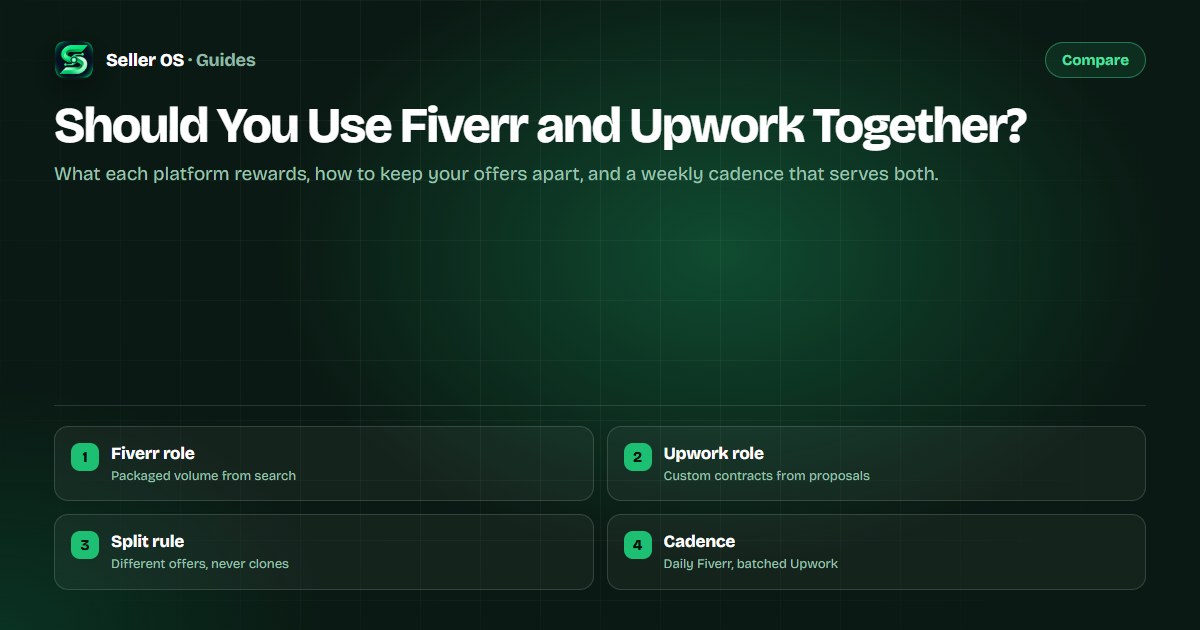
What each platform rewards
Fiverr rewards conversion. Search shows your gig, and everything after the click decides the order: clear scope, believable delivery time, and proof you have done the work before. Fiverr surfaces signals such as response time and reviews on gig pages and profiles, so inbox speed and finished orders compound into more visibility.
Upwork rewards persuasion. Clients post jobs or invite freelancers, and the proposal decides who gets the conversation. A sharp opening line, evidence matched to the brief, and a profile that reads as one specialist rather than five generalists win more often than a lower rate does. Long contracts and repeat hires then stabilize income in a way single gig orders rarely match.
- Fiverr: packaging, conversion, response speed, completed orders.
- Upwork: tailored proposals, specialist positioning, client retention.
- Both punish the same sin: a generic offer aimed at everyone.
Position the offers so they never compete
Give each platform a different job. A workable split is Fiverr for fixed-scope starters and Upwork for custom follow-ons: a $40 audit gig on Fiverr and full implementation quotes on Upwork, or template-based deliverables on Fiverr and strategy-plus-build contracts on Upwork. When a buyer compares your two presences, each should look like the right door for a different need.
Do not clone copy between them. Identical gig text and proposal templates read as mass-produced, and they teach you nothing about which positioning actually converts. Write each offer for its context: search keywords and package tables for Fiverr, brief-mirroring and outcome language for Upwork. The beginner comparison details how each selling motion works.
A weekly cadence that serves both
Fiverr needs daily attention in small doses; Upwork needs focused batches twice a week. The inbox and the order queue set each day, while proposals get calendar blocks where you can research the client and write something specific. Without protected proposal time, Upwork always loses to the urgency of Fiverr messages.
Morning Fiverr sweep
answer inbox, check queue dates, and confirm anything due within 48 hours
Two proposal blocks
research five jobs and send three tailored proposals per block, then stop
Friday review
log hours, revenue, and win rate per platform and adjust next week's split
Monthly rebalance
give the channel with the higher realized hourly pay the extra day
Account and location rules to respect
Fiverr's rules, described in the Fiverr Help Center, limit sellers to a single Fiverr account, so never solve a slow month by opening a second one. One person, one account, with consistent login location and accurate verification details. A second account risks both, which ends the two-platform strategy instantly.
Keep each platform's work inside that platform. Discuss, deliver, and get paid through the channel where the client found you, and keep separate records for each income stream. General account hygiene applies to both: unique passwords, current recovery options, and sign-in alerts reviewed rather than ignored.
- One Fiverr account per person; never open a second.
- Consistent login location and truthful verification details.
- Each platform's clients, messages, and payments stay there.
Review the split every quarter
Every three months, compare realized hourly pay per platform: revenue minus fees, divided by all hours including proposals, messages, and revisions. If one side pays double the other for two quarters running, it deserves the majority of your week, and the weaker side keeps a maintenance presence until the numbers change.
Dropping a platform is also a valid outcome. Some sellers find their skill sells only as custom work and leave Fiverr; others find proposals never convert and go all-in on gigs. The split is a discovery method, not a marriage. The fee comparison helps keep the money side of the review honest.
Where Seller OS helps
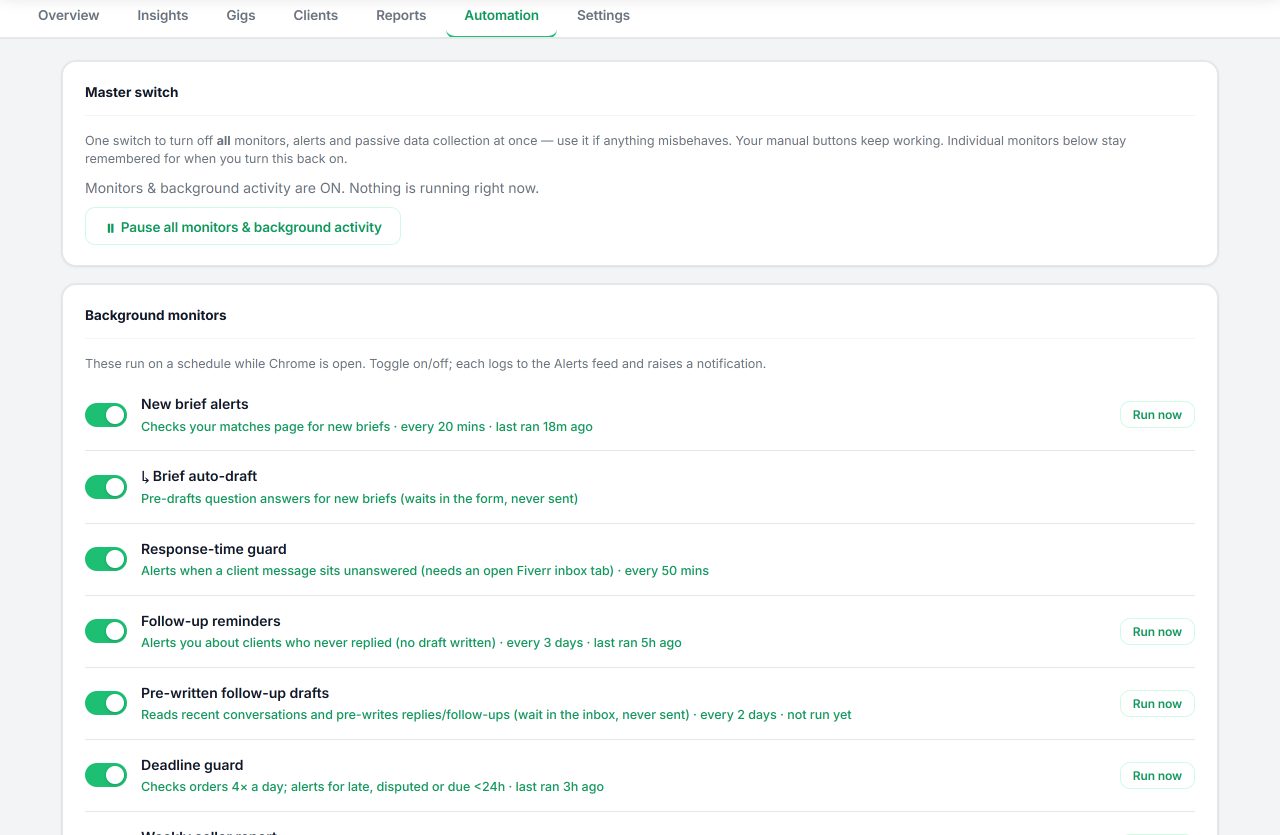
Seller OS covers the Fiverr half of this split: rank tracking shows whether your gigs earn their calendar share, client records keep Fiverr buyers organized, and monitors flag queue and inbox changes during your morning sweep. The Upwork half stays in Upwork, where its own tools track proposals and contracts.
The extension drafts and fills while you decide, and it never publishes or sends anything on its own. A person completes every Save, Continue, or Publish action, and all records stay in Chrome local storage.
Should You Use Fiverr and Upwork Together? questions
Is it allowed to sell on Fiverr and Upwork at the same time?
Yes. Fiverr's one-account rule concerns multiple Fiverr accounts, not work elsewhere, and selling on several marketplaces is normal freelance practice. The obligation is to keep each platform's work inside that platform: its messages, its orders, and its payments. Run both openly, keep separate records, and never use one platform to solicit clients for the other.
How should I split my time between Fiverr and Upwork?
Start with daily Fiverr maintenance plus two batched Upwork proposal blocks per week, then let realized hourly pay set the ratio. Fiverr maintenance means inbox, queue dates, and anything due within 48 hours; proposal blocks mean researched, tailored applications, not mass submissions. Review the split monthly and give the winning channel the extra day until the numbers shift.
Should my Fiverr gigs and Upwork profile offer the same service?
Offer the same skill in different shapes. Fiverr suits the fixed-scope starter version with a package table and a delivery date; Upwork suits the custom version scoped per brief. Cloned copy across both teaches you nothing about positioning and can confuse buyers who find you twice. Differentiate the packaging and the price anchor, and let each context do what it does best.
What mistakes do sellers make when running both platforms?
The classic failures are neglecting one side until it dies, cloning identical offers onto both, and opening a second Fiverr account to chase volume. Others include counting only billable hours when comparing pay and letting Fiverr urgency eat every proposal block. A written cadence, a quarterly pay review, and one account per platform prevent nearly all of these.
Give each platform one job.
Split the offers, protect proposal time, and review the numbers quarterly.