 Seller OS
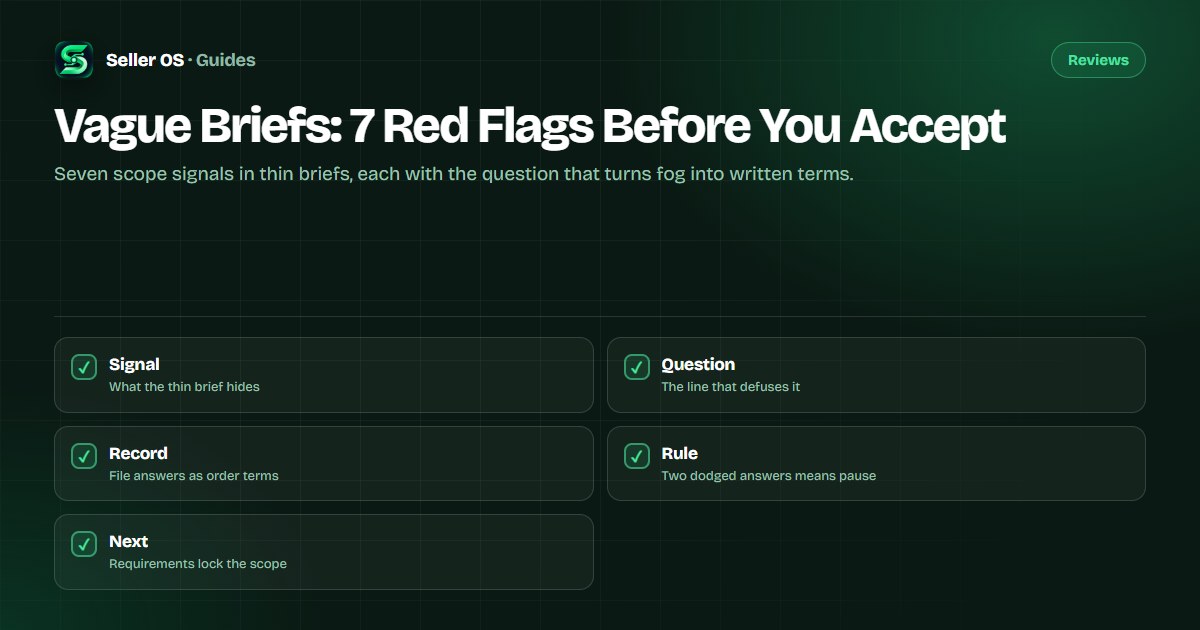
Vague Fiverr briefs: 7 red flags to check
A vague brief is not a small brief. A small brief names one deliverable and one date. A vague brief leaves the deliverable, the date, or the definition of done open while the buyer acts as if all three were settled, and that gap becomes a revision fight after you start.
This is a screening checklist, not a rejection guide. Each of the seven signals below comes with the clarifying question that defuses it, plus where to file the answer so it becomes order terms. For the polite no after screening, use the decline guide.
Free plan available. Local-first data. Human review on every change.
Why vague briefs fail after acceptance
Vague briefs fail because each side pictures a different delivery. You picture the package as written, the buyer pictures the outcome they described to someone else, and neither picture is wrong until the delivery exposes the gap. Written scope is the only bridge between the two.
Your job at screening is to convert fog into sentences a stranger could enforce: what ships, by when, in what form, after how many revisions, and against which files. Anything left as a feeling will be graded as a feeling at review time.
Sellers who skip this step usually pay for it in revision rounds. Each undefined item becomes a separate argument after delivery, while each answered question becomes a line you can point to. The ten minutes you spend here are the cheapest revision insurance you will ever buy.
Red flags one to four: missing pieces
The first four flags all describe something the brief needs but does not contain. A missing deliverable with a fixed deadline means you are timed against work nobody defined. A missing source file means the start date is fiction. A missing decision-maker means your draft waits on someone you have never met. A missing definition of done means approval depends on mood.
Ask the paired question for each flag in one message so the buyer answers in writing. If the answers arrive, file them as scope; if they stall, you have learned what the order would have felt like.
| Red flag | What you see | Clarifying question |
|---|---|---|
| No deliverable | Deadline set, output unnamed | What exactly ships on that date, in what file form? |
| No source files | Logos, data, or access promised later | Which files arrive before I start, and when? |
| No decider | Someone else must approve | Who gives final approval, and how many rounds? |
| No done | Quality described as feelings | What does accepted work look like in one sentence? |
Red flags five to seven: moving pieces
The last three flags describe scope that moves. A growing feature list between messages means the price you quoted covers a smaller job than the buyer now expects. A flexible deadline tied to an event means the date will harden without warning. A reference to other sellers means your process is being compared against work you cannot see.
Name the movement directly and re-anchor the price. Buyers who accept the re-anchor in writing usually work out; buyers who treat your question as an insult rarely improve after the order forms.
- Growing list: new items appear between the first and second message. Ask which list is final and what each added item costs.
- Soft date with a hard event: launch or campaign behind a flexible deadline. Ask for the must-ship date and what moves if files arrive late.
- Comparison shopping: mentions of cheaper or faster sellers. Ask what outcome matters most, then confirm your package covers exactly that.
One message that asks everything
Send a single scoping message rather than seven scattered replies. Keep it short, numbered, and neutral, and ask the buyer to answer each line before you quote. Five minutes of structure here replaces five rounds of revisions later.
Paste and adapt this shape: thanks, then one line per open item with the decision you need. Close with a sentence that ties the quote to the answers, so any later scope change visibly reopens the price. The requirements guide shows how to lock those answers into order questions.
Thank and narrow
name the gig and the outcome you understood
Ask the deliverable
form, count, and file types in one line
Ask the inputs
every file or access item with its arrival date
Ask the done rule
approval owner, rounds included, date that binds
Tie quote to answers
price holds for the scope as answered
Filing answers so they hold
Answers in chat are useful; answers restated as order terms are protective. Before the order forms, repeat the agreed scope, deadline, and revision count in one message and ask for a yes. After it forms, the same restatement belongs in the order thread, where support can read it if a scope dispute ever needs a record.
When two rounds of questions still leave fog, stop asking and pass politely. The screening guide sets that two-strike rule, and the decline guide gives the wording. A brief you cannot pin down before payment will not get clearer after it.
Where Seller OS helps
Seller OS keeps the checklist near the work. Saved reply snippets hold your scoping message so every inquiry gets the same five questions, and local order notes keep the buyer's answers beside the gig they belong to.
The extension does not judge briefs or message buyers for you. It holds your wording and your records on your device, and you send every message and accept every order yourself.
Vague Briefs questions
What is a vague brief on Fiverr?
A brief that leaves the deliverable, the inputs, the decider, or the definition of done open while acting as if all were settled. A short brief with one clear output and date is fine. A vague one forces you to guess at two or more of those, and the guess becomes a revision dispute later.
Which vague-brief red flags matter most?
Missing deliverables with fixed deadlines, missing source files, unknown approvers, and undefined acceptance cause most failures. Moving scope, event-driven dates, and comparison shopping add the rest. Any single flag deserves one written question, while two or more dodged answers mean you should pause or pass.
What should I ask before accepting a thin brief?
Ask what ships in what form, which files arrive before you start, who approves and how many rounds are included, and which date binds. Send the questions as one numbered message and tie your quote to the answers. Restate the agreed terms in the thread so both sides share one record.
When should I decline a vague brief?
Decline when two rounds of clear questions still leave the scope open, when the buyer will not confirm terms in writing, or when the work sits outside your gig. Pass politely with short neutral wording and keep everything on-platform. Forcing the order turns screening fog into a review you cannot remove.
Ask once, in writing, before quoting.
Seven questions now replace seven revision rounds later.