 Seller OS
How to avoid Fiverr buyers likely to leave a bad review
Most bad reviews are decided before the order starts. The brief already hides the mismatch, the message thread already shows how feedback will go, and the seller accepts anyway because the inbox feels quiet. Prevention costs a few careful minutes, while a public review stays visible for months.
This guide is prevention-first. It names the pre-order signals in the brief and the message history, gives you a short screening habit to run before accepting, and points to the decline and dispute pages when the answer is no. For damage already done, use the reactive review page instead.
Free plan available. Local-first data. Human review on every change.
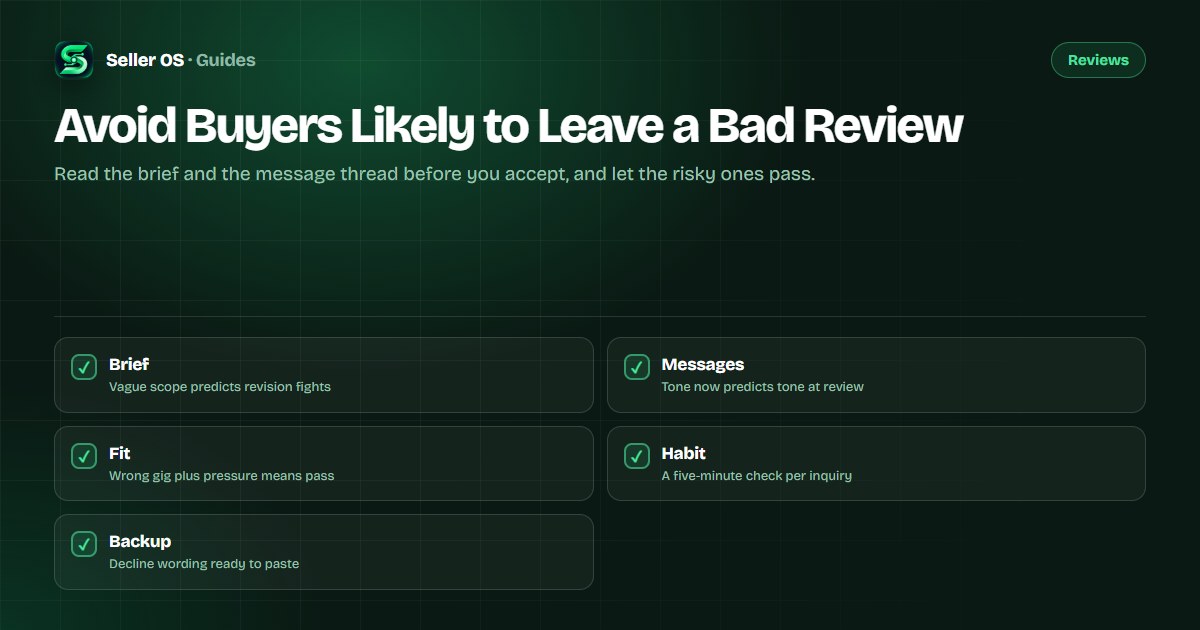
Why prevention beats repair on reviews
A published review is hard to move. Fiverr sets the conditions under which feedback can change, and those conditions are narrow, so most of your influence sits before acceptance rather than after delivery. The bad-review response guide covers the reactive side; this page covers the minutes before you commit.
Prevention is also a general business habit, not an accusation against any buyer. You are reading signals in your own inbox and deciding which work fits your gig, your calendar, and your rules. That framing matters, because the goal is fit, not blame.
Brief signals that predict review trouble
The brief tells you how the buyer thinks about scope. Watch for missing deliverables with firm deadlines, feature lists that grow between messages, reference files that never arrive, and budget language that prices your middle package against a much larger job. Each one points to a delivery the buyer has already pictured and you have not agreed to.
Treat these as general screening heuristics you apply to your own pipeline, not as Fiverr policy. One unclear line is a question to ask; three unclear lines across two messages is a pattern to respect. The vague-brief checklist names seven of these signals with the exact clarifying question for each.
- Deliverable missing but the deadline is fixed and urgent.
- Scope grows between the first and second message.
- Source files or access promised later never arrive.
- Budget set against a far larger job than described.
- Success defined as feelings rather than anything checkable.
Message-history signals worth weighing
Tone before the order usually survives into the review. Short replies that ignore your questions, pressure to start before requirements are complete, demands for free samples of the paid work, and rewriting your process in the first exchange all forecast how revision requests will sound later. Read the thread once as a preview of the whole order.
Also note how the buyer handles your boundaries. A buyer who answers your scoping question directly is usually workable even when the brief started thin. A buyer who answers a direct question with a new demand or a complaint about other sellers is showing you the review they write when anything slips.
Keep a private note on each inquiry: date, signals seen, and your decision. Over a month that log shows which flags predicted trouble in your niche and which ones you can relax, so the habit sharpens instead of staying generic.
A five-minute screening habit before accepting
Run the same four checks on every inquiry so quiet weeks cannot lower your bar. The habit fits inside the quoting step and leaves a written record you can revisit if the order later needs support attention. Keep it on-platform the whole time, since Fiverr can only see what happened in its own messages.
Score the inquiry honestly and act on the score. Two or more red signals means you clarify in writing or walk away; a single signal means you name it, price it, and get agreement before the order forms. The requirements guide shows how to turn the answers into order terms.
Read the brief twice
list every deliverable, date, and file the buyer named
Read your thread once
mark ignored questions, pressure, and free-work asks
Check fit and calendar
right gig, right skills, realistic delivery window
Name the risk in writing
one message stating scope, price, and deadline
Accept, clarify, or pass
no silent acceptance of a flagged inquiry
When the screen says walk away
Walk away when clarification fails twice, when the buyer refuses written scope, or when the job needs skills outside your gig. A polite decline protects your completion rate and your rating far better than a forced order that ends in dispute. Keep the wording short, neutral, and free of any comment about the buyer.
Use the safe-decline guide for message wording before an order forms and the mutual-cancellation path after one has. If threats or abuse appear at any point, switch to the threat response instead of negotiating further.
Where Seller OS helps
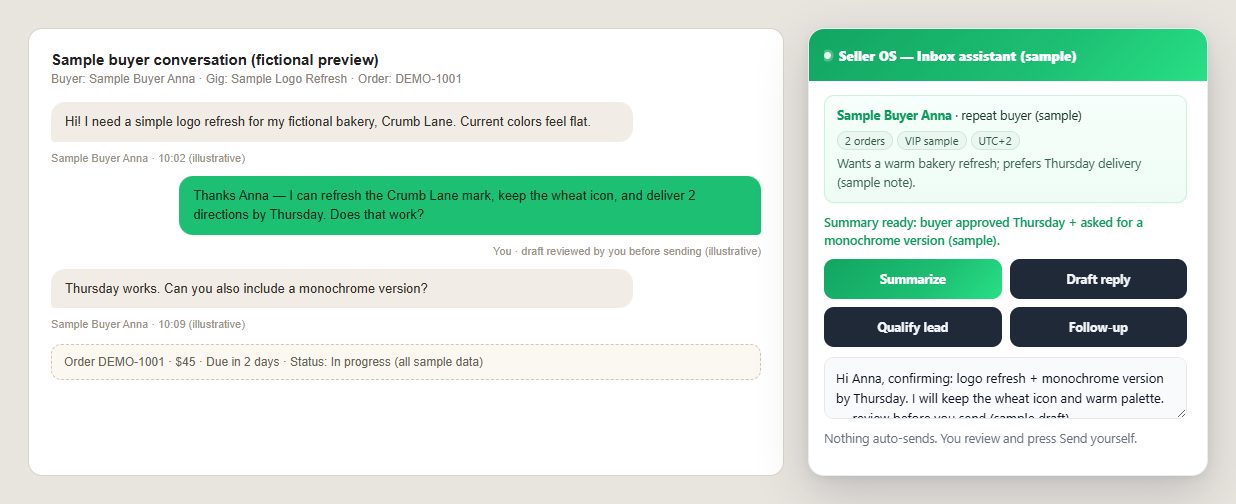
Seller OS supports the screening habit with memory, not judgment. Local client records keep past message patterns and order outcomes on your device, and inbox views surface which inquiries are still waiting on buyer answers before you quote.
The extension never labels a buyer or blocks an order for you. It organizes what your own inbox already said, and you make the accept-or-pass call with a person reviewing every step.
Avoid Buyers Likely to Leave a Bad Review questions
How can I avoid bad reviews on Fiverr?
Screen before accepting. Read the brief twice for missing deliverables and shifting scope, read the thread once for ignored questions and pressure, and get scope, price, and deadline agreed in writing. Inquiries that survive two clarifications without answers are the ones most likely to end in a bad review.
What buyer behaviors predict a bad review?
Common early signals include vague deliverables with fixed deadlines, scope that grows between messages, missing files, pressure to start before requirements are complete, and answers that dodge your scoping questions. One unclear line deserves a question, while several together deserve a pause or a polite decline.
Should I accept a risky order when work is slow?
A slow week makes risky orders tempting, but forced orders produce the reviews that keep weeks slow. If the screen flags two or more signals, clarify once in writing and pass if the answers stay unclear. One careful decline protects your rating and completion record better than a disputed delivery.
What if I already accepted a risky order?
Restate scope, deadline, and price in the order messages and ask for written agreement before starting. If the buyer will not agree, consider a mutual cancellation through the Resolution Center before delivery goes wrong. Document everything on-platform so support can see the full thread if you need help.
Catch the mismatch before the order.
Five minutes of screening now beats months of a review you saw forming.