 Seller OS
Fiverr pricing guide: packages without guessing
Three numbers set every package price: what the work costs you in delivery time, the effective hourly rate you need, and what the buyer believes the outcome is worth. Get those in order and the tier table almost writes itself.
Free plan available. Local-first data. Human review on every change.
Start with the cost of delivery
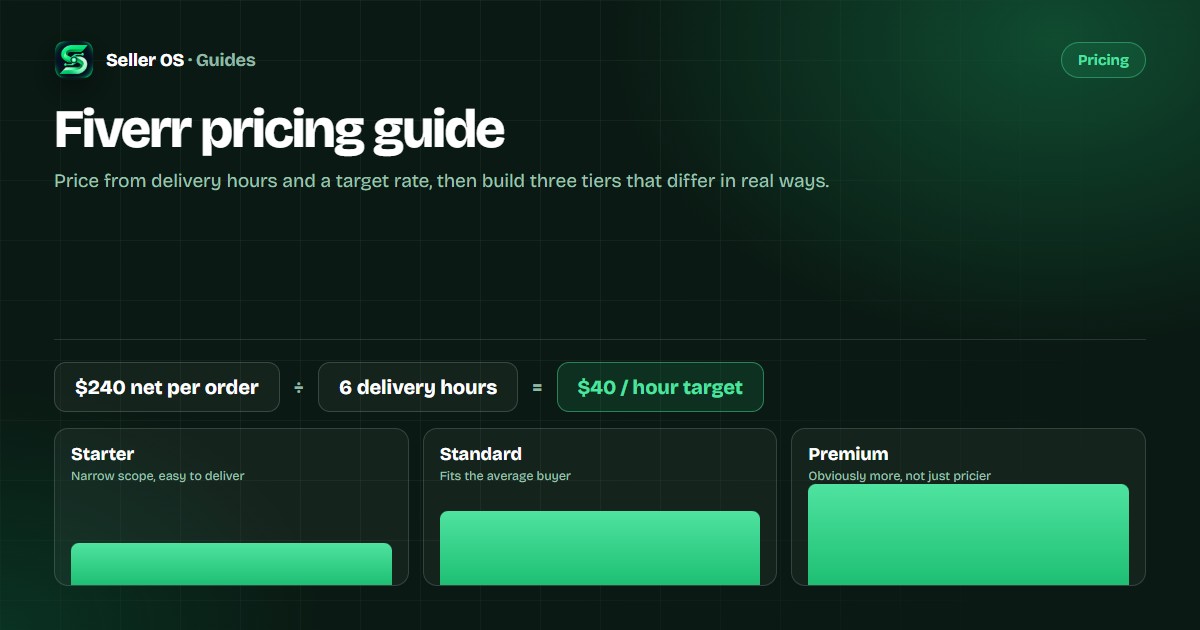
Price one order before you look at the market. List the realistic delivery hours, discovery and revisions included. Add hard costs such as software, assets, or subcontractor time. Then apply Fiverr's 20% seller fee to the price you have in mind.
A $100 order pays $80 once the fee is in. If the build takes four hours, that is $20 an hour before the extra revision round and the unbilled messages. The free Fiverr fee calculator shows the net you keep, so you can price from the number you need instead of the number that looks competitive.
Set your target effective hourly rate
Divide the net payout by realistic hours per order, revisions and communication included. That number, not the headline price, is what your business runs on. An effective rate you would not accept from an off-platform client means the package is mispriced, however competitive it looks.
Raising the price and trimming scope are both valid corrections. Cutting quality is not. Write the target rate down and keep it visible. The number will not create demand by itself, but it stops you from working for less than the job costs.
Build three tiers with clear deltas
Three packages give buyers a comparison instead of a yes-or-no decision. Make each tier differ in something concrete: scope, turnaround, number of revisions, or depth of the deliverable.
The entry package should be narrow and easy to deliver. The standard package should fit the average buyer in your niche. The premium tier is for buyers who want more than the minimum, and it should feel obviously different, not just more expensive. Tiers that differ only by price read as an upcharge, not a choice. The Fiverr gig packages guide goes deeper on Basic, Standard, and Premium.
Anchor value before you show the number
Perceived value lives in the package description, the gallery, and the outcome you promise. A buyer comparing two similar gigs picks the one they believe will deliver. So describe deliverables specifically, show relevant work, explain what happens after purchase, and answer the questions buyers usually ask before ordering.
When the offer is clear, price matters less. If buyers keep asking what is included or what happens next, that is a description problem, and a lower price will not fix it.
Raise prices in steps, with evidence
Your calendar stays full, buyers keep choosing the top tier, scope has quietly grown past what the package was built for. Any one of those is a signal to raise prices, in one deliberate step, with the ladder kept consistent across packages.
Change one thing at a time. A price change and a gallery change in the same week leave you unable to tell which one moved conversion. For the fuller picture of how price interacts with orders, see Fiverr pricing vs conversion. Update the price, watch how buyers respond, and compare against the weeks before the change instead of against a feeling.
Discounting and the race to the bottom
Discounting trains buyers to wait for the next one and attracts the buyers most likely to demand more for less. A bounded promotion with an end date can test demand. A permanently low price is a business model, and a thin one.
Competing on price alone is a race you cannot win, because someone with lower costs will always undercut you. Compete on fit, speed, clarity, and reliability instead.
Where Seller OS helps
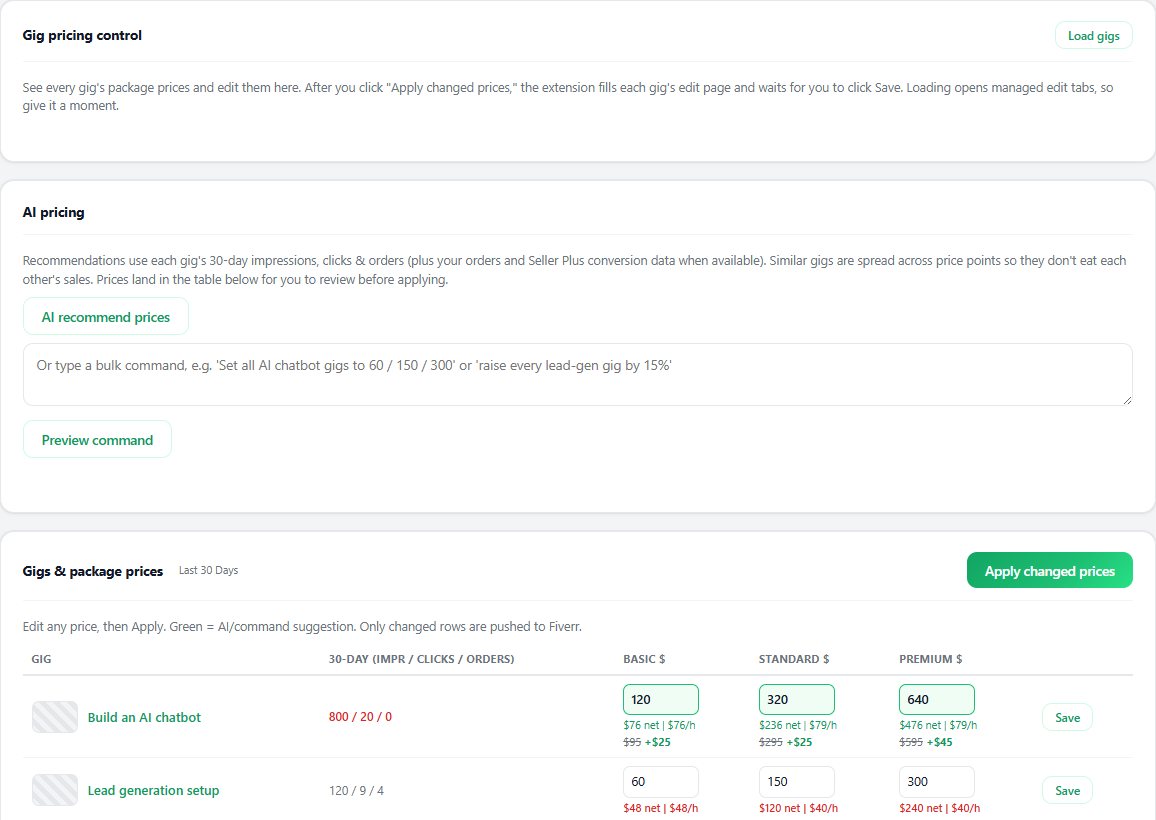
Seller OS includes a pricing review that checks a gig against profit guardrails, including the Fiverr 20% fee, and warns when a change would push you below the target you set. A recent-price write guard means an accidental edit cannot quietly rewrite pricing you already worked out. Client records keep repeat history next to the number, so you can see what a buyer has paid before, and reports give you the wider context for the next decision.
Nothing changes automatically: you review the suggestion and apply it yourself. Read the workflow in the Fiverr seller tools guide.
Fiverr pricing questions
Does the Fiverr 20% fee apply to every order?
Yes. Fiverr takes a 20% seller fee, so your asking price is not what you keep. Price from the net figure you need, then check the gross price with the fee calculator.
How many packages should a Fiverr gig have?
Three tiers is a practical default: a focused entry package, a standard package that fits most buyers, and a premium option for buyers who want more. Each tier should differ in something concrete, such as scope, turnaround, or revisions.
When should I raise my Fiverr prices?
Raise prices when your delivery calendar stays full, when most buyers choose your top tier, or when scope has grown beyond what the package was built for. Move in one deliberate step, and tell repeat buyers before their next order.
Should I lower prices to win more orders?
Rarely. A low price attracts buyers who are more likely to negotiate and less likely to value the work. Fix the offer, the gallery, or the description first. If you discount, make it a bounded test with a clear end date, not a permanent position.
Price from numbers, not guesswork.
Compare client history and check pricing guardrails before every change, with you making the final call.