 Seller OS
How to get more Fiverr briefs
You cannot force Fiverr to send you more briefs or Mira invitations, because no quota or volume setting is published. What you can influence is the surface matching reads: how clearly your services state what you do, how specific your profile is, and how reliably you answer when an opportunity arrives.
This guide covers the levers that are actually yours, the criteria Fiverr names for brief and Mira matching, and the honest ceiling on all of it: volume depends on demand, category, and a gradual rollout.
Free plan available. Local-first data. Human review on every change.
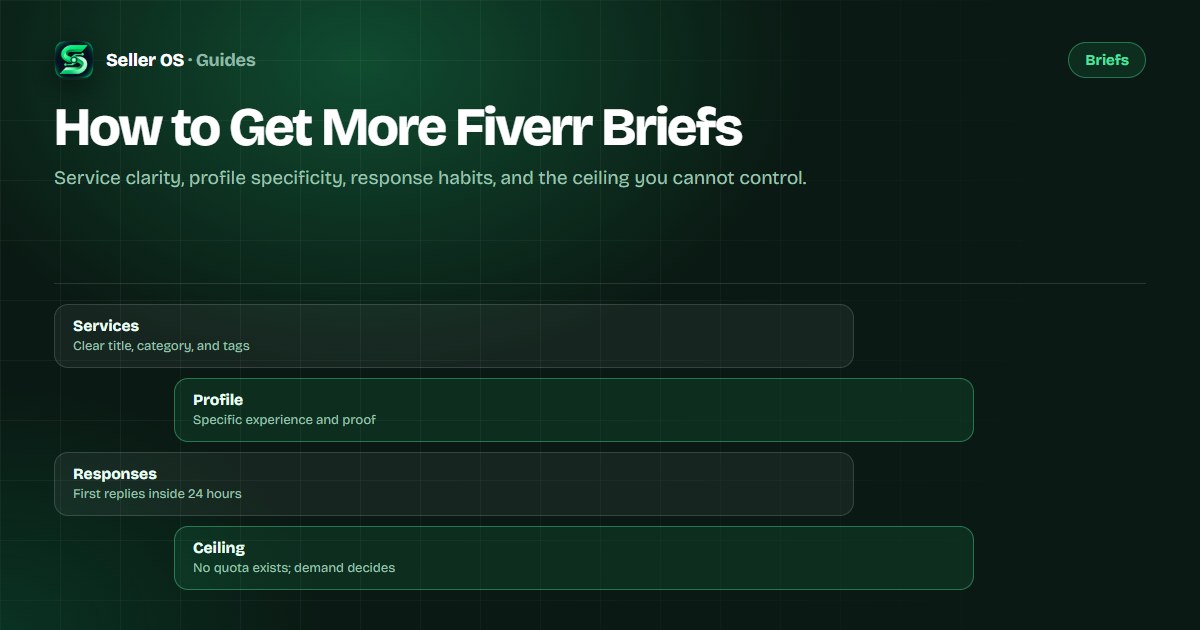
What matching actually looks at
Two systems matter here. Briefs, now replaced by Mira, focused on services with a success score of 7 or higher and matched on expertise, pricing, and profession, per Fiverr's brief FAQ. Mira matches on criteria including previous projects completed on Fiverr and experience level.
Neither description hands you a setting to raise. Instead, they tell you what the system reads: your service catalog, your completed work, and your account standing. That is the surface you improve, and it is the same surface buyers read when they land on your gig.
Make your services unmistakably clear
Matching starts with what your gigs say you do. If a gig title, category, and tags point in three different directions, the system has to guess and so does the buyer. Rewrite the title around the exact service, keep the category aligned with it, and use your tags to cover the close variants people search for.
A concrete test: read your gig title alone and ask what someone would search to find it. If the answer is vague, such as design, video, or marketing, the match surface is vague too. Narrow services also make response behavior easier, because you only receive requests you can actually serve well.
One practical note: significant edits to a gig title, category, or pricing may trigger a review, and the gig may not be visible until that review completes. Make deliberate changes one at a time, not a full catalog rewrite the night before a quiet week.
Sharpen the profile and experience signals
Mira's published criteria include previous projects completed on Fiverr and your experience level, so the profile and order history carry weight. Fill in the profile sections you have been leaving blank, describe your experience plainly, and keep your portfolio current with work you can discuss comfortably in a conversation.
Specificity beats superlatives. Three years editing YouTube explainers for software companies tells the matching system and the buyer more than expert video editor. The same principle applies to the gig description: name the deliverable, the format, and the kind of client you serve.
You do not need to inflate anything to be specific. Matching and buyers both reward an accurate, narrow description more than a broad claim that could belong to anyone. The field to edit is usually the first line of the description: say what you make, for whom, and in what format.
Answer fast, starting with today's messages
Response behavior is the lever with the clearest published rule. Fiverr says to respond to Mira's first message within 24 hours to ensure your response rate is not affected. That is the same first-response metric measured across your account over the last 90 days, and it gates levels at 80% for Level 1 and 90% for Level 2 and Top Rated.
In practice, treat the Inbox as the briefs page. A short holding reply that names the request is a first response and starts the record correctly; the full answer can follow once you have scoped it. What matters is that the first reply lands inside the window.
Check the Inbox at least twice a day
Mira conversations look like ordinary messages.
Reply to anything new within 24 hours
even a brief acknowledgment starts the record.
Follow with the real answer
mirror the need, add one proof point, propose a next step.
Keep availability settings honest
an out-of-office window hides the messages you want.
A worked match-surface example
Suppose a seller offers video editing for everyone and receives almost nothing. The rewrite: title around the exact service, such as editing a talking-head YouTube video into a ten-minute cut, a category aligned with video editing, tags covering the editing variants buyers search, and a description listing exact deliverables and turnaround.
The second half of the fix is response history. The same seller sets two Inbox checks a day, answers every first message inside the window, and logs which requests actually turn into orders. Two weeks later the feedback loop is visible: not guaranteed more briefs, but a surface that is legible to matching and to buyers.
| Surface | Before | After |
|---|---|---|
| Gig title | Video editing for everyone | Talking-head YouTube edit, ten-minute cut |
| Category and tags | Broad, mixed direction | Aligned to video editing variants |
| Profile | Expert video editor | Three years editing software explainers |
| Inbox habit | Checked when remembered | First reply within 24 hours, twice daily |
Why you cannot force more briefs
No quota is published for briefs or Mira invitations, and Fiverr describes Mira as rolling out gradually and unavailable on the mobile apps. Projects also depend on buyer demand in your category and on the client-side rule that keeps job descriptions under $500 from being sent to talent at all.
So the honest plan is: improve the inputs you control, respond to everything that arrives, and do not read a quiet week as punishment. Fiverr's brief FAQ states that declining a brief will not hurt the process of the briefs you receive, which also means the system is not a machine you can trigger by clicking correctly.
“Freelancers receive briefs based on the skills and services you offer. Our system selects briefs that align with your expertise, focusing on services with a success score of 7 or higher.”
— Fiverr's Help Center, Personalized offers (Briefs) for freelancers, September 2026
Mistakes that shrink your match surface
The most common mistake is defining your services broadly to catch everything. Broad gigs match vague demands, attract mismatched buyers, and make your response record noisier. The second is letting messages age: an Inbox checked weekly guarantees missed windows, and the response rate it produces shows up in the numbers that gate your level.
The third is copying a competitor's gig fields wholesale. Matching reads your services, not theirs, and a copied description that overstates what you deliver leads to conversations you cannot close, which is worse for your score areas than a narrower accurate surface.
The fourth is editing frantically during a quiet stretch. A significant edit can hide the gig during review, and stacking changes makes it impossible to tell which one mattered. Change one field, wait, and judge the result.
Where Seller OS helps
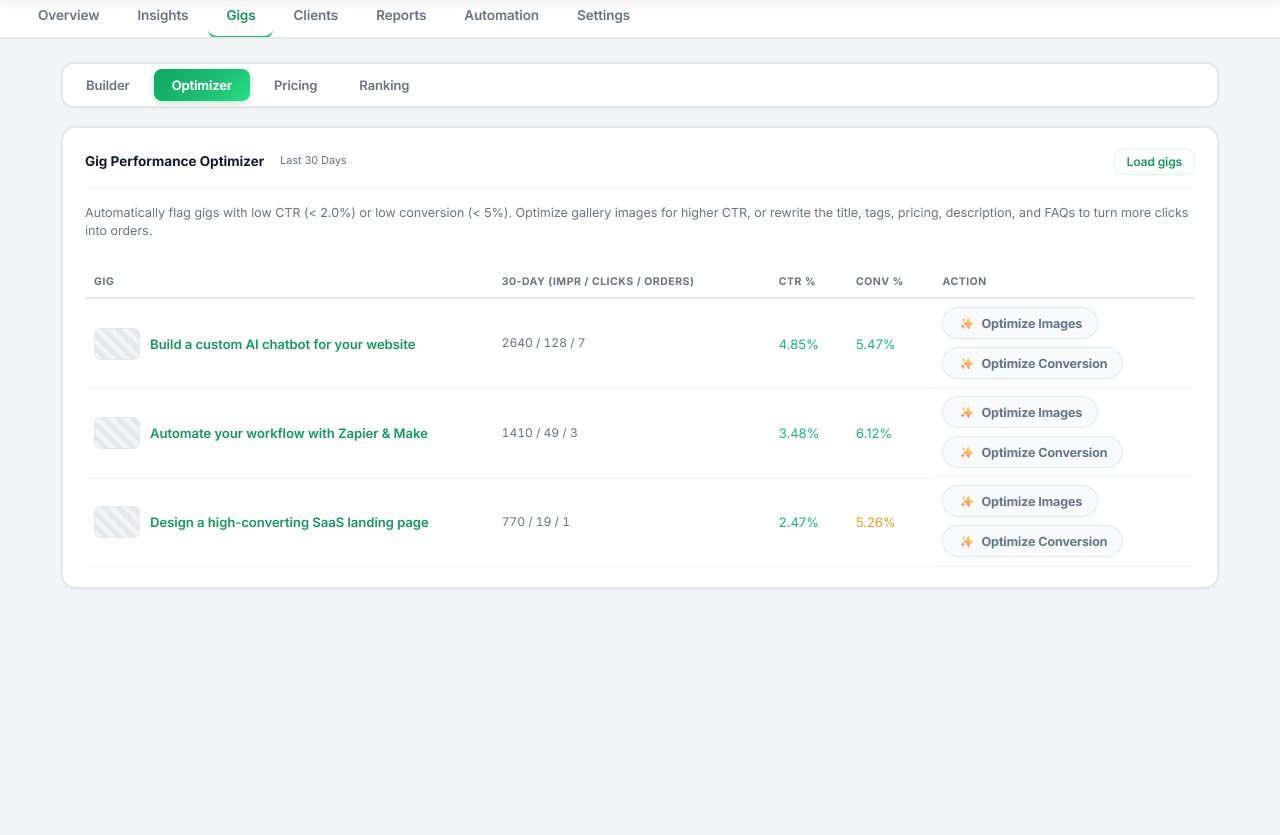
Seller OS helps with the parts of matching you control. The Gig Performance Optimizer reviews a live gig's copy, gallery, and conversion signals against its own performance data and proposes specific changes you can accept or reject, and keyword research helps you describe the service in the vocabulary buyers actually use.
On Pro, unread message alerts and the client radar keep opportunities from aging in the Inbox while Chrome is open. Everything is a proposal or a draft: you approve each edit, and a person performs every final Save or Send. Data stays in Chrome local storage.
How to Get More Fiverr Briefs questions
Can I choose how many briefs I get?
No. Fiverr publishes no quota, frequency setting, or volume control for briefs or Mira invitations. Matching depends on your services, your profile and history, category demand, and rollout, and Mira is described as rolling out gradually. Anyone claiming you can set a monthly brief target is not describing a real Fiverr feature.
Does declining briefs hurt future matches?
Fiverr's brief FAQ states that declining will not hurt the process of the briefs you receive. What does affect your account is ignoring messages: response rate counts first replies sent within 24 hours over the last 90 days, and Fiverr says a late first response to Mira's message can affect it. Decline freely, but reply promptly.
Do more orders mean more briefs?
There is no published exchange rate between orders and briefs. Mira's criteria mention previous projects completed on Fiverr and experience level, and the brief system focused on services with a success score of 7 or higher. Completed projects strengthen the profile signal, but category demand and the client's budget still decide what exists to match.
Why did briefs stop after I changed my gig?
Nothing published ties brief volume to a single gig edit, but matching reads the services you offer. A change that narrows, renames, or confuses the category can change what the system considers relevant, and significant edits may also send a gig to review. Check service clarity first, then wait before changing more.
Make your match surface legible
Clarify the service, sharpen the profile, and answer inside the window, then let demand do the rest.