 Seller OS
Fiverr relevance vs best selling: how each sort works
Fiverr search results can be sorted more than one way, and the toggle changes which gigs rise. Relevance and Best Selling answer different questions: relevance asks which gigs best match the query, and best selling asks which gigs have proven demand.
This guide explains what each sort optimizes, where a newer gig can actually win, and how buyers use each view, so you stop benchmarking a fresh listing against the wrong page.
Free plan available. Local-first data. Human review on every change.
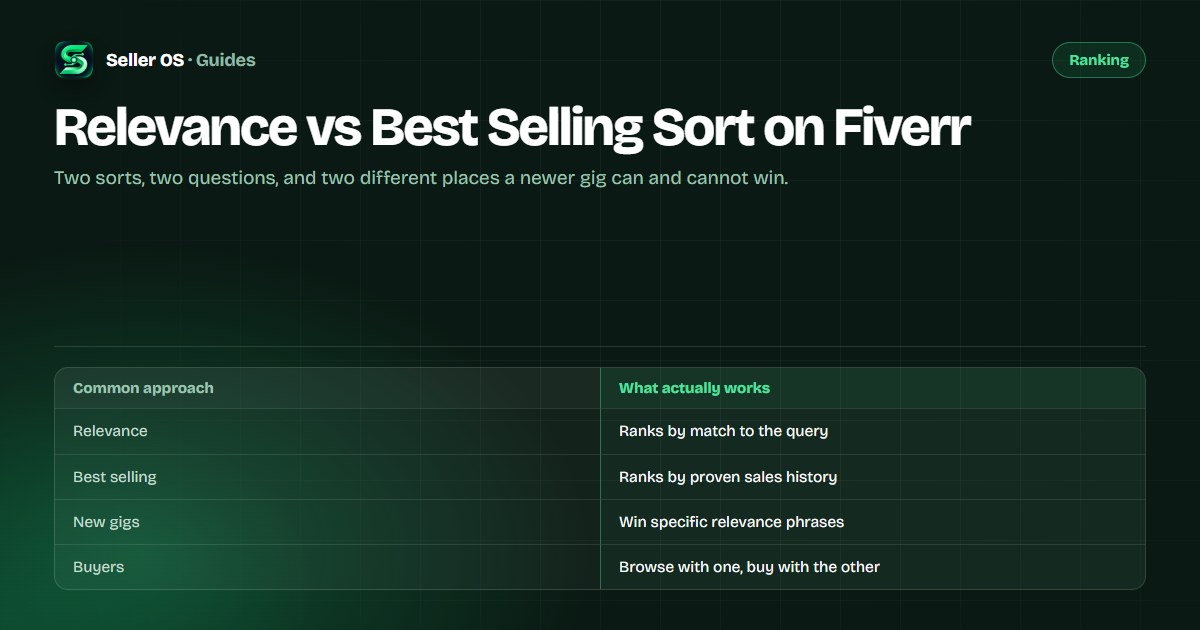
Two ways to sort the same results
The toggle does not change which gigs are eligible; it changes their order. Relevance and Best Selling draw from the same matching pool, and each one elevates a different kind of gig. Understanding the difference is the difference between measuring the right thing and reading noise.
The ordering model behind relevance is not published. Fiverr's search and recommendation article names the ingredients it uses without the weights. Best selling is easier to reason about, because it reflects sales history rather than a match score.
One note before comparing the two: a single reading is a sample, not a fixed position. Both sorts are shown to a specific buyer in a specific session, and personalization can move the order from one check to the next. Compare directions over time rather than single readings.
What relevance optimizes
Relevance is about matching intent. The listing's title, tags, description, and category tell the system what the gig is for, and the query tells it what the buyer wants. A specific, well-matched gig can appear for a specific phrase even without a long sales history.
Quality and performance signals shape relevance too, which is why one gig can sit high for one phrase and low for another. But the entry point is the match, and match is something a newer seller can influence directly by describing the work precisely.
That makes relevance the sort a new seller can actually study. Change a tag, sharpen the title, name the deliverable in the buyer's words, and the match shifts. Best selling does not respond to copy edits that way, which is the next section's point.
What best selling optimizes
Best selling leans on proven demand, so established gigs with steady order history tend to rise. That is a fair proxy for buyer confidence, and it is also why a new gig rarely tops this sort. It is not a judgment of quality; it is a ranking of accumulated sales.
Treat best selling as a view of the market rather than a target for a new listing. Watching which gigs hold the top positions tells you what buyers in the category reward, which is useful research even when you cannot rank there yet.
It is also a reminder about buyer psychology. A buyer who sorts by best selling is buying confidence, so gigs with visible volume win. If you cannot offer that history yet, offer something else concrete: a narrow specialism, a clear process, and proof at the scale the buyer cares about.
Where a newer gig can win
A newer gig competes best on relevance for specific queries. Rather than chasing the broad head term the established sellers own, match a clear phrase that describes exactly what you deliver. Fewer searches, but a far better chance of showing.
This is where keyword work pays off: long-tail phrases are where a fresh listing can meet a buyer's precise need. The top keywords guide and the search results guide cover how to find and read those phrases.
The mistake is benchmarking a new gig against the best-selling winners. Compare yourself to gigs of similar age and history, on the queries you actually match, using the same sort each time.
How buyers use each sort
Buyers who know the job use search and often keep the default relevance sort, which means the match matters more than history for that session. Buyers who are still exploring may switch to best selling for social proof, letting other people's orders narrow the field for them.
That gives you two audiences on one page. The relevance reader is judging whether your gig is about their task; the best-selling reader is looking for evidence that it works. Your title and card answer the first, and your reviews and order history answer the second.
Use that difference when you write. The phrases a relevance reader types belong in your title and tags; the reassurance a best-selling reader wants belongs in your packages, your reviews, and the first line of your description. Neither audience is wrong; they are asking different questions.
What to do with this
The two sorts answer different questions rather than competing over one. Use the list below to decide which view should guide your daily work and which you read only for research.
Know your default
check which sort you see without changing anything.
Track by sort
record positions in both views so a change in one is not mistaken for the other.
Target relevance first
win specific phrases where your match is strongest.
Read best selling for research
note what the top gigs have in common.
Do not chase the head term
a newer gig loses the volume race and gains little.
Re-check the same way
same sort, same queries, same conditions each time.
Where Seller OS helps
Seller OS fits the measure-both-views habit. The local rank tracker samples your keywords and records positions over time, so relevance movement shows as a trend instead of a single sample. Keyword help suggests phrases when you are choosing what to target.
It observes what a browser session can see and stores it locally. It does not know Fiverr's ordering formula and does not claim to, and nothing about your results leaves Chrome.
Relevance vs Best Selling Sort on Fiverr questions
What is the difference between relevance and best selling on Fiverr?
Relevance ranks gigs by how well they match the query, using the listing's fields and quality signals. Best selling ranks them by proven demand, so established gigs with sales history tend to rise. The same search page can order gigs very differently depending on which sort a buyer selects.
Which Fiverr search sort should a new seller target?
Target relevance for specific phrases. A new gig can match a clear long-tail query even without sales history, while best selling favors established listings. Choose phrases that describe exactly what you deliver, and compare your position only against gigs of a similar age.
Does switching the sort change which gigs can show?
Both sorts draw from the same set of matching gigs; the toggle changes their order, not the pool. Ads still occupy their labeled slots above the organic results. Watching both views tells you whether a change sits in your match or in the market around you.
Why do I rank differently in relevance and best selling?
The two sorts weigh different things. Relevance rewards a strong match to the query, so a precise gig can place well. Best selling rewards accumulated orders, so a newer listing drops. That gap is normal, and it is why you record positions per sort rather than one combined number.
Win the match, not the volume race
Target the phrases your gig actually matches, and stop comparing a new listing to the best-selling incumbents.