 Seller OS
Fiverr's shift to large projects and what it means
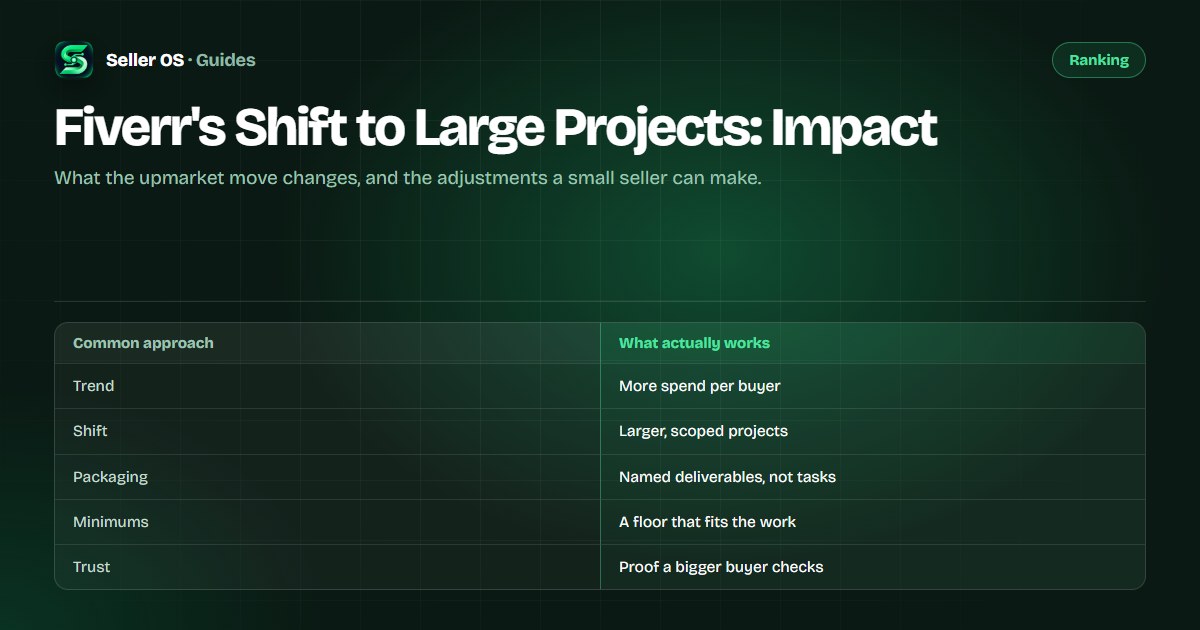
Fiverr has been shifting toward larger, higher-value projects. Its public reporting through 2026 describes a move upmarket and a higher spend per buyer, which changes what a small seller competes for and how a gig should be positioned.
This guide explains what the shift means in plain terms, what it changes for a seller with a handful of orders, and the practical adjustments worth making: packaging, minimums, and the trust signals a larger project buyer looks for.
Free plan available. Local-first data. Human review on every change.
What the upmarket shift means
The direction is toward larger projects and buyers who spend more per engagement. That has been described consistently in Fiverr's public results and commentary through 2026, alongside a smaller and more selective buyer base than in earlier years.
For a seller, the practical meaning is that the average order worth chasing is bigger and more involved than a single micro-task, and the buyers placing those orders expect a more considered listing.
What it changes for small sellers
When buyers spend more per project, they read more carefully before ordering. They compare packages as scopes rather than prices, they look for evidence of process, and they are more likely to message first. The gig that wins is the one that looks like it can handle the whole job.
It does not mean every seller should chase enterprise work. It means the middle of the market is shifting, and positioning a gig for a larger scope is now a realistic option rather than an exception.
| Dimension | Single-task gig | Larger-project gig |
|---|---|---|
| Buyer intent | One quick deliverable | A scoped piece of work |
| Package naming | By task | By outcome and scope |
| Price anchor | Lowest in category | Value of the result |
| Proof needed | A sample or two | Process and case notes |
| Conversation | Order first | Message, then a custom offer |
Package for a larger scope
A larger-project gig packages outcomes, not tasks. Instead of three tiers of the same deliverable, each tier describes a scope with a named set of inclusions, a realistic timeline, and a clear sense of who it suits. The buyer should be able to pick a tier without messaging you first.
Fiverr's gig package guidance covers the mechanics. The package design guide goes further into how to build a ladder that still has a strong entry point.
Set a floor, stop competing on price
A minimum is the smallest order you will accept without losing money or interest. For a larger scope, that floor should sit above the micro-task price band, because the intake, the review, and the delivery all cost the same time whether the order is small or large.
Raising the floor is not the same as raising every price. It means declining the orders that never made financial sense and pointing those buyers at the tier that does.
Strengthen trust signals
A buyer committing more money checks more. Portfolio pieces with process notes, a video that shows how you work, and consistent response times all matter more at the larger scope, because the buyer has more to lose if the project goes wrong.
Reviews help, but a new seller can substitute. A clear FAQ, a requirements question set that shows you have run projects before, and a few well-chosen pieces all signal that the larger order is in safe hands.
- Portfolio pieces with process notes, not just finished images.
- A short video showing how you work.
- A requirements set that captures scope upfront.
- A response time a larger buyer can rely on.
Who should hold their position
Not everyone needs to move upmarket. If your demand is steady and your small orders are profitable, holding a clear position in a narrow niche is a legitimate strategy, and it can be more resilient than reaching for larger work you do not want.
Decide based on your capacity and the work you enjoy. The shift changes the market; it does not prescribe one path for every seller.
Where Seller OS helps
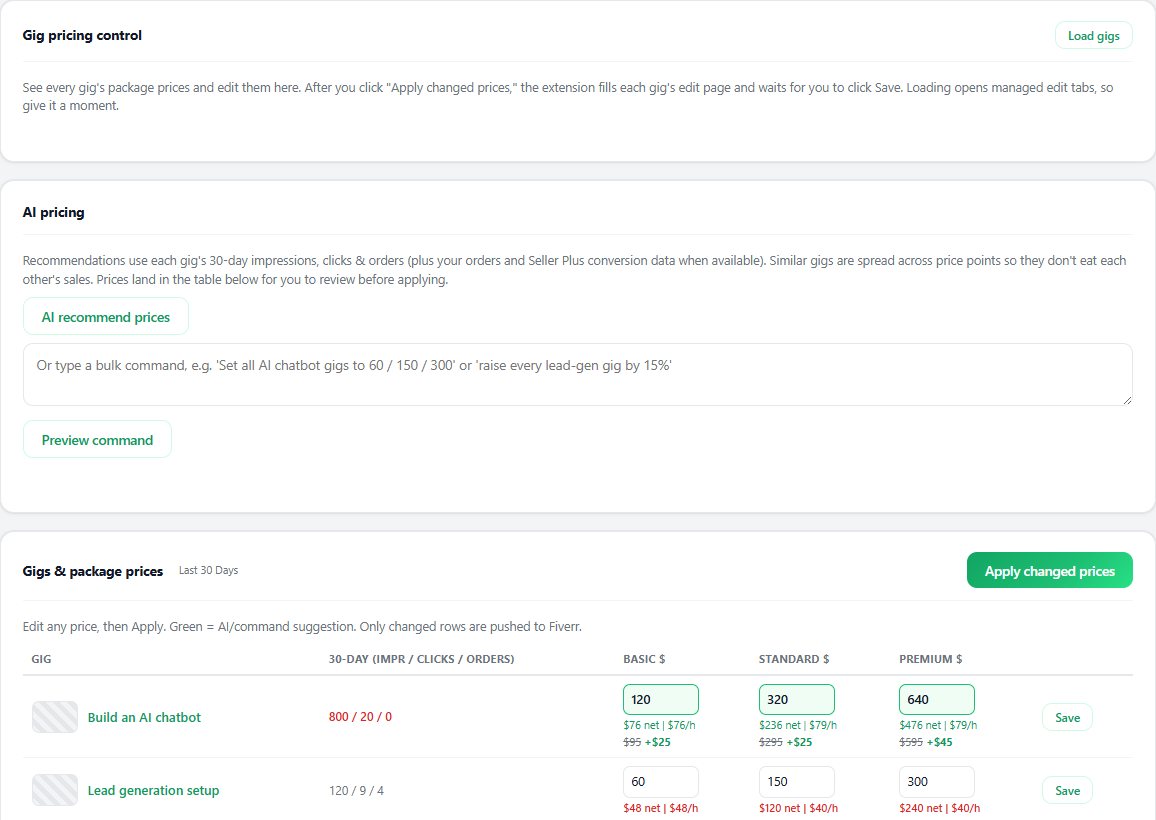
Seller OS leans toward the larger-project workflow, where scope and pricing matter more than volume. The pricing views help you read what each package needs to earn, and the gig optimizer reviews a live listing's packaging and conversion signals against its own performance data.
The extension runs locally and never publishes or messages on your behalf. It drafts and tracks so the Save, Continue, and Publish decisions, and any custom offer you send, stay in your hands.
Fiverr's Shift to Large Projects questions
What is Fiverr's shift to large projects?
Fiverr's public reporting through 2026 describes a move upmarket: larger, higher-value projects and higher spend per buyer, alongside a smaller and more selective buyer base. For a seller, it means the average order worth chasing is bigger and more involved than a single micro-task.
Does the upmarket shift mean small gigs are dead?
No. Single-task gigs still sell, and a clear niche position can be a stable strategy. What changes is that larger scopes are now a realistic option for more sellers. Choose based on your capacity and the work you want, rather than assuming one path fits everyone.
How do I package a gig for larger projects?
Package outcomes rather than tasks. Give each tier a named scope, a realistic timeline, and a sense of who it suits, so a buyer can choose without messaging first. A strong entry tier still matters, and a clear requirements set keeps the larger scope from drifting once work begins.
Should I raise my prices because of the shift?
Not automatically. A better first step is setting a minimum that fits your time, so small orders stop eating hours that larger work would pay for. Raising specific prices should follow your own demand and margins. The platform trend informs the decision; it does not dictate it.
Position for the work you actually want.
Package outcomes, set a floor that fits your time, and let the trust signals do the convincing for larger scopes.