 Seller OS
Fiverr revision after completion: what should you do?
The order completed, the review window is open, and the buyer writes: one more small change? Nothing about a completed Fiverr order says you owe free edits, and nothing says you must refuse. The useful skill is sorting the request into one of three cases — your error, a fair favor, or new work — and answering each one deliberately.
This guide covers what Fiverr's rules say once an order is completed, why these requests arrive, and three replies you can adapt for the three cases. It also shows how to price genuine new work without souring the relationship.
Free plan available. Local-first data. Human review on every change.
What Fiverr's rules say after completion
Once an order is completed, its status cannot be changed or canceled through the Resolution Center, and the Resolution Center is unavailable for completed orders. Fiverr's help pages do not describe a formal revision process after completion either — the documented revision flow belongs to active orders. What remains is a direct conversation between you and the buyer, with no platform mechanism requiring you to act. On an active order, changing the deadline has a formal route, which the order extension guide covers; a completed order offers nothing similar.
Two clocks keep running in the background. The buyer can still leave a public review for 14 days after completion in most categories, or 30 days in Programming & Tech and several Digital Marketing subcategories, plus a private review within 60 days. And your revenue clears 14 days after completion, or 7 days for Seller Plus, Top Rated, and Pro Talent. Neither clock is a reason to buy peace with free work; both are reasons to reply promptly and professionally.
Why requests arrive after the clock stops
Auto-completion is not approval. Fiverr completes a standard order three days after delivery if the client does nothing, and milestone orders after eight, so a buyer who was traveling, busy, or waiting on a stakeholder may never have looked at the work before it closed. Their first real review happens after completion, and their notes are genuine.
Other arrivals are slower: an end client sees the file weeks later, a campaign goes live and the copy does not fit, or the buyer simply changed their mind about direction. The request usually carries a deadline of its own, which is why a same-day reply matters more than a perfect one.
Sort every request into one of three cases
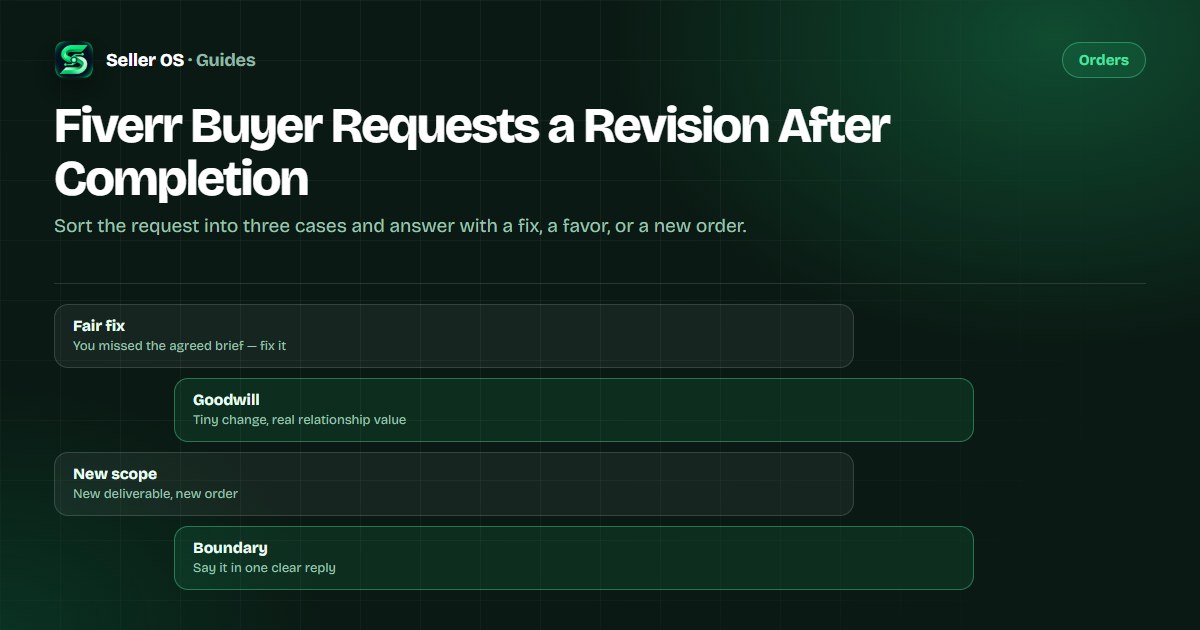
Case one: you missed the agreed brief. The deliverable does not match the scope you accepted — wrong format, broken export, a promised element missing. This is not a favor, it is a correction. Fix it promptly, do not debate it, and consider whether a small gesture such as a bonus file or priority turnaround restores the relationship.
Case two: a fair favor. The change is small, the brief is not violated, and the buyer is otherwise a good client. Do it, state that it is outside the original scope, and set the expectation that future changes are quoted. Case three: new work. A new deliverable, a new direction, or hours of additional craft. Quote it as a new order, warmly, and make the first step easy.
| Case | Test | Your move |
|---|---|---|
| Your miss | The delivery does not match the agreed scope | Fix it fast; no charge, no argument |
| Fair favor | Tiny change, no scope breach, valuable client | Do it once and say it is outside scope |
| New work | New deliverable, direction, or hours | Quote a new order; keep it friendly |
Three replies for the three cases
Script 1, your miss: 'You're right, Maya — the captions were part of the agreed scope and they're missing from the export. I'm fixing that now and will send a corrected file today. Nothing else changes.' Short, no defense, done.
Script 2, fair favor: 'Happy to adjust the title placement — that's a quick change. To be transparent, it sits outside the original scope, so I'm doing it as a one-time goodwill edit. If bigger changes come up, I'll quote them first so there are no surprises.'
Script 3, new work: 'This is a bigger shift than the two revision rounds we agreed, because it replaces the approved direction. I'd love to build it: I can send a custom offer today for the new concept with a three-day turnaround. If you'd rather keep the original, it is ready to use as is.'
All three scripts follow the same moves: name the situation, say what you will do, and make the next step clear. None of them mentions reviews, refunds, or payment outside Fiverr — and none should.
How to price work that arrives late
Price the new request like any new project: scope, deliverables, timeline, and your normal rate. The fact that the buyer came back is a good sign, but it is not a discount code. If you want to reward the relationship, do it visibly — expedited turnaround at the standard price, or a named addition you would normally charge for — so the value is understood rather than assumed.
Send it as a custom offer attached to a new order, and keep the transaction on Fiverr. A completed order cannot be reopened or paid again through the Resolution Center, so the old order offers no legitimate way to bill; a new order also protects you if the new scope expands again.
Mistakes that turn goodwill into resentment
The most common mistake is answering with hours of silent free work to protect a review. It works once and sets a precedent, and the next request arrives bigger. Decide with the three-case test before you open the file, and let your answer match the case.
The second is going silent. A request that sits unanswered reads as refusal with extra steps, and the buyer's review window is still open. The third is arguing about the word completed. Fiverr's rules are clear that the order is closed, but winning that argument can cost the relationship; reply with the case, not the courtroom.
One more line to hold: Fiverr states you cannot ask another user to remove their review, so never offer a fix in exchange for review changes. Fix what is yours, quote what is new, and let the work speak. If a different order is the one going quiet, that is a separate playbook: the unresponsive buyer guide covers silence while an order is still active.
Where Seller OS helps
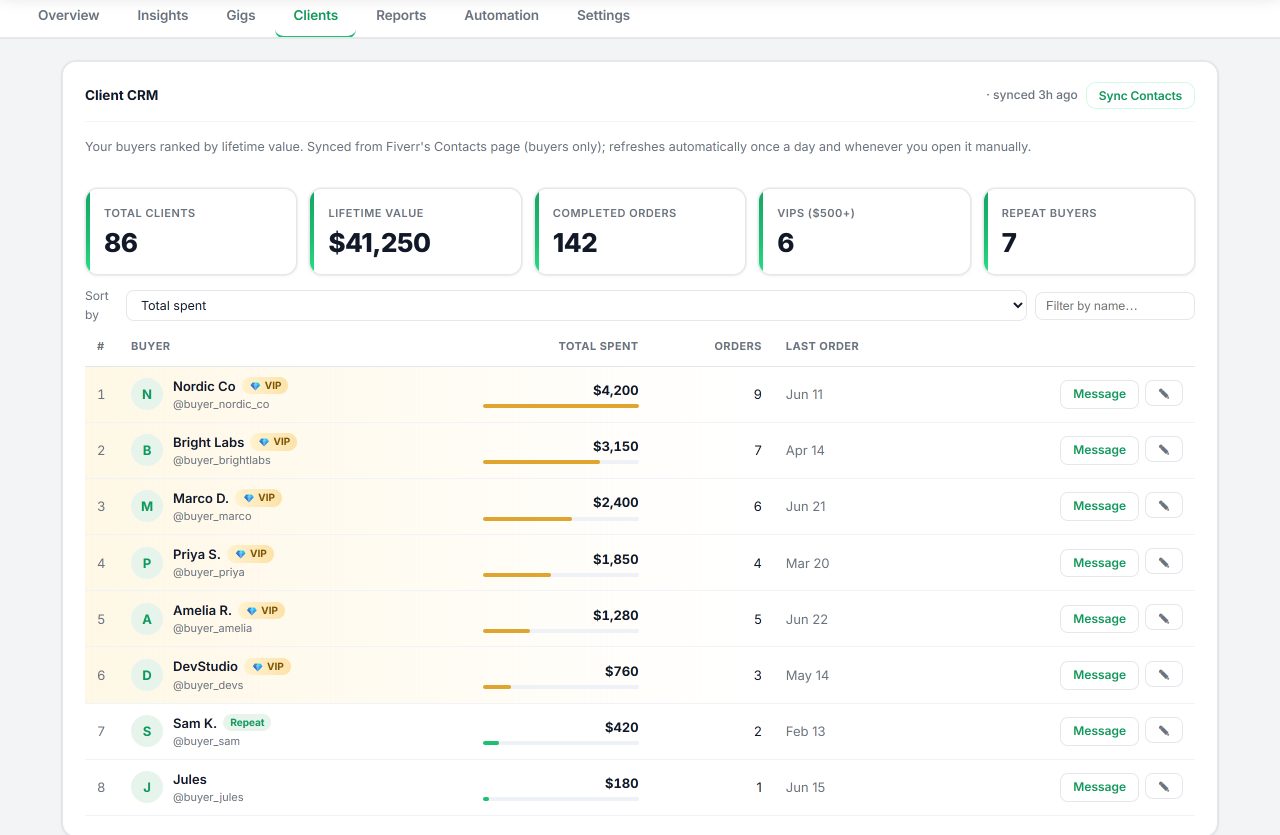
Seller OS keeps the history you need when a past buyer returns. Client records hold the order, the agreed scope, and the notes locally, so you can check what was actually promised before deciding whether a request is your miss or new work, instead of re-reading an old thread from memory.
The inbox assistant drafts the reply for whichever case you chose, and you edit and send it yourself. There is no automatic sending and no review or refund machinery: decisions about free fixes, new offers, and boundaries stay entirely with you.
Fiverr Buyer Requests a Revision After Completion questions
Can a buyer request a revision after the order is completed?
They can ask, and you can agree, but Fiverr does not publish a post-completion revision process. Completed orders cannot be changed or canceled through the Resolution Center, and the documented revision flow applies to active orders. Treat the request as a fresh negotiation: fix genuine errors, and quote anything that is new scope.
Am I obligated to make changes after Fiverr completes an order?
Fiverr's help pages do not describe any obligation to revise a completed order. That is different from what you should do: if the delivery genuinely missed the agreed scope, fixing it is both ethical and cheaper than a fight. If the request adds something new, treat it as new work rather than an obligation.
How do I price changes after completion on Fiverr?
Set up a new order, usually through a custom offer, and price it like a fresh project: scope, deliverables, timeline, your rate. Completed orders cannot be reopened for payment through the Resolution Center, and handling payment outside the platform breaks Fiverr's terms. A clean new order also gives the work its own completion path.
Will saying no hurt my review?
You cannot control that, and you should never trade a fix for a review: Fiverr states you cannot ask another user to remove their review. What you can control is the reply. A prompt, specific, warm answer to a reasonable request does more for your reputation than silent free labor, and a fair fix for your own error is simply right.
Answer the request before it becomes a story.
Check the scope, pick the case, and reply with the fix, the favor, or the quote.